From Speedometer to Surveillance: The Quiet Revolution Inside Your Car's Dashboard
From Speedometer to Surveillance: The Quiet Revolution Inside Your Car's Dashboard
Picture the dashboard of a 1985 Ford F-150. Speedometer. Fuel gauge. Temperature needle. Maybe a radio with four preset buttons if you were lucky. The relationship between driver and vehicle was almost entirely mechanical. The truck did what you told it to do, and it didn't report back to anyone.
Now picture the dashboard of a 2024 model. Touchscreen. Navigation. Backup camera. Smartphone integration. Lane-keep assist. Driver attention monitoring. And underneath all of it, a data collection architecture that most owners have never read a word about.
The transformation didn't happen overnight — it crept up on us over four decades of incremental upgrades, each one reasonable on its own terms, until the cumulative result became something genuinely new. Your car now knows more about your daily life than most of your friends do.
The Analog Era: Simple, Dumb, and Honest
For most of automotive history, a car's instrumentation existed for one purpose: to tell the driver what the driver needed to know right now. Speed. Fuel. Engine temperature. Oil pressure on the better-equipped models. That was the full scope of the information relationship.
Cars built before the mid-1990s had no onboard computers worth mentioning, no event data recorders, no wireless connectivity. If you wanted to know how your vehicle was performing, you listened to it, felt it through the steering wheel, and took it to a mechanic when something seemed off. The data, such as it was, lived in your own head.
This wasn't a design choice driven by privacy principles. It was simply the limit of the technology. Nobody was collecting driving data because there was no practical way to collect it, store it, or transmit it. The absence of surveillance was a side effect of capability, not intention.
The Slow Build: OBD Ports and Black Boxes
The first meaningful shift came with the standardization of the OBD-II diagnostic port in 1996, required on all vehicles sold in the US. Originally designed to help mechanics diagnose engine problems by reading stored fault codes, the port created a standardized access point into a vehicle's computer systems — a detail that would become significant later.
Around the same time, event data recorders (EDRs) — colloquially known as black boxes — began appearing in vehicles. Initially limited in scope, these devices recorded a few seconds of data before a collision: speed, brake application, seatbelt status. They were designed for crash reconstruction, and most drivers had no idea they existed.
By the mid-2000s, EDRs were nearly universal in new American vehicles, and the data they captured was increasingly used in insurance disputes and legal proceedings. Your car had been quietly keeping notes, and you hadn't been told.
The Smartphone Era Plugs In
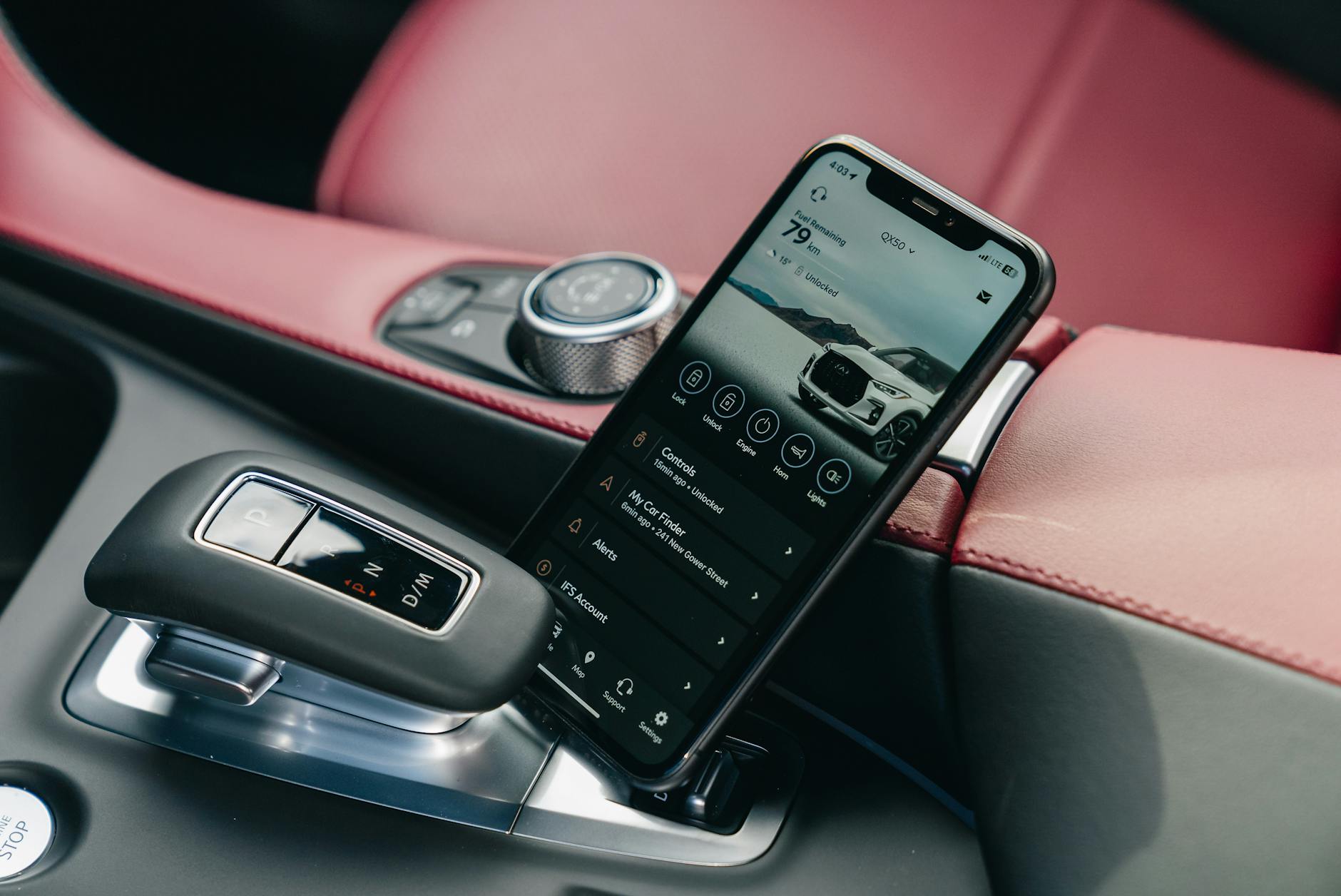
When Apple CarPlay and Android Auto arrived in the mid-2010s, they were marketed as convenience features — a seamless way to use your phone's apps on your car's screen without fumbling with a mount. And they were convenient. They were also a new integration point between two data-rich ecosystems.
Your phone already tracked your location, your habits, your contacts, and your calendar. Your car was increasingly tracking your driving behavior. The moment those two systems connected, the combined data profile became significantly more detailed.
Telematics — the transmission of real-time vehicle data over cellular networks — moved from fleet management into consumer vehicles during this period. Insurance companies began offering usage-based programs that monitored acceleration, braking, cornering, and mileage through a dongle plugged into the OBD-II port or through factory-installed systems. Safer driving meant lower premiums, the pitch went. It also meant a continuous feed of your driving behavior flowing to an insurance company's servers.
What Modern Cars Actually Collect
A 2024 connected vehicle can collect and transmit a striking range of information. Location history. Trip duration and frequency. Speed and acceleration patterns. Seatbelt usage. Which doors were opened and when. Media preferences. Voice commands made to the in-car assistant. Smartphone contacts synced through Bluetooth. And in vehicles with driver monitoring systems — increasingly common as semi-autonomous features require them — even eye-tracking data and head position.
A 2023 investigation by the Mozilla Foundation ranked cars as the worst product category they had ever reviewed for privacy, worse than smartphones, smart home devices, or fitness apps. Researchers found that 84 percent of the automakers studied shared or sold driver data to third parties. Several brands collected data that could be used to infer sensitive personal characteristics.
Over-the-air software updates — pioneered by Tesla and now adopted across the industry — mean that a vehicle's capabilities and data collection behaviors can change after purchase without the owner's active involvement. You buy a car. The car you own six months later may function differently than the one you drove off the lot.
The Financial Dimension
This matters beyond privacy in the abstract. Data about your driving behavior has direct financial consequences. Insurance premiums are increasingly priced using telematics data. Several major insurers now access data directly from automakers — sometimes without the driver explicitly enrolling in a monitoring program. A 2024 New York Times investigation found that some drivers had their rates raised based on data sharing arrangements they were unaware of.
Location data from connected vehicles has been sold to data brokers, who aggregate it with other consumer data and sell it to marketers, financial institutions, and others. Your commute pattern, your regular stops, the hours you keep — all of it has commercial value to parties who have no direct relationship with you.
The Trade-Off Nobody Quite Agreed To
None of this happened through a single dramatic decision. It accumulated through decades of feature additions, each one welcomed by consumers who wanted better navigation, safer driving assistance, lower insurance rates, or a more connected experience. The data collection was the price, buried in terms of service that almost nobody reads.
The analog car of 1985 offered none of the modern conveniences that today's drivers take for granted. It also offered something that's now genuinely difficult to find: a machine that simply did its job and kept your business to itself.
Whether that trade-off was worth it is a question most Americans are only beginning to ask — usually after finding out, often by accident, just how much their car has been saying about them.