The Car That Could Kill You: How Five Decades of Safety Engineering Changed Everything
The Car That Could Kill You: How Five Decades of Safety Engineering Changed Everything
Picture this: you're driving a 1973 Ford LTD down a two-lane highway. The steering column is a solid metal rod pointed directly at your chest. There's no airbag. The dashboard is hard plastic with no give whatsoever. Your seatbelt is technically present, but studies from the era suggest there's maybe a 20% chance you're actually wearing it — because almost nobody did. And if something goes wrong at 55 mph, the car around you will do very little to absorb the impact before it reaches your body.
This wasn't negligence. It wasn't some fringe product. This was the average American car, and tens of millions of people drove vehicles exactly like it every single day.
The numbers that came out of that period are genuinely shocking by modern standards. In 1972, the United States recorded 54,589 traffic fatalities. That's not a typo. Over 54,000 people died on American roads in a single year. To put that in context, the US population in 1972 was around 210 million. Today it's roughly 335 million — a 60% increase — and yet in 2022, traffic deaths totaled approximately 42,795. More people, more cars, more miles driven, and significantly fewer deaths. That shift didn't happen by accident. It happened because of engineering.
What a 1970s Car Actually Offered in a Crash
The honest answer is: not much. Let's go through what was — and wasn't — present in the typical American vehicle of that era.
Seatbelts existed in most cars by the early 1970s, following federal mandates that kicked in from 1968. But a belt sitting across your lap does limited good if the structure around you collapses inward, if the steering wheel drives into your sternum, or if your unbelted passenger becomes a projectile. Wearing a seatbelt in a 1972 car was better than not wearing one. It just wasn't the same kind of protection a modern three-point belt system offers as part of an integrated safety architecture.
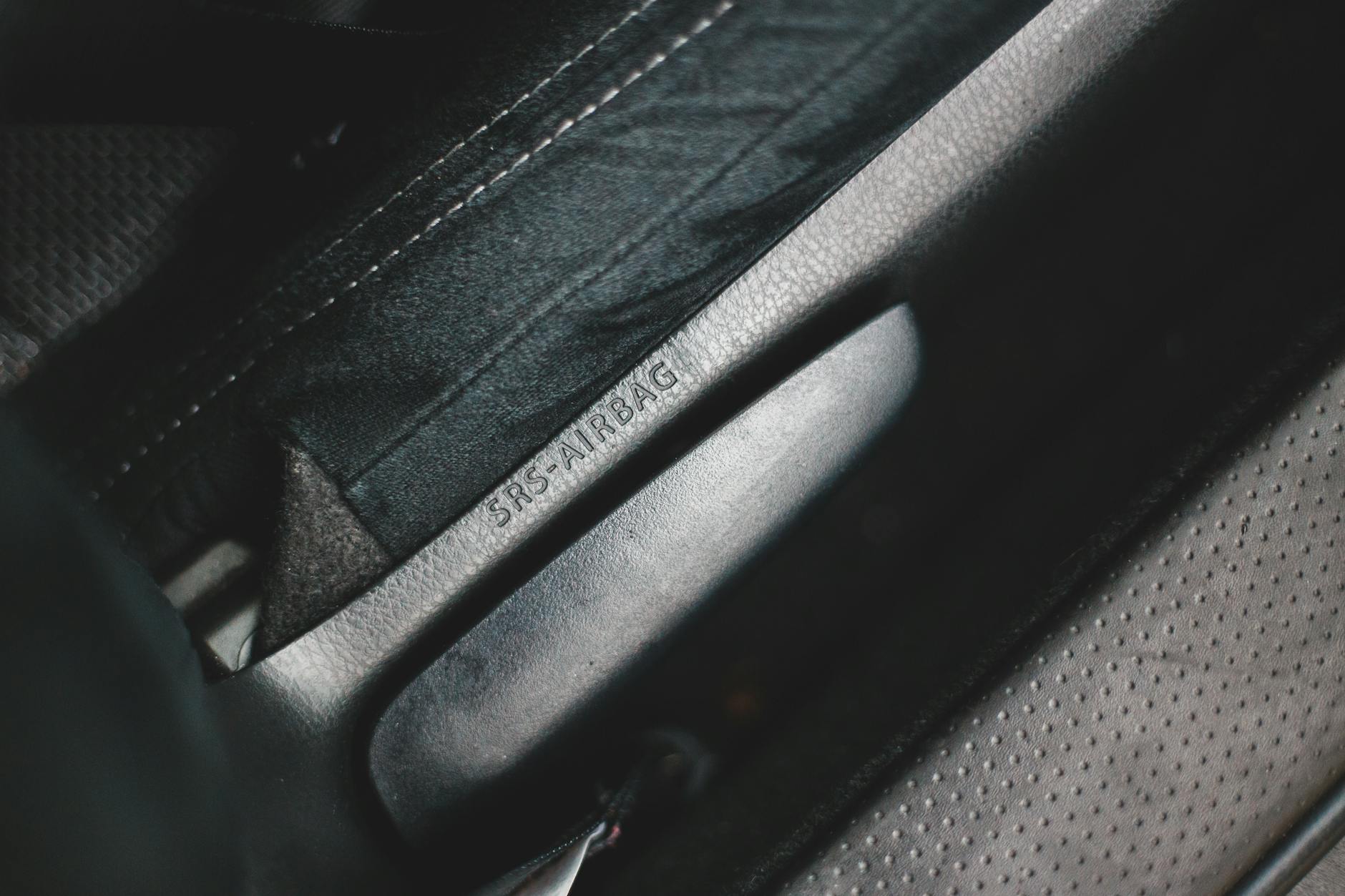
Airbags were essentially nonexistent in consumer vehicles. General Motors experimented with them in a small fleet of cars in the early 1970s, but the technology was expensive, unreliable, and met with significant industry resistance. The federal government didn't mandate driver-side airbags until 1989, and passenger airbags followed in 1994. Side curtain airbags, which protect your head during a side-impact collision, became standard equipment much later still.
Antilock brakes (ABS) weren't available on mainstream American passenger cars until the 1980s, and even then, they were optional equipment on higher-end models for years. Before ABS, panic braking often meant locking up your wheels and skidding, with the driver having little meaningful control over direction during the stop.
Crumple zones — the engineered sections of a car's body designed to absorb crash energy before it reaches the occupants — were a concept being developed in Europe during the 1970s but hadn't yet transformed American vehicle design. Many US cars of the era were built with rigid frames that transferred crash forces directly through the cabin rather than dissipating them.
And the dashboards and interior surfaces? Hard, unyielding, and full of protrusions. In a frontal collision, an unbelted driver's face met all of that at speed.
The Turning Point
The shift didn't happen overnight, and it didn't happen without a fight. Ralph Nader's 1965 book Unsafe at Any Speed had already lit a public fuse under the American auto industry, and congressional pressure through the late 1960s and 1970s forced manufacturers to start taking occupant protection seriously.
The National Highway Traffic Safety Administration (NHTSA) played a central role, issuing Federal Motor Vehicle Safety Standards that gradually raised the floor on what automakers were required to provide. Each decade brought new mandates: energy-absorbing steering columns, padded dashboards, improved door latches, head restraints to reduce whiplash, and eventually the airbag and ABS requirements that reshaped vehicle design entirely.
Crash testing became more rigorous and more public. The Insurance Institute for Highway Safety (IIHS) began publishing crash test results that consumers could actually access, creating market pressure on top of regulatory pressure. Automakers that scored poorly faced reputational damage. The ones that innovated got to advertise it.
What's Inside a Modern Car
Step into a 2024 midsize sedan and the contrast with a 1973 vehicle is almost surreal. A typical modern car includes:
- Front, side, and curtain airbags — often six to ten airbags across the vehicle
- Automatic Emergency Braking (AEB), which can detect an imminent collision and apply the brakes faster than any human reaction time
- Lane Departure Warning and Lane Keeping Assist, which alert or correct the driver when drifting out of lane
- Blind Spot Monitoring, covering the areas outside your mirrors' range
- Rearview cameras, now mandatory on all new US vehicles since 2018
- Electronic Stability Control (ESC), which helps prevent rollovers and skids, mandatory since 2012
- Sophisticated crumple zones engineered through thousands of hours of computer simulation and physical crash testing
- High-strength steel and aluminum structures that protect the passenger cabin while the rest of the vehicle absorbs energy
Some vehicles now include pedestrian detection, driver drowsiness monitoring, and rear cross-traffic alert systems. The 2024 car isn't just safer than its 1973 equivalent — it's operating in an entirely different category of occupant protection.
What the Numbers Tell Us
The fatality rate per 100 million vehicle miles traveled in 1972 was approximately 4.3. By 2022, that figure had fallen to around 1.37. In other words, Americans are now driving far more miles collectively and dying at less than a third of the rate they were five decades ago.
NHTSA estimates that airbags alone have saved more than 50,000 lives in the United States since their widespread introduction. Seatbelt use — now at roughly 91% nationally, compared to the 20% of the early 1970s — prevents an estimated 15,000 deaths per year.
These aren't abstract statistics. They represent real people who walked away from accidents that, in a previous era, would have killed them.
The Road Ahead
Automatic emergency braking is now being phased in as a standard requirement across all new light vehicles. Fully autonomous driving technology, while still maturing, promises to eventually address the human error that underlies the vast majority of crashes. The trajectory is clear, even if the destination is still being mapped out.
We tend to take the safety of modern cars for granted because we've never known anything different. But the numbers don't lie. The car that could kill you has been slowly, systematically, and remarkably transformed into something designed — at every level — to keep you alive.