When Every Mile Had Its Own Menu
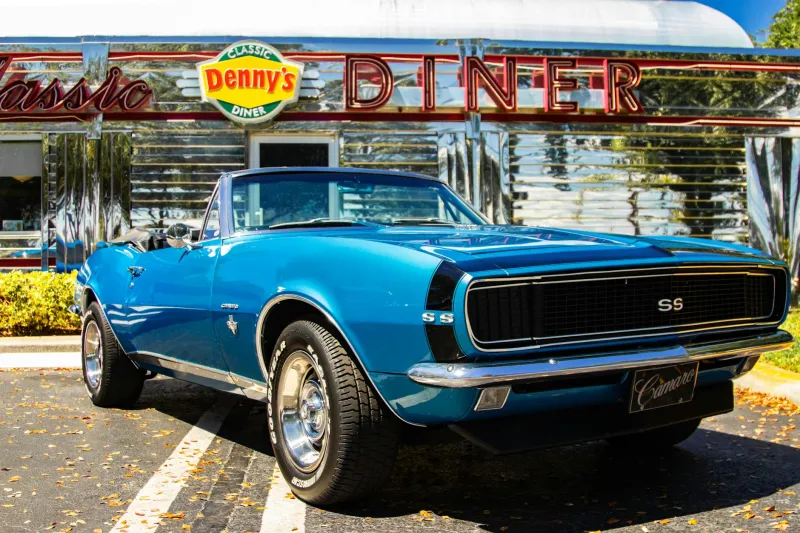
Picture this: you're driving cross-country in 1965, and hunger hits somewhere outside Barstow. You don't pull out your phone to find the nearest McDonald's—you slow down and scan the horizon for the telltale signs of a real meal. A chrome-sided railway car converted into a kitchen. Hand-painted signs promising "World's Best Pie." Neon that's seen better decades but still flickers with promise.
You pull into the gravel lot, and through the screen door comes the sound of coffee percolating, bacon sizzling, and conversations that have been going on since the Eisenhower administration. This was America's dining room, stretched along thousands of miles of two-lane blacktop.
The Birth of Highway Culture
The American roadside diner didn't start as a business plan—it started as survival. During the Great Depression, enterprising folks bought decommissioned railway dining cars for pennies on the dollar and parked them wherever hungry travelers might stop. These weren't restaurants in any traditional sense; they were rolling kitchens that had found permanent homes beside the road.
By the 1950s, the formula had evolved into something uniquely American. The classic diner combined the efficiency of a short-order kitchen with the intimacy of a small-town gathering place. Truckers knew which joints served coffee strong enough to keep them alert through Nevada. Families on vacation learned to spot the places where locals actually ate—the ones with pickup trucks in the parking lot and hand-written specials taped to the window.
Every diner had its own personality, shaped by whoever was brave enough to flip burgers for strangers at three in the morning. There was Mabel's outside Tucumcari, where the green chile cheeseburger could make grown men weep. The Silver Dollar near Flagstaff, where the waitress remembered how you liked your eggs even if you hadn't been through in two years. Places that existed nowhere else on earth, serving food that tasted like nowhere else on earth.
The Golden Miles of Route 66
Route 66 became the unofficial museum of American roadside dining. Between Chicago and Los Angeles, every town seemed to have its own interpretation of what a highway meal should be. These weren't chain restaurants following corporate recipes—they were local institutions that happened to serve travelers.
The economics were simple: provide good food, fast service, and a clean restroom, and people would stop. Word of mouth traveled at 55 miles per hour, passed from one driver to the next at gas stations and motor lodges. A reputation for bad coffee or surly service could kill a diner faster than a new highway bypass.
But when business was good, these places became the beating heart of American highway culture. They were where truckers shared road conditions, where families stretched their legs and their budgets, where traveling salesmen found something that reminded them of home.
When Speed Became Everything
The death of the roadside diner didn't happen overnight—it was a slow strangulation that began with the Interstate Highway System and accelerated with the rise of fast food.
Suddenly, travelers weren't meandering through small towns anymore; they were bypassing them entirely on ribbons of concrete that prioritized speed over discovery. The new highways demanded a different kind of dining—something visible from 70 miles per hour, something that could feed a family in ten minutes, something that tasted exactly the same whether you were in Ohio or Oregon.
Fast food chains understood this new reality better than the independent diner owners who had built their businesses on personal relationships and local flavor. McDonald's didn't promise the world's best burger; it promised the same burger, every time, everywhere. For America in a hurry, that was enough.
What We Lost in Translation
Today's highway dining landscape is a monument to efficiency. Every exit ramp features the same collection of corporate logos, the same predictable menus, the same climate-controlled dining rooms that could be anywhere in America—or nowhere in particular.
We gained consistency, but we lost discovery. We gained speed, but we lost stories. We gained convenience, but we lost the chance encounters that made long drives memorable.
The numbers tell the story: in 1960, there were over 6,000 independent roadside diners across America. Today, fewer than 2,000 remain, many of them struggling to compete with drive-throughs that can serve a family faster than a short-order cook can crack an egg.
The Last of the Holdouts
The diners that survive today aren't just restaurants—they're time machines. Places like the Double Eagle in Mesilla, New Mexico, or Rosie's Diner in Rockford, Michigan, where the coffee still comes in thick white mugs and the pie is still made from scratch every morning.
These holdouts remind us what we traded away when we chose convenience over character. They're proof that America's highways once had a soul, served up one plate at a time by people who understood that feeding travelers was about more than just filling stomachs.
The Road We Left Behind
The vanishing of the American roadside diner represents something larger than just a change in dining habits. It's a symbol of how we've streamlined the humanity out of travel, turning the journey into nothing more than the time between departure and arrival.
When we stopped eating at places that existed nowhere else, we stopped discovering the America that exists between the cities. We stopped meeting the people who make each mile unique. We stopped believing that the road itself might have something to offer beyond just getting us where we're going.
The chrome has faded, the neon has dimmed, and the coffee doesn't taste quite the same when it comes from a machine instead of a pot that's been brewing since dawn. But somewhere out there, if you know where to look and you're not in too much of a hurry, you can still find a piece of America's highway soul—served up with a side of hash browns and a story about the way things used to be.