When America's Living Rooms Had Wheels: The Drive-In Theater's Rise From Parking Lot to Cultural Phenomenon
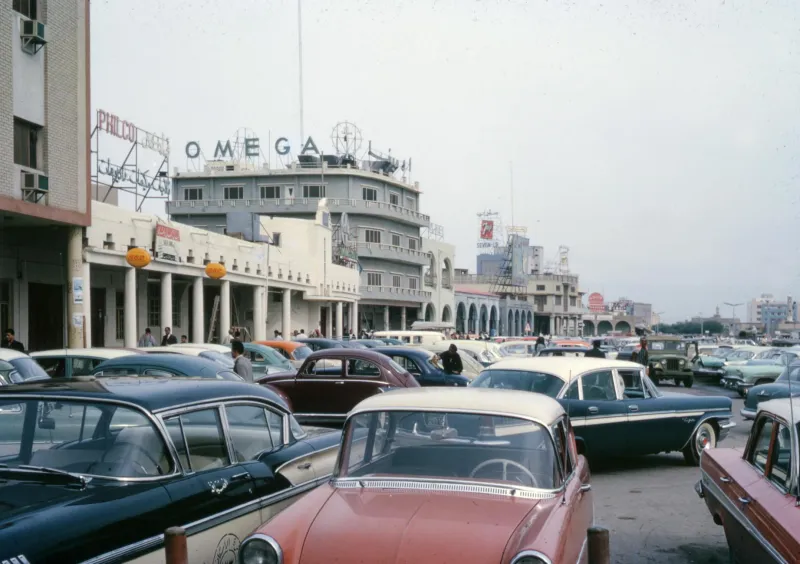
Picture this: It's a warm Saturday night in 1958, and families across America are loading blankets, popcorn, and pajama-clad children into their Chevrolets and Buicks for an evening at the movies. But instead of filing into theater seats, they're driving into what looks like a massive parking lot dotted with metal posts, each topped with a gray speaker box. Welcome to the drive-in theater, where America once watched movies from the comfort of its front seat.
At their peak in the late 1950s, more than 4,000 drive-in theaters dotted the American landscape, serving over 20 million customers annually. These weren't just movie venues—they were cultural institutions that redefined how families spent their evenings and how teenagers navigated romance.
The Genius of Richard Hollingshead's Backyard
The drive-in story begins in 1933 in Camden, New Jersey, where Richard Hollingshead Jr. had a problem. His mother was too large to comfortably fit in traditional theater seats, but she loved movies. So Hollingshead set up a 1928 Kodak projector in his driveway, hung a sheet between two trees, and positioned his car at various distances to test the concept.
What started as a son's solution to his mother's discomfort became a revolutionary entertainment format perfectly suited to America's growing car culture. Hollingshead's first drive-in opened on June 6, 1933, with the slogan "The whole family is welcome, regardless of how noisy the children are."
The timing couldn't have been better. Post-war America was experiencing unprecedented prosperity, suburban growth, and most importantly, near-universal car ownership. The drive-in theater became the perfect intersection of these cultural forces.
More Than Movies: A Complete Social Ecosystem
Drive-ins were never just about watching films. They evolved into complete entertainment complexes that served multiple functions in American social life. Families could arrive in pajamas, bring their own snacks, and let children play on the playground equipment installed beneath the screen during intermission.
For teenagers, drive-ins offered something revolutionary: privacy. Young couples could enjoy a date without parental supervision, leading to the drive-in's reputation as a "passion pit." Many theaters capitalized on this by showing double features, knowing that the second movie was often ignored in favor of more intimate activities.
The intermission became an art form unto itself. Elaborate animated shorts encouraged moviegoers to visit the concession stand, featuring dancing hot dogs and singing candy bars that became iconic pieces of Americana. These weren't just advertisements—they were entertainment that audiences anticipated and enjoyed.
The Golden Age: When Parking Lots Ruled Entertainment
The 1950s represented the absolute pinnacle of drive-in culture. Theater owners competed to create the most elaborate experiences, installing everything from miniature golf courses to full restaurants. Some drive-ins featured playgrounds with swings and slides, allowing parents to let children burn energy before the movie started.
The car itself became part of the entertainment infrastructure. Families would arrive hours early to claim the best spots, setting up elaborate tailgate-style arrangements with folding chairs, card tables, and picnic spreads. The automobile transformed from mere transportation into a mobile entertainment center.
Sound technology evolved specifically for drive-ins. The early systems used massive speakers that broadcast audio across the entire lot, but by the 1950s, individual car speakers provided personalized sound while maintaining the quiet necessary for neighboring vehicles.
The Perfect Storm of Decline
The drive-in's decline came from multiple directions simultaneously. Rising real estate values made large parking lots increasingly expensive to maintain, especially as suburban development pushed theaters further from city centers. The energy crisis of the 1970s made evening car trips less appealing, while the rise of television provided convenient home entertainment.
But the killing blow came from an unexpected source: daylight saving time. Extended summer daylight meant movies couldn't start until much later, pushing end times past midnight and making drive-ins impractical for families with children.
Multiplex theaters offered year-round operation, multiple movie choices, and climate-controlled comfort that drive-ins couldn't match. By 1990, fewer than 1,000 drive-ins remained, and by 2000, that number had dropped to around 400.
The Streaming Paradox: Why Drive-Ins Are Staging a Comeback
Here's the fascinating twist: just as streaming services seemed to spell doom for theatrical experiences entirely, drive-ins began experiencing an unexpected renaissance. The COVID-19 pandemic accelerated this trend, as drive-ins offered the only socially distanced movie experience available.
But the revival predated the pandemic. Millennials and Gen Z, raised on Netflix and smartphones, discovered something magical about watching movies under the stars from their cars. The very inconveniences that killed drive-ins in the 1980s—the need to plan ahead, the weather dependency, the limited scheduling—became part of their charm for generations seeking authentic experiences.
Modern drive-ins have adapted cleverly to contemporary expectations. Many now broadcast audio through FM radio rather than requiring speaker boxes, allowing moviegoers to use their car's sound system. Food trucks replace traditional concession stands, and some theaters offer craft beer and gourmet options alongside classic movie snacks.
What the Drive-In Taught Us About American Culture
The rise and fall of the drive-in theater tells a larger story about American values and how they've evolved. The drive-in represented peak American individualism combined with community experience—you were together with hundreds of other families, but each group maintained its own private space.
This format reflected a uniquely American approach to entertainment: informal, family-friendly, and centered around the automobile. Europeans never embraced drive-ins to the same extent because their cities weren't built around car culture the way American suburbs were.
The drive-in also represented a more relaxed approach to entertainment consumption. Unlike today's precisely timed streaming experiences, drive-in movies encouraged socializing, eating, and even sleeping. The movie was just one element of the overall experience.
The Future of Outdoor Entertainment
Today's drive-in revival suggests Americans never completely abandoned the desire for communal outdoor entertainment. Pop-up drive-in events now appear in shopping mall parking lots and sports stadiums, while traditional theaters experiment with rooftop screenings and backyard movie nights.
The format has evolved beyond movies too. Drive-in concerts gained popularity during the pandemic, and some venues now host everything from comedy shows to religious services, proving that the basic concept of car-based entertainment remains viable.
As we spend increasing amounts of time in digital environments, the drive-in's emphasis on physical presence, weather, and shared space feels almost revolutionary. It's entertainment that can't be paused, fast-forwarded, or consumed alone—qualities that may be exactly what modern America needs.
The drive-in theater's story isn't just about movies or cars—it's about how Americans have always sought to combine convenience with community, privacy with shared experience. In an age of isolated digital consumption, perhaps it's no surprise that parking lots under the stars feel like the future again.