From Clutch Control to Computer Control: How Real Driving Skills Became Extinct
The Art of Actually Driving
In 1975, if you couldn't parallel park a 1973 Buick Electra between two cars with maybe six inches of clearance on either side, you didn't get your license. Period. No backup cameras, no parking sensors, no automated steering. Just you, your mirrors, and the primal fear of scraping someone's bumper while a stone-faced DMV examiner watched your every move.
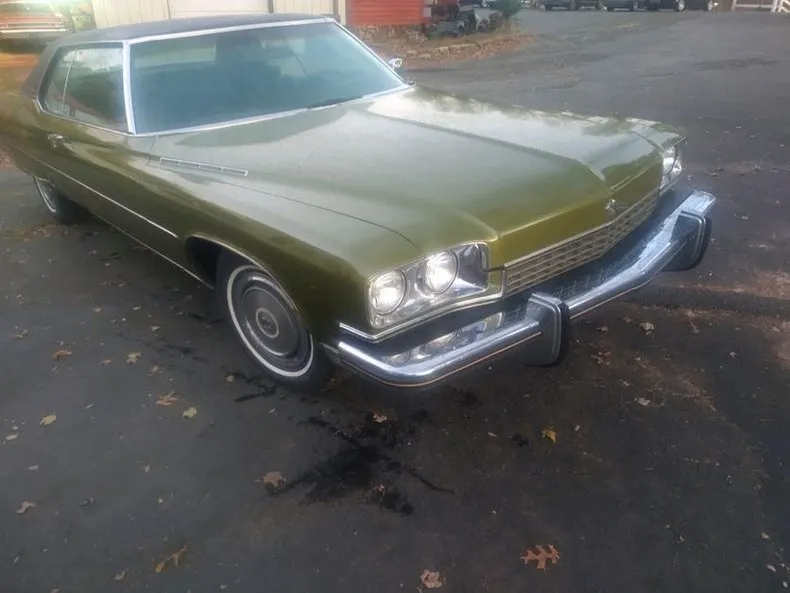 Photo: 1973 Buick Electra, via cdn.dealeraccelerate.com
That world is gone.
Today's driving tests have quietly evolved into something our parents wouldn't recognize. Where once you needed to demonstrate three-point turns, hill starts, and the ability to judge distances by eye, modern examiners increasingly work around the assumption that the car will handle the hard parts. Some states have even removed parallel parking from their tests entirely.
When Cars Demanded Respect
Driving in the 1960s and 70s required a completely different relationship with your vehicle. Manual transmissions were standard, not exotic. You learned to feel the clutch engagement point, to rev-match on downshifts, to start on hills without rolling backward into the car behind you. Power steering was a luxury option, meaning you actually felt the road through the wheel.
Parking required spatial intelligence. You estimated distances, used reference points on your car's body, and developed an almost supernatural sense of where your bumpers ended. Veteran drivers could slide a full-size sedan into spaces that would make today's drivers break out in a cold sweat.
Winter driving meant understanding weight transfer, knowing when your tires were about to break loose, and having the reflexes to correct a skid without thinking. No stability control, no traction control, no all-wheel drive computer deciding how much power went to which wheel. Just physics, experience, and quick hands.
The Gentle Takeover
The transformation didn't happen overnight. It crept in feature by feature, each one marketed as a convenience rather than a replacement for skill. Power steering made parking effortless. Automatic transmissions eliminated the clutch. Anti-lock brakes prevented wheel lockup.
By the 1990s, cars were becoming more forgiving. By the 2000s, they were becoming actively helpful. Backup cameras appeared, followed by parking sensors, then automatic parallel parking systems that could slide into spaces without any input from the driver.
Today's luxury cars can do things that would have seemed like science fiction to previous generations. They maintain following distances, stay centered in lanes, and park themselves while you stand on the sidewalk watching through a smartphone app.
The Skills We're Losing
What happens when an entire generation learns to drive in cars that do most of the work? We're conducting a real-time experiment, and the early results are telling.
Spatial awareness — the ability to judge distances and navigate tight spaces — is becoming a lost art. Many young drivers genuinely struggle with basic maneuvers like backing out of parking spaces or judging whether their car will fit through an opening.
The feel for vehicle dynamics that once came naturally is disappearing. Drivers who learned on stability-controlled cars often have no idea what their vehicle is doing at the limits of traction. They've never felt a car slide, never learned to catch and correct it.
Most concerning is the growing dependence on technology for basic navigation and decision-making. Drivers who can't read a paper map or estimate travel times without GPS aren't just technologically dependent — they're fundamentally less capable of independent problem-solving.
When the Technology Fails
This shift might not matter if the technology never failed. But it does. Sensors get dirty, cameras fog up, and systems malfunction at the worst possible times. When a driver who's never parallel parked manually suddenly needs to do it without assistance, the results can be genuinely dangerous.
Rental cars in unfamiliar cities become exercises in frustration when the backup camera doesn't work the same way as the one at home. Road trips through areas with poor GPS coverage reveal just how helpless we've become without constant technological guidance.
The Paradox of Safer Cars, Worse Drivers
Here's the strange part: cars have never been safer, but driving skills have never been worse. Modern vehicles can prevent accidents that would have been inevitable in earlier decades, but they've also created drivers who lack the fundamental skills to avoid those situations in the first place.
It's like having a generation of pilots who've only flown planes with autopilot, or cooks who've only used microwaves. The technology works beautifully until it doesn't, and then you discover that the basic skills were never developed.
What We've Gained and Lost
None of this is to say that automotive technology is bad. Anti-lock brakes save lives. Backup cameras prevent tragedies. Lane-keeping systems catch mistakes that could be fatal.
But something has been lost in the translation from driver to passenger. The confidence that comes from truly knowing your vehicle, the satisfaction of executing a perfect parallel park, the deep understanding of how cars behave at their limits — these were more than just skills. They were part of what made driving an art rather than just a means of transportation.
Today's drivers are safer than ever, but they're also more helpless than ever when the technology fails them. We've traded competence for convenience, and most of the time, that trade works out fine.
Until it doesn't.