Grease, Gut Feeling, and a Guy You Trusted: The Slow Death of the Neighborhood Mechanic
Grease, Gut Feeling, and a Guy You Trusted: The Slow Death of the Neighborhood Mechanic
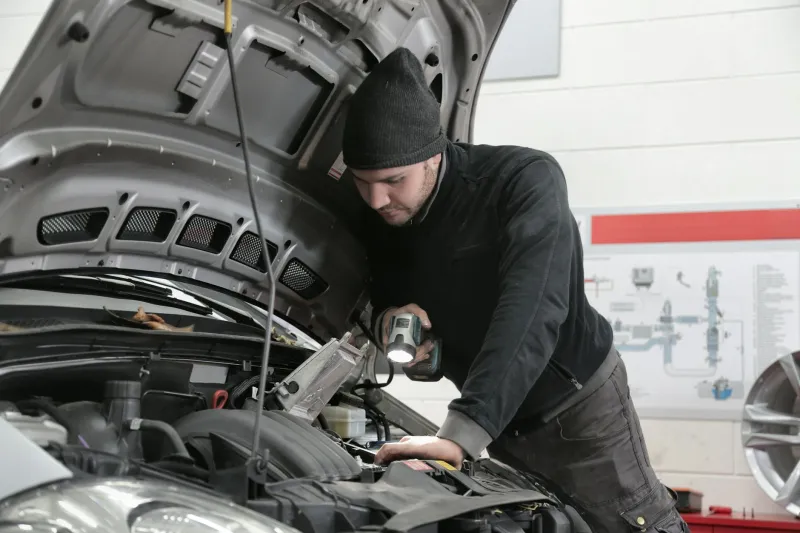
Picture a small garage on the edge of a residential street somewhere in 1968. Two bays. A hand-painted sign. A guy named Dave or Earl or Sal who's been working there since he got back from the service. He knows the sound your engine makes when it's happy and the sound it makes when it isn't. You pull in, describe the problem, and he fixes it — usually by the end of the day, usually for a price that doesn't require a payment plan.
That version of auto repair is mostly gone now. And the road from there to here is a lot more interesting than it might seem.
When a Wrench and Some Experience Were Enough
For most of the 20th century, car repair was a relationship-based trade. The mechanical systems under the hood were complex enough to require real skill, but they were also comprehensible — physical, visible, and logical. A carburetor was a carburetor. Timing could be set with a light and a steady hand. Brakes wore down in predictable ways. If you had decent tools, a repair manual, and enough stubbornness, you could handle a surprising amount yourself.
This gave rise to what became a genuine American institution: the shade-tree mechanic. Millions of people — not just professionals, but regular homeowners, farmers, teenagers learning from their dads — could perform meaningful repairs on their own vehicles. Changing your own oil, replacing brake pads, even rebuilding a carburetor were all things an ordinary person with moderate mechanical aptitude could reasonably accomplish on a weekend afternoon.
The neighborhood shop thrived in this environment. Small, independent garages were everywhere. They competed on trust and reputation rather than corporate branding. You went back because Dave had never steered you wrong, not because the waiting room had a coffee machine and a TV.
The Moment Everything Started to Change
The shift didn't happen all at once. It crept in gradually, beginning in the 1980s when federal emissions regulations pushed automakers to start integrating electronic control systems into their vehicles. The first onboard computers were modest things — monitoring a handful of sensors, adjusting fuel mixture, logging basic fault codes. But they represented a philosophical turning point.
By the 1990s, the OBD-II standard had been introduced, requiring all new vehicles sold in the US to include a standardized diagnostic port. On the surface, this seemed like a win for consumers — any shop could now plug in a reader and pull fault codes. And for a while, that was largely true.
But the vehicles themselves kept getting more complex. Engine management systems became more sophisticated. Transmissions went electronic. Stability control, anti-lock brakes, airbag systems, adaptive cruise control — each new feature added another layer of software, another network of sensors, another potential point of failure that a wrench alone couldn't diagnose.
The Computer Knows More Than You Do — But You Can't Ask It
Today's vehicles are, by any reasonable measure, engineering marvels. A modern car might contain over 100 million lines of code. Sensors monitor everything from tire pressure to lane position to the alertness of the driver. The engine management system makes thousands of adjustments per second that would have been unimaginable in 1970.
But here's the trade-off nobody fully advertised: that complexity has effectively locked most owners — and even many independent mechanics — out of meaningful repairs.
Dealer-exclusive diagnostic software is a real and growing problem. Many manufacturers restrict access to the deeper layers of their vehicle software, meaning that a fully qualified, experienced independent mechanic may not be able to complete certain repairs or recalibrations without paying for proprietary access tools that can cost thousands of dollars. Some advanced driver assistance systems require cameras and sensors to be recalibrated after even minor collision repairs — a process that often requires dealer equipment.
The Right to Repair movement has been pushing back on this for years, arguing that consumers and independent shops deserve access to the same tools and data that dealer networks use. Some progress has been made, particularly in Massachusetts, but it remains an ongoing fight.
What the Numbers Say
The economics of repair have shifted dramatically too. The average age of vehicles on American roads is now over 12 years — people are keeping their cars longer, partly because of reliability improvements, partly because new vehicles have become so expensive. But when something does go wrong on a modern vehicle, the repair bill reflects the complexity involved.
Labor rates at dealerships in major US cities now commonly run $150 to $200 per hour. Diagnostic fees alone — just for plugging in and reading the system — can run $100 to $200 before any actual work begins. A replacement key fob that would have cost nothing to duplicate in 1975 can run $300 or more for a modern proximity key, because it has to be programmed to the car's computer.
Something Real Was Quietly Lost
None of this means modern cars are worse. In almost every objective sense, they're dramatically better — safer, cleaner, more reliable, more efficient. A vehicle today will routinely travel 200,000 miles with basic maintenance in a way that would have seemed extraordinary in 1965.
But something intangible went away in the process. The sense that your car was yours to understand, yours to tinker with, yours to fix. The relationship with a local mechanic who knew your driving habits and your family. The Saturday afternoon in the driveway with a repair manual propped open on the fender.
The gateway between drivers and their vehicles has shifted from a handshake to a software interface. Whether that feels like progress probably depends on how much you miss the smell of a garage where someone actually knew your name.