When Your Neighbor Was Your Mechanic: The Saturday Morning Oil Change That Built Communities
The Ritual That Disappeared
Every Saturday morning in suburban America, you'd hear it: the metallic clank of a car jack hitting concrete, the scrape of a creeper rolling across asphalt, and the inevitable "Hey, can you give me a hand with this?" echoing from driveways up and down the block. Changing your car's oil wasn't just maintenance—it was a communal event that turned neighbors into mechanics and parking lots into impromptu repair shops.
Today, that Saturday morning symphony has been replaced by the hum of hydraulic lifts in corporate quick-lube bays, where your car disappears for 15 minutes and emerges with a fresh sticker reminding you to return in exactly 3,000 miles. The ritual is gone, and with it, something fundamental about how Americans once connected with their cars and their communities.
When Oil Changes Took All Morning
Back in the 1970s and 80s, changing your oil was an event that required planning, patience, and usually a friend with better tools than you had. You'd drive to the auto parts store—often a locally-owned shop where the guy behind the counter knew your car's quirks better than you did—and load up on oil, filters, and maybe a new air freshener shaped like a pine tree.
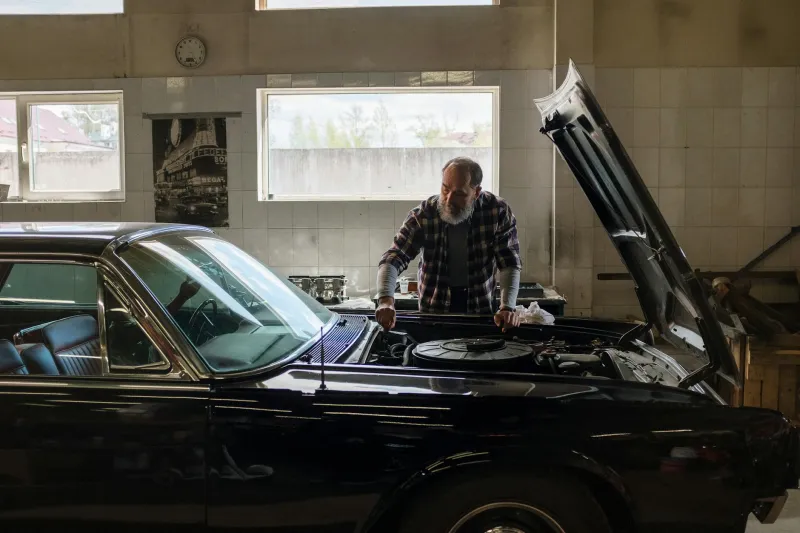
The process itself was methodical. You'd wait for the engine to cool, gather your tools, and find a reasonably level spot of concrete. If you were lucky, you had access to a garage with a pit or ramps. If not, you'd jack up the car in your driveway, hoping the neighbors wouldn't judge your technique too harshly.
"It was like a meditation," remembers Tom Richardson, who spent countless Saturdays under the hood of his 1976 Chevy Nova. "You couldn't rush it. You had to feel your way through each step, and if something went wrong, you figured it out right there on the spot."
The Neighborhood Knowledge Network
What made these DIY oil changes special wasn't just the hands-on experience—it was the community that formed around them. Neighbors would wander over to offer advice, share tools, or just chat while you worked. Kids learned by watching, absorbing lessons about problem-solving and self-reliance that went far beyond automotive maintenance.
Every neighborhood had its unofficial car guru: the guy who could diagnose problems by sound alone and always seemed to have the right wrench for the job. These weren't professional mechanics—they were teachers, accountants, and factory workers who just happened to understand that knowing your car meant more than knowing where to find the nearest service center.
"My dad taught me to change oil when I was twelve," says Maria Santos, now a software engineer in Austin. "But really, half the neighborhood taught me. Mr. Peterson would always come over to check that we'd tightened the drain plug properly, and Mrs. Chen would remind us to check the air filter while we were at it."
The Corporate Takeover
Then came the quick-lube revolution. Valvoline Instant Oil Change opened its first location in 1986, promising to change your oil in ten minutes without you ever leaving your car. Jiffy Lube had been around since 1979, but the concept really took off in the 90s as Americans became busier and less willing to spend their weekends crawling under cars.
The convenience was undeniable. Drive in, stay in your car, drive out. No mess, no tools required, no need to dispose of old oil. The corporate chains offered something the neighborhood ritual couldn't: predictability. Every location looked the same, used the same procedures, and promised the same result.
But something was lost in translation. The quick-lube experience is fundamentally transactional. You're a customer, not a car owner learning about your vehicle. The person changing your oil is following a checklist, not sharing knowledge. The entire interaction is designed to be forgettable—which is exactly the opposite of what those Saturday morning oil changes used to be.
What We Gave Up
Today's oil change experience is undeniably more convenient. You can schedule appointments through apps, receive text updates, and even stay in your car while technicians work. Some chains offer loyalty programs and subscription services that track your maintenance automatically.
But we've traded something irreplaceable: the deep familiarity with our cars that came from regular hands-on maintenance. When you change your own oil, you notice things. You see when brake pads are wearing thin, when hoses are starting to crack, when something just doesn't look right. You develop an intuitive understanding of your vehicle that no amount of dashboard warning lights can replace.
More importantly, we've lost the community aspect of car maintenance. Those Saturday morning oil changes weren't just about cars—they were about neighbors helping neighbors, knowledge passing from one generation to the next, and the satisfaction of solving problems with your own hands.
The Price of Convenience
The modern quick-lube industry processes millions of oil changes every year with remarkable efficiency. But efficiency isn't everything. The old way taught patience, problem-solving, and self-reliance. It connected people to their possessions and to each other in ways that our increasingly digital world rarely allows.
Some things can't be optimized without losing their essence. The neighborhood oil change was one of them—a ritual that built communities one Saturday morning at a time, and left Americans a little more connected to the machines that carried them through their daily lives.
In our rush toward convenience, we've created a world where cars have become appliances rather than companions, and maintenance has become a transaction rather than a skill. The oil may get changed faster now, but something essential about the American relationship with cars got left behind in those empty parking lots and quiet driveways where neighbors once gathered to keep their vehicles running.