The Day the Future Came to Town
Every January, the Detroit Auto Show transformed Cobo Hall into something between a museum and a crystal ball. Families would drive hours through Michigan snow just to walk among the concept cars and production models that represented next year's possibilities. Children pressed their faces against velvet ropes while their parents calculated loan payments on vehicles that wouldn't hit showrooms for another eight months.
This wasn't just shopping—it was pilgrimage. The auto show was where America came to see what tomorrow looked like, wrapped in chrome and steel and displayed under spotlights that made every paint job look like liquid jewelry. In 1989, the Detroit show drew over 800,000 visitors. By 2019, that number had dropped to fewer than 400,000, and then the pandemic arrived to accelerate a decline that had been building for years.
The question isn't just why attendance fell—it's why we stopped believing that cars could capture our imagination.
When Cars Were the Future
In the golden age of American auto shows, roughly from the 1950s through the 1980s, these events served as annual festivals of possibility. General Motors would unveil concept cars that looked like spacecraft. Ford would reveal muscle cars that promised to redefine performance. Chrysler would display luxury sedans that made suburban living feel glamorous.
The shows weren't just about cars you could buy—they were about cars that might exist, someday, if technology and imagination aligned correctly. The GM Firebird concepts of the 1950s featured jet engines and guidance systems borrowed from aerospace. The Ford Gyron concept balanced on two wheels. These weren't production vehicles; they were dreams made tangible, proof that American engineering could solve any problem and make it beautiful.
Families would spend entire weekends at these shows, moving from booth to booth like art gallery visitors. Children would collect brochures and model cars while their parents sat behind steering wheels of vehicles they couldn't yet afford, imagining themselves in something newer, faster, more stylish than whatever sat in their driveway at home.
The Theater of Automotive Desire
Auto shows mastered the art of controlled desire. Every car was positioned perfectly, lit dramatically, and surrounded by just enough space to make it feel precious. Attractive spokesmodels—a fixture of the era that wouldn't survive changing cultural attitudes—posed beside vehicles while trained presenters explained horsepower figures and interior features to crowds that hung on every word.
The experience was deliberately overwhelming. Visitors would encounter hundreds of vehicles in a single day, from economy cars to luxury sedans to pickup trucks that promised to transform weekend adventures. The sensory overload was part of the appeal—you left feeling like you'd glimpsed not just next year's lineup, but the entire future of American transportation.
Local newspapers would dedicate entire sections to auto show coverage. Television news would broadcast live from the show floor. Radio DJs would broadcast remote shows from major manufacturer displays. For one week each year, the auto show dominated local media coverage in ways that seem impossible to imagine today.
The Economics of Anticipation
From a manufacturer's perspective, auto shows were marketing investments that paid dividends for months. A successful show debut could generate orders before the first production vehicle rolled off the assembly line. Dealers would use show attendance to gauge customer interest and plan inventory. Banks would prepare financing packages based on the vehicles that generated the most show floor excitement.
The shows also served as competitive intelligence gathering. Manufacturers would study their rivals' displays, noting design trends, feature innovations, and marketing strategies. Industry journalists would analyze every detail, from paint colors to interior materials, looking for clues about where the market was heading.
For consumers, auto shows provided information that was otherwise difficult to obtain. This was before the internet made every specification instantly available, before YouTube reviews and comparison websites. The auto show was where you could actually sit in different cars, compare interior space, and get a feel for build quality without the pressure of a dealership sales floor.
When the Magic Started Fading
The decline of auto show attendance didn't happen overnight—it was the result of several converging trends that gradually reduced both the shows' relevance and their appeal.
The internet fundamentally changed how people researched vehicle purchases. Why drive to a convention center when you could explore every option from your home computer? Online reviews, detailed specifications, and high-resolution photos made the physical experience of seeing cars less necessary.
Manufacturing cycles accelerated, making the traditional annual reveal less significant. Instead of waiting for auto shows to unveil new models, companies began announcing vehicles throughout the year, whenever they were ready. The concentrated excitement of the annual show dispersed into a constant stream of product launches.
Cars themselves became less emotionally compelling. As vehicles became more reliable, more similar, and more focused on practical concerns like fuel efficiency and safety, they inspired less passion. The concept cars that once captured imaginations were replaced by hybrid sedans and electric crossovers that prioritized function over fantasy.
The Rise of Digital Everything
COVID-19 accelerated trends that were already reshaping the auto industry. Manufacturers discovered they could reach larger audiences through online events than physical shows. Virtual reality experiences allowed potential customers to "sit" in vehicles without leaving home. Live-streamed reveals could generate global audiences that no convention center could accommodate.
Younger consumers, raised on digital experiences, showed less interest in walking through convention centers to look at cars they could research more thoroughly online. The tactile experience that once defined auto shows—sitting in driver's seats, opening hoods, touching interior materials—became less important to buyers who prioritized specifications over sensations.
Social media also changed how automotive desire worked. Instead of waiting for annual shows to see the latest models, enthusiasts could follow manufacturers' Instagram accounts and see new vehicles as soon as they were photographed. The concentrated anticipation that made auto shows special was replaced by constant, low-level awareness of automotive developments.
What We Lost When We Stopped Looking
The decline of auto show attendance represents more than just a change in marketing strategy—it reflects a fundamental shift in how Americans relate to automobiles. Cars once represented possibility, status, and personal expression. Today, they're increasingly viewed as appliances—important, expensive appliances, but appliances nonetheless.
The families who once made annual pilgrimages to auto shows were participating in a collective dream about American mobility. They were imagining better versions of their lives, enabled by better vehicles. When we stopped gathering to admire sheet metal and chrome, we lost a shared ritual of optimism about technological progress.
The concept cars that once dominated auto shows have largely disappeared, replaced by production models that prioritize practicality over imagination. We gained efficiency and lost wonder. We gained convenience and lost the communal experience of marveling at human ingenuity.
The Future of Automotive Dreams
Today's auto shows, when they happen at all, attract industry professionals more than general consumers. The crowds of families that once defined these events have been replaced by journalists, dealers, and fleet managers conducting business rather than dreaming about possibilities.
Electric vehicles have created some renewed interest in automotive innovation, but it's different from the excitement that once surrounded muscle cars and luxury sedans. Tesla's direct-to-consumer model bypasses traditional auto shows entirely. Other electric vehicle manufacturers focus on online marketing rather than physical displays.
The death of the auto show as a mass cultural event reflects broader changes in American consumer behavior. We've become more practical, more informed, and more skeptical of marketing spectacle. We've also become more isolated, more likely to research major purchases alone rather than as shared family experiences.
The Last of the Believers
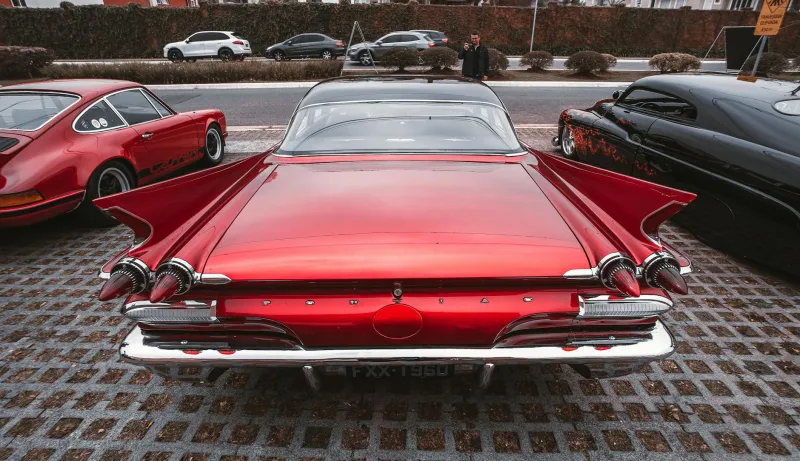
A few auto shows still draw crowds—SEMA in Las Vegas, Barrett-Jackson auctions, specialized events for classic cars or modified vehicles. But these cater to enthusiasts rather than general consumers. They celebrate automotive culture rather than automotive commerce.
These surviving events remind us what we lost when cars stopped being objects of desire and became mere transportation solutions. They preserve the idea that vehicles can be beautiful, exciting, and worthy of pilgrimage—even if most Americans no longer feel that way.
The empty convention centers that once hosted auto shows now accommodate trade shows for software companies and medical device manufacturers. The spotlights that once illuminated concept cars now highlight server racks and surgical robots. Progress has moved on, and apparently, so have we.
But somewhere in storage warehouses across America sit the brochures, model cars, and photographs that prove we once gathered by the hundreds of thousands just to touch tomorrow and dream about what we might drive there. That seems worth remembering, even if we're no longer interested in doing it.