The Weekly Parade Nobody Called a Parade
Every Sunday after church in 1962, the Patterson family from Toledo would perform the same ritual that millions of American families knew by heart. Dad would wash and wax the Impala until it gleamed. Mom would change into her second-best dress—the one too nice for church but perfect for being seen in public. The kids would be scrubbed clean and pressed into their Sunday clothes, hair combed with water and determination.
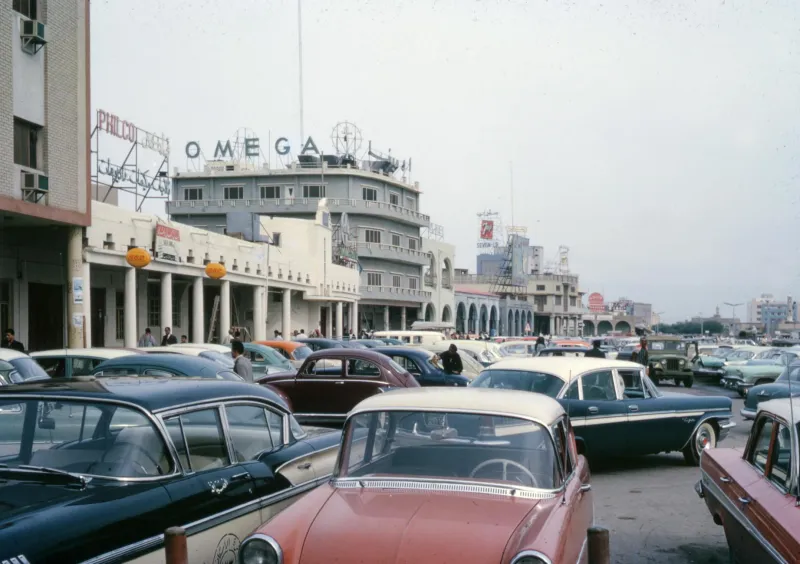
Then they would drive. Not to anywhere in particular, but through the neighborhoods they wanted to see and be seen in. Past the new subdivisions where the successful families lived. Down Main Street where other families were doing exactly the same thing. Through the tree-lined streets where the big houses sat back from the road like quiet statements about who had made it in America.
This wasn't transportation—it was performance. The Sunday drive was as much a part of American weekend routine as church services or family dinner, and for many families, it was just as important.
When Cars Were Still Magic
To understand the Sunday drive, you have to remember that car ownership was still relatively new for most American families in the 1950s and 1960s. Your grandfather might have walked to work his entire life. Your parents were among the first generation for whom a family car wasn't a luxury but an expectation—and they never quite got over the novelty.
The car wasn't just transportation; it was proof that you had arrived in the American middle class. It was a rolling display of your taste, your values, and your success. The chrome was polished to mirror brightness not because it needed to be, but because it was going to be seen by everyone who mattered in your community.
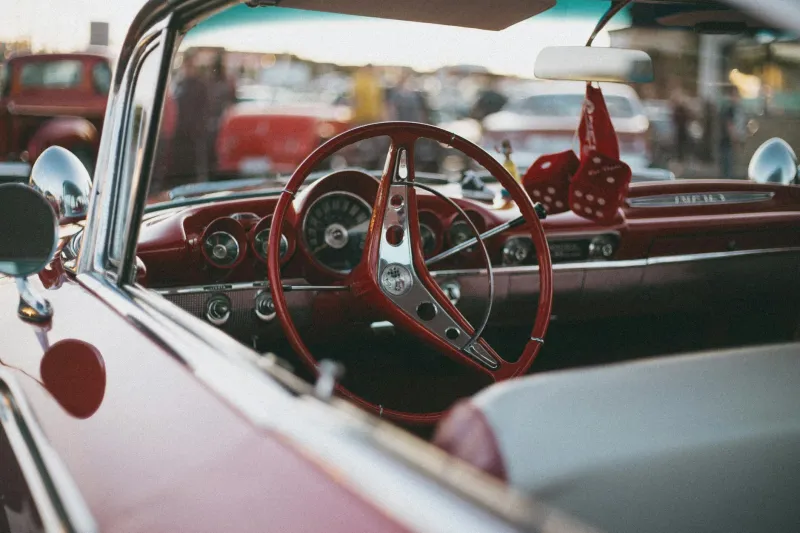
Families would spend genuine money on car accessories that served no functional purpose: fuzzy dice, custom seat covers, hood ornaments, whitewall tires. These weren't practical choices—they were statements about who you were and what you valued.
The Social Geography of Slow Motion
The Sunday drive had its own unspoken rules and routes. You drove slowly—not because you had to, but because the point was to see and be seen. You kept the windows down so neighbors could wave. You took the long way through the nicest parts of town, the parts where you aspired to live someday.
Kids would count different car models like a game. Families would comment on new houses being built, lawns being landscaped, neighbors washing their own cars in driveways. It was social media before social media existed—a way to stay connected to your community's rhythms and changes.
The drive usually ended at a specific destination: the local drive-in restaurant, an ice cream stand, or a scenic overlook where dozens of other families would be parked, doing exactly the same thing. These weren't random choices—they were the designated endpoints of a community ritual that everyone understood.
When Driving Had No GPS Destination
What's almost impossible to explain to someone who grew up with smartphones is how aimless these drives actually were. There was no Google Maps calculating the most efficient route, no Yelp reviews determining where you'd stop for ice cream. The route itself was improvised, conversational, democratic.
"Let's see what they're doing with that new shopping center."
"Drive past the Johnson house—I heard they're getting a divorce."
"Take the long way home through Maple Heights."
The car became a mobile living room where families talked without the distractions of television or household chores. Parents pointed out changes in the neighborhood. Kids argued about whether the new Cadillac was prettier than last year's model. Grandparents told stories about what these same streets looked like when they were young.
The Death of Purposeless Driving
By the 1980s, the Sunday drive was already becoming a relic. Gas crises made aimless driving seem wasteful. Cable television and video games offered more engaging entertainment than slowly cruising through suburban neighborhoods. Shopping malls provided climate-controlled alternatives to drive-in restaurants.
But the real death blow was cultural. Cars stopped being symbols of arrival and became appliances. The novelty wore off. Owning a car became so universal that it no longer marked you as special or successful. The performative aspect of the Sunday drive—the need to be seen in your car—lost its social meaning.
Today's families are more likely to spend Sunday afternoons at organized activities: soccer games, birthday parties, trips to specific destinations planned around specific purposes. The idea of getting dressed up just to drive around with no particular goal seems as quaint as listening to radio dramas or playing parlor games.
What We Lost in Translation
Modern Americans still take leisure drives, but they're different animals entirely. Scenic routes are researched online and chosen for their Instagram potential. Road trips are planned with military precision, optimized for efficiency and documented for social media. Even recreational driving has become purposeful, goal-oriented, productive.
The Sunday drive represented something that's almost extinct in American life: time spent together without any particular agenda. It was slow, inefficient, and seemingly pointless—which was exactly the point. It was family time disguised as transportation, community connection disguised as leisure.
In our current era of optimized everything, the idea of spending two hours driving slowly through neighborhoods just to see what's happening seems almost wasteful. But those Sunday afternoon drives represented a different relationship with time, with family, and with the communities we live in.
The End of an American Sunday
The Sunday drive died not because cars became less important to American life, but because they became too important. When cars transformed from special possessions into necessary tools, they lost their power as symbols worth displaying. When driving became something we do to get somewhere rather than something we do to be somewhere, the social ritual that surrounded it simply evaporated.
Looking back, those slow Sunday afternoon drives through American neighborhoods represent a brief moment when families had time to waste, communities were small enough to navigate in an afternoon, and the simple act of being seen in your car was entertainment enough for an entire family. It's a lost art that most Americans today wouldn't even recognize as something worth missing.