When Strangers Were Just Friends You Hadn't Met
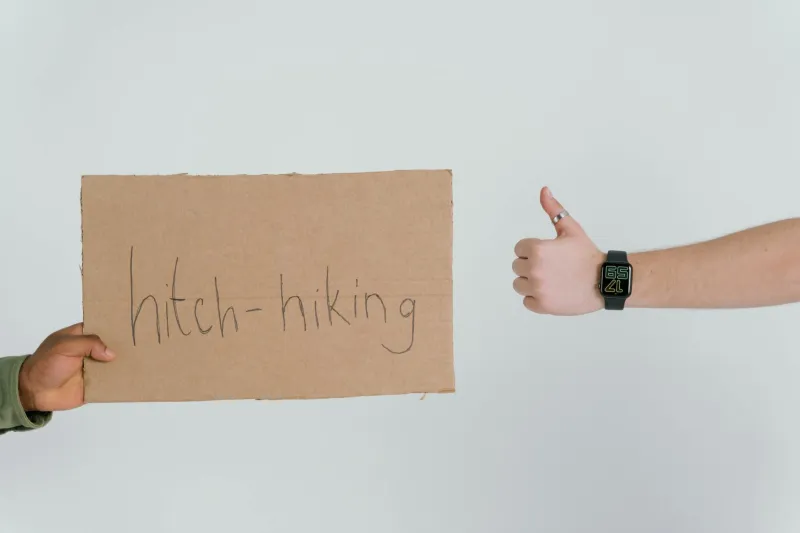
Stand on any American highway in 1969, stick out your thumb, and you'd likely catch a ride within minutes. Hitchhiking wasn't desperate or dangerous—it was just another way to get around, as normal as catching a bus or hailing a taxi. College students thumbed their way across the continent for summer adventures. Workers caught rides to job sites. Soldiers in uniform never waited long for someone to pull over and offer them a lift home.
The roadside thumb was America's unofficial transportation network, built entirely on trust between strangers. No apps, no background checks, no payment systems—just an unspoken agreement that if someone needed a ride and you had an empty seat, you'd probably help them out.
The Golden Age of the Open Road
The late 1960s and early 1970s represented hitchhiking's peak in American culture. An estimated 2.5 million people were regularly thumbing rides by 1973, according to studies from that era. It wasn't just hippies and counterculture figures—mainstream Americans of all ages used hitchhiking as routine transportation.
Highway rest stops had designated hitchhiking areas. Some college campuses maintained ride boards where students could arrange to share hitchhiking routes. The practice was so common that etiquette guides emerged, teaching proper thumb technique and roadside safety. Standing near on-ramps was considered good form; blocking traffic was not.
Families driving cross-country would regularly pick up hitchhikers for company on long stretches. Many drivers appreciated having someone to talk to during boring interstate miles, and hitchhikers often helped with gas money or driving duties. It was a system that worked for everyone involved.
When the Fear Crept In
The shift away from hitchhiking didn't happen overnight, but it was remarkably swift once it began. By the early 1980s, what had been normal behavior for millions of Americans had become something most people wouldn't consider under any circumstances.
Several high-profile crimes involving hitchhikers—both as victims and perpetrators—dominated news coverage in the mid-1970s. The media began portraying roadside thumb-seekers as potential threats rather than fellow travelers in need of help. Movies like "The Hitcher" reinforced the idea that picking up strangers was an invitation to disaster.
But the real killer of hitchhiking culture wasn't fear of crime—it was the fundamental reorganization of American life around the automobile and suburban sprawl.
The Infrastructure That Killed Spontaneity
As interstate highways replaced smaller roads, hitchhiking became both more dangerous and less practical. Standing on the shoulder of a 70-mph highway wasn't safe, and the limited access design of interstates meant fewer opportunities for drivers to safely stop and pick up riders.
Suburban development patterns made hitchhiking irrelevant for most daily transportation needs. When everyone lived in subdivisions designed around car ownership, there weren't many places worth walking to, let alone thumbing toward. The American landscape was being rebuilt in ways that assumed everyone had their own vehicle.
Meanwhile, car ownership rates soared. In 1960, about 77% of American households owned at least one car. By 1980, that figure had jumped to 86%. When nearly everyone had access to a car, the social pressure to help stranded travelers diminished. Why pick up hitchhikers when they should have their own transportation?
The Rise of Stranger Danger
The 1980s brought a cultural obsession with "stranger danger" that extended far beyond hitchhiking. Parents stopped letting children walk to school alone. Neighborhoods that had operated on casual trust began locking doors and installing security systems. The idea of voluntarily getting into a car with someone you'd never met became unthinkable for many Americans.
This shift reflected broader changes in how Americans thought about risk and community. The tight-knit neighborhoods and social connections that had made hitchhiking feel safe were disappearing, replaced by more anonymous suburban environments where neighbors barely knew each other.
Law enforcement agencies began actively discouraging hitchhiking, citing safety concerns. Many states passed laws restricting or banning the practice on major highways. What had once been seen as resourceful became officially problematic.
When Technology Replaced Trust
The final nail in hitchhiking's coffin wasn't fear—it was convenience. Cell phones meant stranded motorists could call for help rather than relying on passing strangers. Credit cards made it easier to afford alternative transportation. Eventually, rideshare apps like Uber and Lyft provided the convenience of hitchhiking with the safety of a regulated system.
These technological solutions addressed the practical needs that hitchhiking had once filled, but they eliminated the human connection that had made roadside thumb-seeking special. Uber drivers and passengers rarely become friends. There's no shared adventure, no stories traded over hundreds of highway miles.
What We Lost on the Roadside
The death of hitchhiking culture represents more than just a change in transportation habits—it reflects a fundamental shift in how Americans relate to strangers and risk. The generation that routinely picked up hitchhikers grew up in communities where helping neighbors was expected and trusting strangers was normal.
Today's Americans are arguably safer in their cars, with GPS navigation and emergency services just a phone call away. But something intangible was lost when we stopped being willing to help strangers on the roadside. The casual generosity that made hitchhiking possible was part of a broader social fabric that held communities together.
The Ghost of the American Road
You can still occasionally spot hitchhikers on American highways, but they're rare enough to seem like anachronisms. Most drivers pass them without a second glance, not out of cruelty but because the idea of stopping simply doesn't occur to modern motorists.
The infrastructure of trust that supported hitchhiking—the shared assumption that strangers were generally decent people worth helping—took decades to build and only a few years to dismantle. Once that social contract was broken, it became nearly impossible to restore.
Rideshare apps have brought back some elements of hitchhiking, but they're mediated by technology, ratings systems, and corporate oversight. The spontaneous human connection that defined roadside thumb-seeking is gone, replaced by efficient but impersonal digital transactions.
The open road is still there, but the open hearts that once made hitchhiking possible have largely closed. America's highways carry more traffic than ever, but they've become lonelier places for anyone without their own set of wheels.