The Silent Conversation Between Government and Drivers
Every drive in mid-20th century America was a one-way conversation. The government spoke through chunks of metal bolted to posts, and drivers had to pay attention or risk missing critical information entirely. No second chances, no voice repeating directions, no screen showing alternate routes. Just you, your windshield, and whatever message someone had decided to paint on a sign months or years earlier.
This wasn't a backup system or a quaint supplement to better technology—it was the entire communication infrastructure between authorities and the millions of Americans navigating the nation's roads. Every speed limit, every warning about dangerous curves, every indication of which lane led where had to be conveyed through static metal rectangles that drivers passed at 60 miles per hour.
When Every Sign Was Hand-Painted and Locally Managed
Before the 1960s, American road signage was a chaotic patchwork of local decisions and artistic interpretations. Each state, county, and municipality created its own signs using whatever materials, colors, and fonts seemed appropriate to local officials. Driving across state lines meant adapting to entirely different visual languages.
Some places used wooden signs with hand-painted lettering that faded within a few seasons. Others invested in elaborate neon displays that looked more like advertising than official guidance. Rural counties might nail hand-carved wooden boards to fence posts, while wealthy suburbs installed ornate stone markers that prioritized aesthetics over visibility.
The result was a system that worked fine if you knew the local conventions but could be completely bewildering to travelers. A red octagonal sign meant "stop" in most places, but the exact shade of red, the style of lettering, and even the size could vary dramatically from one jurisdiction to another.
The Federal Standardization Revolution
World War II changed everything. Military planners realized that inconsistent signage was a national security problem—troops and supplies needed to move efficiently across state lines, and local sign variations were causing dangerous delays and confusion.
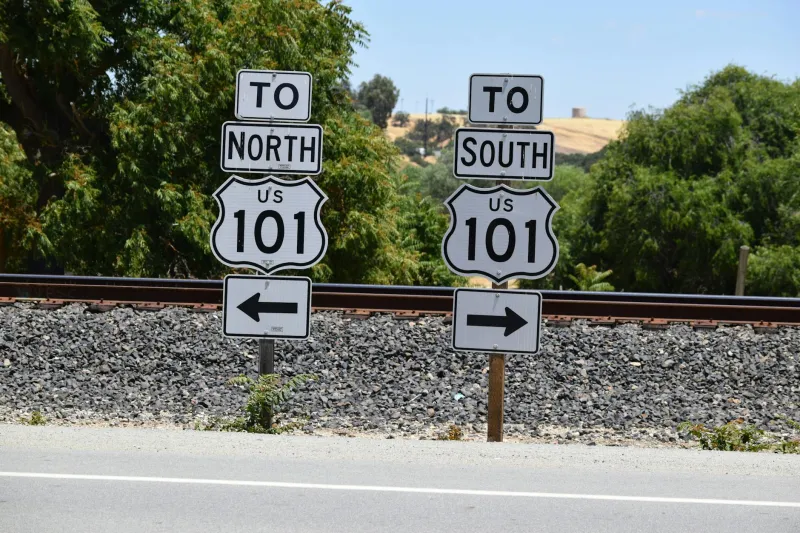
In 1961, the federal government published the Manual on Uniform Traffic Control Devices (MUTCD), establishing national standards for road signage. Suddenly, every stop sign had to be the same shade of red, every speed limit sign had to use identical fonts and proportions, and every highway marker had to follow strict design specifications.
This standardization was revolutionary, but it also revealed how much responsibility was being placed on static signs. A single piece of metal had to communicate complex information to drivers traveling at high speeds, in all weather conditions, during day and night. The signs had to work for teenagers learning to drive and elderly motorists with declining vision, for locals familiar with the area and tourists seeing it for the first time.
The Cognitive Load of Constant Vigilance
Driving in the pre-digital era required a level of attention that modern drivers can barely imagine. You couldn't rely on a voice to remind you when your exit was approaching—you had to spot the sign yourself, process the information quickly, and make navigation decisions in real-time with no backup system.
Missing a sign could mean driving hundreds of miles out of your way. There was no "recalculating route" or "turn around when possible." If you missed the turnoff for Highway 40 West, you might not get another chance for 50 miles, and you'd have no electronic assistant to help you figure out how to get back on track.
This created a driving culture where reading signs was a survival skill. Experienced drivers developed techniques for scanning the roadside systematically, processing sign information quickly, and making split-second decisions based on limited visual cues. Passengers often served as co-navigators, helping spot important signs and calling out crucial information.
When Signs Carried the Full Weight of Safety
Beyond navigation, road signs were the only way authorities could warn drivers about hazards. A sharp curve ahead, a steep downgrade, a school zone—all of these life-and-death situations had to be communicated through static signs that drivers might or might not notice in time.
Sign placement became a science. Engineers calculated sight distances, measured reaction times, and positioned warnings at precisely calculated intervals to give drivers adequate time to respond. But the system only worked if drivers were actively looking for and processing sign information.
Compare that to today's roads, where your car might automatically slow down in school zones, GPS apps warn you about speed traps ahead, and electronic signs can display real-time information about road conditions. Modern drivers have multiple layers of technological assistance that their predecessors couldn't imagine.
The Rise of the Electronic Conversation
The first electronic road signs appeared in the 1960s, but they were expensive novelties used only for major highways and special situations. Most drivers didn't encounter variable message signs until the 1980s, and even then, they were primarily used for basic traffic updates.
Today's roads never stop talking. GPS navigation provides turn-by-turn directions with voice prompts. Electronic signs display real-time traffic conditions, weather alerts, and Amber alerts. In-car systems monitor your speed and warn you when you're exceeding posted limits. Some newer vehicles can even read road signs automatically and display the information on your dashboard.
This technological evolution has fundamentally changed the relationship between drivers and road infrastructure. Instead of having to actively seek out information from static signs, modern drivers are constantly receiving input from multiple electronic sources.
The Attention Paradox of Modern Driving
But all this technological assistance may have created an unexpected problem. When drivers had to rely entirely on road signs for information, they developed habits of visual scanning and attention that kept them engaged with their environment. Modern drivers, surrounded by electronic aids, may actually be paying less attention to the road itself.
Studies suggest that GPS-dependent drivers have poorer spatial awareness and are more likely to miss important environmental cues. When your phone tells you exactly when to turn, you don't develop the same map-reading skills that previous generations considered essential.
The irony is striking: roads that communicate more information than ever may be producing drivers who are less aware of their surroundings than their predecessors who had to rely on simple metal signs.
What We Gained and Lost in Translation
Modern road communication is undeniably safer and more efficient than the static sign systems of the past. Electronic warnings can respond to changing conditions, GPS navigation reduces the stress of unfamiliar routes, and in-car systems can alert drivers to hazards they might miss.
But something was lost in the transition from metal signs to electronic voices. The old system required active engagement and developed driver skills that went beyond just following directions. When every piece of information had to be gathered visually from the roadside, drivers stayed more connected to their physical environment.
Today's roads are smarter, but they may be creating drivers who are more passive consumers of information rather than active participants in navigation. The metal signs are still there, of course, but they're increasingly overshadowed by the electronic voices that never stop talking. Whether that's progress or just a different kind of problem remains to be seen.