Circling the Block Was a Skill: What We Lost When Parking Became an App Notification
There was a time, not long ago, when arriving downtown was a negotiation. You circled the block with one eye on the road and the other on pedestrians who had that look — keys out, walk with purpose — of someone about to surrender a spot. You knew which side of the street turned over at 4 p.m., which garage had the flat rate after 5, and which metered stretch was secretly the best deal in a three-block radius. Parking wasn't a transaction. It was a talent.
Today you tap an app, reserve a space, and roll through an automated gate that photographs your plate. Convenient? Enormously. But look at the numbers, and the story gets interesting.
When a Quarter Bought the Hour
In the 1950s and 60s, when America's downtowns were at their commercial peak, parking was almost comically cheap. Meters installed in the 1930s — Oklahoma City was the first city, in 1935 — typically charged a nickel or a dime. Even into the 1980s, a quarter commonly bought a full hour in many cities, and meters still accepted them one at a time.
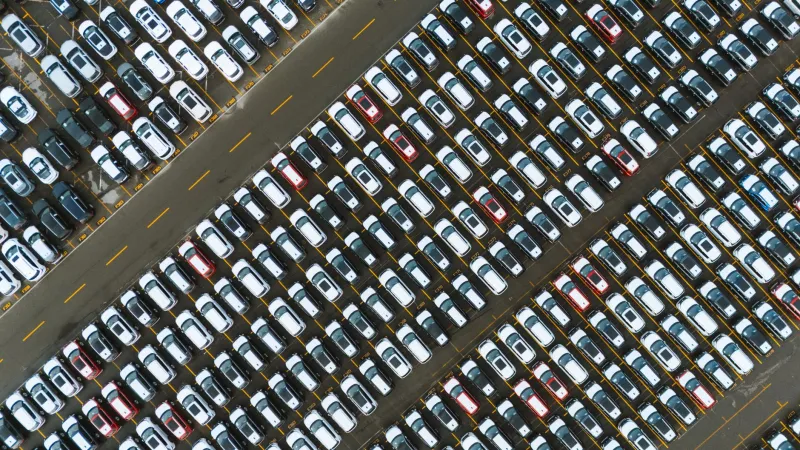
The real cost was hidden in the real estate. Postwar America became obsessed with storing cars. Towns passed minimum parking requirements that forced every new building to include a certain number of spaces, and entire downtown blocks were knocked down to build surface lots. Some estimates suggest that by the 2010s, there were more than two billion parking spaces in the United States — roughly eight for every car in the country.
That's not just asphalt. That's land, and land in a city center is the most expensive thing there is.
The Price of the Spot, Then and Now
Here's where the then-vs-now comparison gets sharp. In 1970, parking in a prime downtown garage in Chicago or Boston might run you $1 or $2 for the day. Adjusted for inflation, that's somewhere around $8 to $16 in today's money. What do those garages charge now? In many big American cities, daily rates run $40 to $70, and monthly downtown parking in Manhattan can exceed $600 — more than many people's car payment.
Monthly parking in midtown Manhattan has climbed past $600 in recent years — a figure that, for many commuters, exceeds the monthly cost of the car they're parking.
Even small cities have seen rates triple since the 1990s, far outpacing inflation. Why? Because cities gradually realized that free or cheap parking was a subsidy with a staggering bill. Every 'free' spot costs money to build — often $25,000 to $50,000 per structured space — and every cheap spot encourages more driving, more congestion, and less productive use of downtown land.
The App Changed the Market, Not Just the Method
Into this economics arrived the apps. Reserving a spot in advance, comparing garage prices before you leave home, paying by plate at an automated gate — these tools did something the old circling-the-block ritual never could: they made parking prices visible and comparable.
And visibility changed behavior. Drivers discovered that the lot two blocks away was half the price. Garages discovered they could use dynamic pricing, charging more for lunch rush than for Tuesday morning. Some cities experimented with demand-based meter pricing — San Francisco famously tried it — raising rates on crowded blocks and lowering them on empty ones, essentially turning curb space into a commodity with a fluctuating market price.
The old-timer's intuition — knowing the block, knowing the hour — has been replaced by a marketplace. In strictly financial terms, the app user usually wins. The person who circles for fifteen minutes 'to find a free spot' is burning gas and time that often costs more than the reservation fee.
The Ledger So Far
So did we come out ahead? The honest answer is: it depends which column you're reading.
We pay dramatically more in dollars and dramatically less in frustration. The $45 downtown garage fee stings precisely because we can see it itemized; the fifteen minutes of circling in 1985 cost nothing visible, which is exactly why it felt free. Behavioral economists call this the pain of paying — apps made the pain explicit, and in doing so, made many of us grumpier even as we spent our time better.
Meanwhile, the old system's hidden costs — the demolished blocks, the sea of empty required spaces, the congestion of everyone hunting at once — never appeared on any receipt. The apps didn't create expensive parking. They just turned on the lights in a room that was always this expensive.
The next time your phone buzzes with a reserved spot and a $38 charge, you can be annoyed. But you might also spare a thought for your grandfather, circling the block in 1975, burning a gallon of gas to save fifty cents — and feeling, the whole time, like he was winning.