Gas Stations, Paper Maps, and No AC: What a Cross-Country Drive Actually Looked Like 60 Years Ago
Gas Stations, Paper Maps, and No AC: What a Cross-Country Drive Actually Looked Like 60 Years Ago
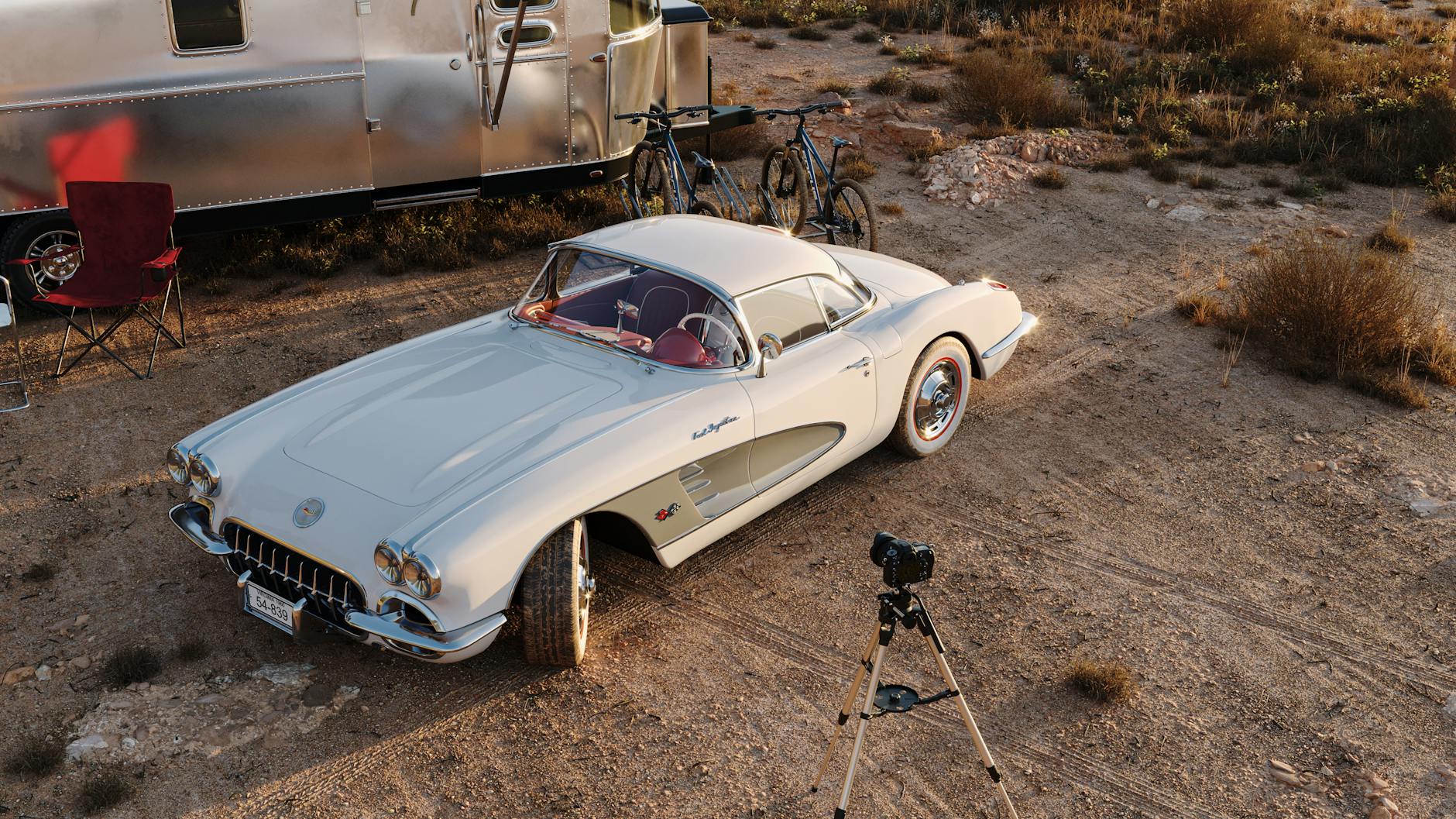
There's something deeply American about loading up a car and heading out across the country. The freedom of the open road, the motels, the diners, the endless stretch of highway disappearing into the horizon — it's practically mythology at this point. But here's the thing: if you actually climbed into a 1963 Chevrolet Impala and tried to recreate a classic cross-country road trip today, you'd be in for a rude awakening. The romance of the era was real. The comfort? Not so much.
The American road trip has changed more dramatically than most of us appreciate, and not just because of GPS. The differences run deeper — into fuel costs, car reliability, safety, and even how long it physically took to get somewhere.
You Had to Actually Know Where You Were Going
Before we get into engines and airbags, let's talk navigation — or the spectacular lack of it. In the 1960s, planning a road trip meant a visit to your local AAA office to pick up a TripTik, a spiral-bound booklet of hand-drawn maps customized to your specific route. It was actually a pretty impressive service for its time. The alternative was a paper road atlas, which you'd unfold across the steering wheel — yes, while driving — and hope you hadn't already missed your turn.
Getting lost wasn't a minor inconvenience. It could cost you hours. Pull off at a gas station, ask the attendant (more on them in a second), get conflicting directions, and carry on. There was no recalculating. There was no satellite telling you there was a wreck 12 miles ahead and suggesting an alternate route through Amarillo.
Today, your phone knows your exact position to within a few feet, warns you about speed traps, accounts for road construction, and can reroute you in real time. Google Maps alone has probably saved American drivers millions of collective hours of frustration. It's the kind of shift that sounds obvious when you say it out loud, but the lived reality of navigating without it was genuinely stressful.
The Gas Station Was a Full-Service Experience
Pull into a filling station in 1965 and something remarkable happened: a human being came out to greet you. They pumped your gas. They checked your oil. They cleaned your windshield. They might even check your tire pressure without being asked. This was just... how it worked. Full-service stations were the norm across most of the country well into the 1970s.
Of course, you were paying around 30 cents a gallon for that privilege. That sounds like a bargain until you adjust for inflation — 30 cents in 1965 is roughly $3.00 in today's money, which actually puts it right in line with what Americans were paying at the pump for much of the 2010s. The price per gallon hasn't changed as dramatically as people assume. What has changed is fuel efficiency. A typical American family car in the mid-1960s got somewhere between 12 and 16 miles per gallon. A modern mid-size sedan routinely hits 35 mpg or better. You're going roughly twice as far on the same tank.
The Car Itself Was a Different Beast
Here's where the gap really opens up. A 1960s American road tripper was dealing with a vehicle that, by modern standards, was almost comically unreliable. Breakdowns weren't rare events — they were a genuine part of the planning process. You carried spare belts. You knew how to check the radiator. You had a contingency plan for when (not if) something went wrong somewhere in the Nevada desert with no cell service and no one for 40 miles.
Overheating was a constant threat on long summer drives. Carburetors flooded. Electrical gremlins were practically a feature, not a bug. And tires? Blowouts happened with a frequency that modern drivers simply don't experience. Today's radial tires, combined with tire pressure monitoring systems that alert you before a problem becomes a crisis, have made roadside tire changes a genuine rarity.
Modern engines, controlled by sophisticated onboard computers, are almost absurdly reliable by comparison. It's not unusual for a well-maintained contemporary vehicle to hit 200,000 miles without a major mechanical failure. That kind of longevity would have seemed like science fiction to a driver in 1965.
How Long Did It Actually Take?
The Interstate Highway System — Eisenhower's great gift to American mobility — was still being built throughout the 1960s. Large sections didn't exist yet. This meant that a coast-to-coast trip from New York to Los Angeles might involve significant stretches on two-lane US routes, navigating through town centers, stopping at traffic lights, and crawling through small cities that hadn't yet been bypassed by a proper freeway.
A cross-country drive in 1960 could realistically take eight to ten days if you were doing it at a reasonable pace. Today, with a fully connected interstate network, the same trip takes four to five days of serious driving — or you can blast through it in three if you're motivated and have a co-pilot who handles the playlist.
The Motel at the End of the Day
After eight hours behind the wheel with no cruise control, no climate system worth speaking of, and a back seat that felt like a park bench, you'd pull into a roadside motel. These places were wonderfully utilitarian — a bed, a bathroom, maybe a black-and-white television with three channels, and if you were lucky, a window unit that made a sound like a lawnmower but technically produced cold air.
Today's road tripper has access to real-time pricing across hundreds of hotel brands, reads reviews before booking, streams Netflix on arrival, and wakes up to a continental breakfast with a waffle iron. The gap in comfort is enormous.
The Road Is Still the Road
For all the technology layered on top of it, the core appeal of the American road trip hasn't changed. The sense of movement, of watching the landscape shift from the Appalachians to the plains to the desert, of stopping somewhere unexpected because a sign looked interesting — that's still there. It's just wrapped in a lot more comfort and a lot less uncertainty than it used to be. And honestly? That's not a bad trade.