Remember When You Could Borrow a Car for Hours? The Lost Era of Real Test Drives
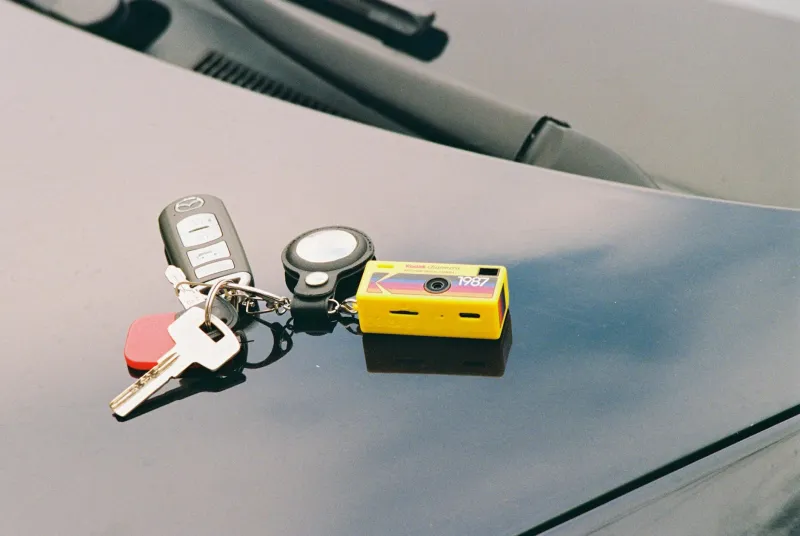
The Saturday Afternoon Car Loan
Picture this: It's 1985, and you walk into a Chevrolet dealership in suburban Detroit. You've been eyeing that new Monte Carlo in the window, and after a brief chat with the salesman, he tosses you the keys. "Take her home for the weekend," he says with a grin. "See how she feels with your daily commute."
Sound impossible? For millions of Americans in the 1970s and 80s, this was just another Saturday afternoon. Car dealers routinely handed over keys to complete strangers, often with nothing more than a driver's license as collateral. Some customers would disappear for hours, taking potential purchases on extended road trips to test everything from highway cruising to grocery store parking.
When Trust Was Standard Equipment
The extended test drive wasn't just common—it was expected. Dealers understood that buying a car represented months or years of payments, and customers needed to feel confident about their choice. A quick spin around the block wouldn't reveal how the transmission shifted during rush hour traffic or whether the seats stayed comfortable on a long drive to visit relatives.
Frank Morrison, who sold Fords in Ohio during the 1980s, remembers the era well. "We'd let people take cars home overnight, especially if they were serious buyers. I had customers drive to Cleveland and back—that's 200 miles—just to see how the car handled on the interstate. Nobody thought twice about it."
This level of trust extended beyond just the time factor. Dealers would hand over keys to their newest, most expensive models without requiring credit checks, co-signers, or extensive paperwork. The assumption was simple: if someone was serious enough to spend an afternoon test driving, they were probably serious about buying.
The Liability Revolution
So what changed? The answer lies in a perfect storm of insurance costs, legal liability, and changing business practices that began in the 1990s.
Insurance companies started demanding higher premiums for dealerships that allowed extended, unsupervised test drives. Too many accidents involving test drivers led to expensive claims and lengthy court battles over who was responsible when things went wrong. A fender-bender during a test drive could trigger lawsuits involving the dealer, the manufacturer, and multiple insurance companies.
Lawyers began advising dealers to limit test drives to minimize exposure. The friendly handshake and "take your time" approach gave way to clipboard-wielding sales associates who insisted on riding along for every mile.
Today's Fifteen-Minute Reality
Walk into a modern dealership, and the test drive experience feels like a medical procedure. Sales staff accompany every drive, following predetermined routes that avoid challenging road conditions. The typical test drive lasts 15-20 minutes and covers perhaps 5-10 miles of carefully selected streets.
Many dealerships now require copies of insurance cards, credit applications, and sometimes even co-signers before allowing any test drive. The casual "let's see how this feels" approach has been replaced by a formal process designed to minimize risk above all else.
Some luxury dealers have eliminated traditional test drives entirely, instead offering "experience centers" where customers can sample cars on closed courses under controlled conditions. It's safer, more predictable, and infinitely more limiting than the old system.
The Online Revolution Changes Everything
Perhaps most dramatically, millions of Americans now buy cars without test driving them at all. Online retailers like Carvana and Vroom have built entire business models around the idea that detailed photos, specifications, and return policies can replace the physical experience of driving.
This represents a fundamental shift in how Americans relate to car buying. Where previous generations wouldn't dream of purchasing a vehicle without extensive hands-on evaluation, today's buyers often prioritize convenience and price over the tactile experience of testing a car's personality.
Even traditional dealers have adapted to this trend, with many offering home delivery services and extended return windows to replace the old-fashioned extended test drive.
What We Lost in Translation
The disappearance of the real test drive represents more than just a change in sales tactics—it reflects a broader transformation in how Americans approach major purchases. The patient, relationship-based buying process has given way to efficient, transactional exchanges optimized for speed rather than connection.
Older car buyers often speak nostalgically about the ritual of spending an entire afternoon getting to know a potential purchase. They'd test the air conditioning in stop-and-go traffic, evaluate the radio's sound quality, and see how the car felt during their actual daily routines. This process created a genuine relationship between buyer and vehicle that began long before the paperwork was signed.
The Trust Deficit
Perhaps most tellingly, the death of the extended test drive reflects a broader erosion of trust in American commerce. The casual confidence that allowed dealers to hand over keys to strangers has been replaced by a assumption that everyone represents a potential liability.
While this shift has undoubtedly reduced accidents and insurance claims, it's also eliminated one of the few remaining personal elements in car buying. The handshake deal and weekend-long evaluation have joined manual transmissions and bench seats in the automotive history books—casualties of a more efficient but decidedly less trusting world.