When Driving Had No Destination: America's Lost Love Affair with Going Nowhere
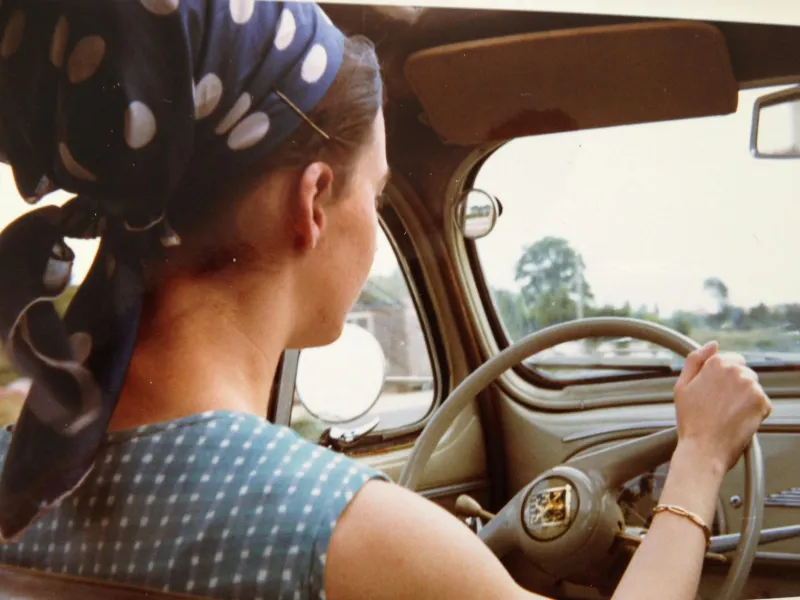
Picture this: It's 3 PM on a Sunday in 1962. Dad closes his newspaper, Mom finishes the dishes, and someone suggests, "Let's go for a drive." Within minutes, the whole family is in the Buick, windows down, heading out with absolutely nowhere to go. No GPS coordinates punched in, no Yelp reviews consulted, no calculated arrival times. Just the open road and whatever they might discover along the way.
This wasn't vacation travel or running errands. This was the Sunday drive—a weekly American tradition so ingrained in mid-century culture that gas stations actually advertised "scenic route" maps, and car manufacturers designed vehicles specifically for leisurely cruising comfort.
The Golden Age of Purposeless Travel
From the 1930s through the 1970s, the Sunday drive represented something uniquely American: the luxury of mobility without urgency. Families would spend hours meandering through countryside, exploring new neighborhoods, or simply enjoying the sensation of movement. It was entertainment, family time, and adventure rolled into one tank of gas.
The ritual had its own unspoken rules. You drove slowly enough to actually see things. You took detours just because a road looked interesting. You stopped at roadside stands, scenic overlooks, or that diner you'd never noticed before. The journey wasn't just more important than the destination—there often wasn't a destination at all.
Motel chains understood this culture so well that they built entire business models around spontaneous travelers. Howard Johnson's didn't just serve food; they served the promise of discovery to families who had no idea where they'd end up for dinner.
When Cars Were Living Rooms on Wheels
The automobiles of this era practically invited leisurely exploration. Bench seats accommodated entire families in comfort. Massive trunks held picnic baskets and blankets for impromptu stops. Air conditioning was still a luxury, so windows stayed down, creating a sensory connection to the landscape that today's hermetically sealed vehicles can't match.
Dashboards were simple affairs—speedometer, fuel gauge, radio. No navigation screens demanding attention, no phones buzzing with notifications, no range anxiety from electric batteries. The car was a vessel for wandering, not a mobile office or entertainment center.
Manufacturers even marketed this lifestyle. Chrysler's "See the USA in your Chevrolet" campaigns didn't promote efficiency or performance—they sold the romance of exploration. Car ads showed families discovering hidden lakes, charming small towns, and scenic vistas, all accessed through the simple act of turning the key and driving.
The Death of Wandering
Today's driving culture would find the Sunday drive almost incomprehensible. Every trip is optimized, every route calculated for maximum efficiency. GPS systems don't just tell us how to get somewhere—they tell us the fastest way, accounting for traffic, construction, and weather. The idea of deliberately taking a longer route "just to see what's out there" feels almost irresponsible in our fuel-conscious, time-optimized world.
Modern drivers plan their routes before leaving the driveway. We research destinations on TripAdvisor, check gas prices on apps, and receive real-time updates about traffic conditions. The spontaneous discovery that defined Sunday drives has been replaced by curated experiences and predetermined outcomes.
Even our vehicles reflect this shift. Today's cars are designed for efficiency and connectivity, not leisurely exploration. Bucket seats separate family members, tinted windows block environmental connection, and entertainment systems encourage passengers to focus inward rather than outward. The modern car is optimized for getting from Point A to Point B, not for the joy of the journey itself.
What We Lost in the Translation
The decline of the Sunday drive represents more than just a change in driving habits—it reflects a fundamental shift in how Americans relate to time, space, and spontaneity. The weekly ritual taught families to value unstructured time together, to find entertainment in simple observation, and to embrace the unexpected.
Children who grew up on Sunday drives learned geography through experience, not screens. They developed patience for longer journeys and appreciation for gradual revelation rather than instant gratification. These drives created shared family memories that weren't photographed, posted, or documented—they simply existed in the collective experience of discovery.
The economic impact was significant too. Small-town businesses depended on Sunday drivers—the ice cream stands, antique shops, and scenic restaurants that survived on spontaneous visitors. When Americans stopped driving for pleasure, entire categories of roadside businesses disappeared.
The Road Less Traveled
In our current era of calculated efficiency, the Sunday drive seems almost quaint—a relic of a time when Americans had different relationships with both time and fuel consumption. We've gained precision and lost spontaneity, optimized our routes and abandoned our sense of wonder.
The next time you're in your car with nowhere urgent to go, consider taking the long way. Turn off the GPS, roll down the windows, and rediscover what your grandparents knew instinctively: sometimes the best destinations are the ones you stumble upon when you're not trying to get anywhere at all.
The road is still there, waiting for drivers who remember that the journey itself can be the point.