When Gas Stations Were the Town Square of American Roads
When Gas Stations Were the Town Square of American Roads
Pull into any gas station today, and the routine is painfully familiar: swipe your card, pump your gas, maybe grab a Red Bull and some beef jerky, then get back on the road. The whole transaction takes maybe five minutes, and you'll likely interact with exactly zero human beings. It's efficient, sure, but it's also a pale shadow of what American gas stations used to be.
The Theater of Full Service
In the 1950s and 60s, driving into a gas station was like pulling into a small-town theater production where you were the star. The moment your tires rolled over that rubber hose—ding-ding—uniformed attendants would emerge from the service bay like a pit crew. "Fill 'er up?" wasn't just a question; it was the opening line of a ritual that connected drivers to their cars and their communities in ways we've completely forgotten.
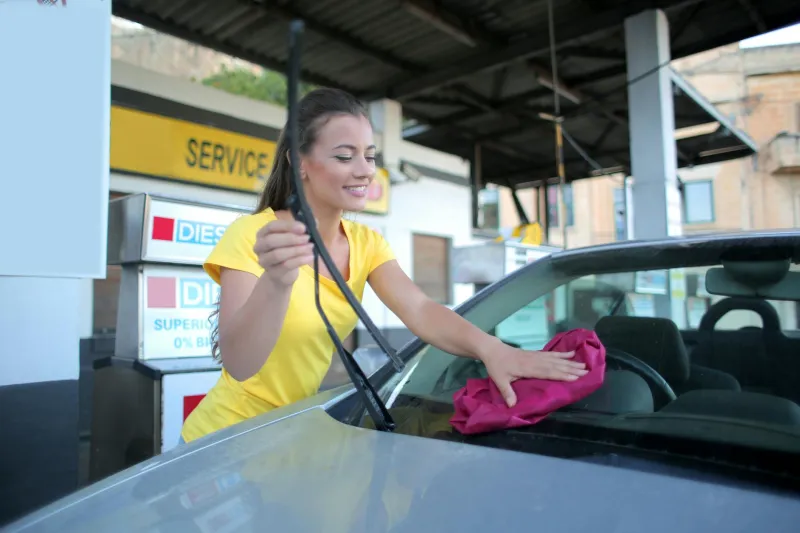
These weren't just gas jockeys. They were automotive concierges who took genuine pride in their work. While your tank filled, they'd pop the hood to check your oil, test your battery, examine your belts and hoses, and clean every speck of road grime from your windshield—inside and out. They'd even check your tire pressure and top off your radiator if needed. All of this happened without you asking, and certainly without additional charges.
The Economics of Care
What's remarkable is that this level of service was simply built into the price of gas. Station owners understood that loyalty came from relationships, not just competitive pricing. Regular customers weren't just account numbers—they were neighbors whose cars the attendants knew intimately. "Mrs. Johnson's Buick burns a quart of oil every thousand miles," or "Mr. Peterson's transmission needs attention." This wasn't upselling; it was genuine care translated into business.
The attendants themselves were often skilled mechanics who could diagnose problems just by listening to your engine idle. They'd notice if your car was running rough, if your brakes were squealing, or if your exhaust sounded off. Many stations employed the same crew for years, creating a continuity of service that modern quick-lube chains can't match.
The Great Shift of the 1970s
The transformation didn't happen overnight. Oregon pioneered self-service pumps in 1951, but it took the oil crisis of 1973 to really accelerate the change nationwide. When gas prices spiked and profit margins tightened, station owners looked for ways to cut costs. Labor was the obvious target.
By the early 1980s, self-service had become the norm almost everywhere. The transition was marketed as convenience and cost savings for consumers, but what really drove it was simple economics. Why pay three attendants when customers would happily pump their own gas for a few cents less per gallon?
What We Gained and Lost
The benefits of self-service are undeniable. Gas became cheaper, stations could operate with skeleton crews, and drivers gained the freedom to fuel up on their own schedule without waiting for an attendant. Late-night travelers especially appreciated being able to fill up at any hour.
But the losses were more subtle and perhaps more significant. We lost the regular car maintenance that prevented bigger problems down the road. We lost the human connection that made long road trips feel less isolating. We lost the local knowledge that attendants provided—directions, road conditions, recommendations for nearby restaurants.
Most importantly, we lost a layer of community infrastructure. Gas stations used to be gathering places where locals caught up on news, travelers got oriented, and car troubles became opportunities for neighborly help. They were the town squares of America's highway system.
The Modern Reality
Today's gas stations are optimized for speed and profit margins, not relationships. The average customer spends less than four minutes at the pump, and most of that time is spent staring at their phone. The convenience store attached to modern stations generates more profit than the gas itself, turning what used to be service centers into retail outlets that happen to sell fuel.
The few full-service stations that remain—mostly in New Jersey and Oregon, where self-service is still restricted—feel like time capsules. Drivers from other states often find the experience charmingly retro, not realizing they're experiencing something that was once as American as apple pie.
The Ripple Effects
The death of full-service gas stations didn't just change how we buy fuel—it changed how we relate to our cars and each other. Without regular professional attention, Americans became less connected to their vehicles' mechanical needs. The rise of the "check engine light generation"—drivers who ignore warning signs until catastrophic failure—can be traced directly to this shift.
We also lost an entry point into automotive careers. Many mechanics and car enthusiasts got their start pumping gas and learning from experienced hands. That pipeline of knowledge and passion largely dried up when stations became unstaffed fuel dispensaries.
Looking Back Down the Road
The evolution from full-service to self-service gas stations perfectly captures how American efficiency often comes at the cost of American community. We solved the problem of expensive labor and slow service, but we created new problems around car maintenance, social connection, and economic opportunity.
Every time you swipe your card at the pump and drive away without speaking to another human being, you're participating in a ritual that would have seemed coldly impersonal to previous generations of American drivers. Progress isn't always a straight line forward—sometimes it's a trade-off that only becomes clear when you look in the rearview mirror.