Where Shopping Malls Once Ruled: The Rise and Fall of America's Concrete Kingdoms
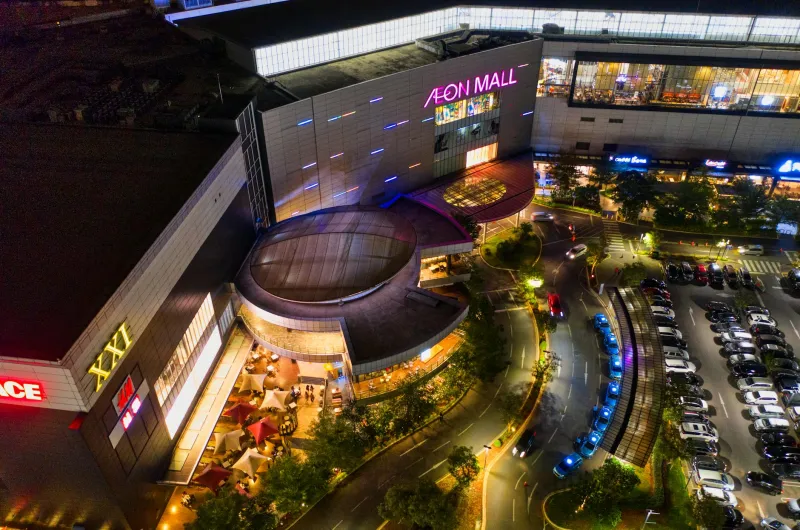
Where Shopping Malls Once Ruled: The Rise and Fall of America's Concrete Kingdoms
Pull into any major shopping center today, and you'll likely find yourself circling for ten minutes, hunting for a spot between the endless rows of SUVs and pickup trucks. But rewind fifty years, and those same lots told a completely different story—one where finding parking was never the problem, and the real action happened between the painted lines.
When Asphalt Was America's Living Room
In 1965, if you wanted to understand American culture, you didn't need to visit museums or attend town halls. You just needed to spend a Saturday evening in any suburban parking lot. These vast concrete expanses, stretching out like geometric prairies around every mall, department store, and drive-in theater, had become the unofficial gathering places of middle America.
Teenagers would cruise these lots in their parents' Impalas and Mustangs, windows down, radios up, treating the painted lanes like racetracks for their social lives. Parents would bump into neighbors while loading groceries into station wagons, turning chance encounters into impromptu community meetings. Kids would ride bikes between the parked cars, using the painted lines as roadways for their own miniature cities.
The parking lot wasn't just functional infrastructure—it was social architecture. These places hosted everything from church fundraisers to high school graduation parties, from farmers markets to political rallies. They were the commons of the car age, where Americans gathered not despite their automobiles, but because of them.
The Golden Age of Endless Space
Back then, land was cheap and cars were king. Shopping centers competed not just on the stores they housed, but on the sheer vastness of their parking fields. The bigger the lot, the more successful the business seemed. Developers would pave over former farmland with the confidence of emperors, creating concrete kingdoms that stretched to the horizon.
These weren't just parking spaces—they were statements of abundance. A typical suburban mall in 1970 might have had four parking spaces for every store employee, with enough room left over to land a small airplane. The lots were designed for Christmas shopping crowds and Black Friday rushes, which meant that for 350 days of the year, they stood mostly empty, creating accidental public plazas where anything could happen.
The social rituals that emerged were uniquely American. Friday night meant cruising the mall lot, where teenagers would spend hours driving in slow circles, seeing and being seen. Saturday mornings brought families in wood-paneled station wagons, kids pressed against rear windows as parents navigated the geometric maze of painted lines. Sunday afternoons featured impromptu car shows, where enthusiasts would gather to admire each other's rides in the neutral territory of shared asphalt.
When Everything Started to Shrink
The first crack in the parking lot empire came not from urban planners or environmentalists, but from economics. As land values soared in the 1990s, those endless seas of asphalt started looking less like assets and more like waste. Developers began calculating the actual cost of maintaining all that pavement—the cleaning, the repainting, the snow removal, the liability insurance.
Online shopping delivered the next blow. Why maintain parking for thousands of cars when fewer customers were showing up each year? Malls started sectioning off portions of their lots, leaving vast areas to crack and sprout weeds while they figured out what to do with all that space.
Then came the smartphone revolution, which turned parking from a social activity into a solitary, efficiency-driven task. Apps like ParkWhiz and SpotHero transformed the hunt for parking from a leisurely cruise into a pre-planned transaction. The spontaneous encounters that once happened between car and store became scheduled, optimized, and antiseptic.
The Great Reclamation
Today's parking lots look nothing like their golden-age predecessors. They're smaller, smarter, and increasingly temporary. Cities across America are actively reclaiming parking spaces, turning former lots into pocket parks, affordable housing, and mixed-use developments. Seattle removed 600 parking spaces downtown in 2020 alone. San Francisco has converted former lots into playgrounds and community gardens.
The new parking culture is about efficiency, not community. Automated payment systems eliminate the need for human interaction. Valet services and ride-sharing apps mean many people never actually park their own cars anymore. Some new developments are being built with no parking at all, betting that the next generation won't miss what they never had.
What We Lost in the Optimization
As parking lots disappear or shrink, something subtle but significant is vanishing with them. Those inefficient, oversized lots of the past weren't just places to leave cars—they were accidentally democratic public spaces where Americans from different backgrounds naturally mingled.
Today's optimized parking solutions work better in almost every measurable way. They're more environmentally friendly, more economically efficient, and certainly more convenient. But they've also eliminated the unplanned encounters, the teenage romance, and the community connections that flourished in those concrete kingdoms of the past.
The next time you find yourself frustrated by a crowded parking situation, remember that you're witnessing the end of an era. Those endless lots that once defined American suburbia are disappearing, taking with them a uniquely American form of public life that we're only now beginning to understand we've lost.