The Engine That Spoke to You: What We Lost When Cars Stopped Making Noise
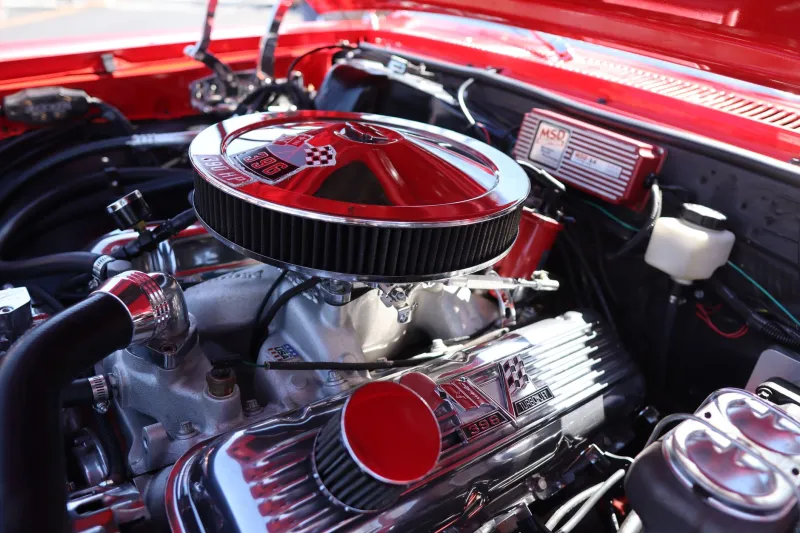
The first time you pressed the accelerator on a 1960s muscle car, the engine didn't just respond — it announced itself. A deep, authoritative rumble at idle that climbed into a full-throated roar under load. You could feel it in your sternum. You could hear it change pitch as the RPMs climbed. The car was talking to you in a language that required no translation.
Now sit inside a current-generation Toyota Camry Hybrid and press the same pedal. There's a faint electric whir. The car moves. The speedometer climbs. And the cabin remains so acoustically isolated from whatever is happening under the hood that you might as well be in a living room that happens to be moving.
Somewhere between those two moments, the relationship between driver and machine fundamentally changed. The question is whether we made a trade we fully understood.
The Mechanical Conversation
For the first eight decades of the automobile's existence, engine sound wasn't just a byproduct of combustion — it was a primary feedback mechanism. Experienced drivers could diagnose problems by ear. A knock meant low oil or bad timing. A high-pitched whine from the differential meant trouble brewing. A change in the exhaust note under load told you whether the engine was pulling cleanly or struggling.
This wasn't reserved for mechanics. Ordinary drivers developed an intuitive literacy around engine sound. You knew what your car sounded like when it was happy. You knew the difference between the note it made on a warm day versus a cold start. You knew when something was off before any warning light confirmed it.
The sounds weren't uniform. Each engine had a personality. The flat-plane crank in a Ferrari 308 produced a shrieking, high-revving wail that sounded nothing like the burbling, potato-potato idle of a Harley-Davidson-influenced V-twin. A Chevrolet 350 small-block had a throaty, distinctly American growl that was recognizable from a block away. Ford's 289 Hi-Po had a higher-pitched, more urgent character. Mopar's 440 six-pack had a deep, authoritative rumble that sounded like it was barely trying.
These weren't marketing descriptions. They were acoustic signatures, as distinct as fingerprints.
The Engineering of Silence
The war on engine noise began in earnest in the 1970s, driven by two forces: federal emissions regulations and consumer demand for refinement.
The Clean Air Act of 1970 forced manufacturers to fundamentally redesign combustion systems, and many of the changes that reduced emissions also changed acoustic character. Catalytic converters, introduced in 1975, muffled exhaust notes significantly. Tighter manufacturing tolerances reduced the mechanical clatter that had always been part of the driving soundtrack. Engine mounts were redesigned to isolate vibration from the cabin.
At the same time, buyers were asking for quieter cars. The German luxury brands — Mercedes-Benz and BMW in particular — had established that a quiet cabin was a mark of quality and refinement. American buyers wanted what the Europeans had. Manufacturers responded by adding sound-deadening material, thicker glass, and more sophisticated acoustic isolation.
By the 1990s, the average new car was dramatically quieter than its 1960s equivalent. By the 2000s, luxury vehicles had achieved near-total acoustic isolation. A 2005 Lexus LS 430 was so quiet at highway speed that engineers had to add a subtle artificial wind noise to prevent the silence from feeling unnatural and disorienting.
And then came the electric vehicle, which removed the internal combustion engine from the equation entirely. The first time most Americans drove or rode in a Tesla, the silence was the thing they commented on first. Not the acceleration. Not the technology. The absence of sound.
The Feedback Gap
Here's where the story gets financially interesting — and practically important.
The sounds that engineers have spent decades eliminating weren't just pleasant or unpleasant noise. They were data. Real-time information about what the engine was doing, how hard it was working, and whether something was wrong. When you remove that acoustic feedback loop, you remove a diagnostic tool that drivers used whether they knew it or not.
Modern vehicles compensate with electronic warning systems. Sensors monitor oil pressure, engine temperature, timing, and hundreds of other variables, and alert drivers via dashboard warnings when something falls outside acceptable parameters. In many ways, this is more accurate than anything a human ear could detect.
But there's a lag. A sensor reports a condition after it has developed. An experienced driver's ear could detect a developing problem — a slight change in the knock pattern, an emerging roughness at certain RPMs — before it registered on any gauge. That early warning system is gone for most drivers now, replaced by a light that turns on after the problem is already present.
The practical consequence shows up in repair bills. Mechanics report that modern drivers frequently bring in cars with issues that have been developing for weeks or months, simply because they never heard anything unusual. The car was too quiet to warn them.
The Fake Noise Problem
Perhaps the most telling development in automotive acoustics is what some manufacturers have done to fill the silence they created.
Several major automakers — including BMW, Ford, Volkswagen, and Porsche — now use a technology called Active Sound Design, which pipes synthesized or amplified engine noise through the car's speaker system. The goal is to give drivers the emotional experience of a powerful engine without the actual acoustic output of one.
Ford's EcoBoost engines, for example, use a "Sound Symposer" to pipe intake noise into the cabin. BMW's M cars use the audio system to enhance and augment the actual exhaust note. Volkswagen was caught in 2019 using a system called "Soundaktor" — essentially a speaker mounted on the firewall that played engine sound files timed to throttle input.
The reaction from enthusiasts was predictably hostile. But the existence of these systems reveals something important: manufacturers know that drivers miss the sound. They know that the silence they engineered into their products created an emotional vacancy that buyers notice, even if they can't articulate exactly what's missing.
You can make a car whisper-quiet. But then you have to fake the noise you removed, because it turns out people needed it.
What the Silence Actually Costs
This is, at its core, a story about the hidden costs of progress.
Quieter cabins are genuinely better for long-distance driving fatigue. Acoustic isolation reduces stress on highway trips. Electric vehicles offer performance advantages and environmental benefits that are real and significant. The engineering that silenced the American automobile solved problems that were worth solving.
But the driver who could diagnose a developing rod knock by ear is gone. The teenager who learned to listen to an engine the way a musician listens to an instrument is gone. The immediate, visceral connection between pressing a pedal and feeling the mechanical response of something powerful happening beneath you — that's been replaced by a smooth, seamless, deeply optimized experience that feels less like driving and more like being transported.
The engine used to talk to you. Now it just does what it's told, quietly, and you never really know what it's thinking.