The Name on the Sign Used to Mean Something: America's Disappearing Independent Car Dealers
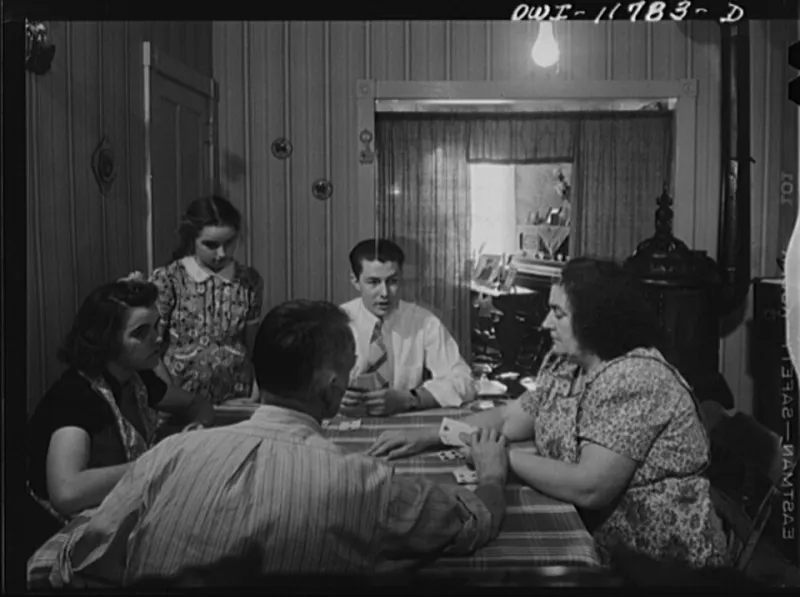
Photo: Marjory Collins, Public domain, via Wikimedia Commons
The Name on the Sign Used to Mean Something: America's Disappearing Independent Car Dealers
In a lot of American towns, the car dealership was as much a landmark as the courthouse or the grain elevator. Not because of what it sold, but because of whose name was on the sign. Bob Patterson Ford. The Kowalski Brothers Chevrolet. Martinez Auto Group — three generations, same corner, since 1951. You didn't just buy a car there. You bought it from someone whose kid played soccer with your kid, whose family had been part of the community longer than most of the roads leading into town.
That version of the American car dealership is disappearing. Not dramatically, not all at once, but steadily — absorbed, acquired, and rebranded by massive dealer groups that now operate hundreds of locations across multiple states, running the whole operation with the kind of algorithmic efficiency that makes every lot feel exactly like every other lot.
When the Dealer Was the Neighborhood
The golden age of the independent American auto dealer ran roughly from the postwar boom through the 1990s. Franchise agreements with manufacturers allowed local entrepreneurs to hold exclusive rights to sell a particular brand in their area, and many of those franchises became multigenerational family businesses. The dealer principal — the owner — was often on the floor, shaking hands, remembering names, making deals that didn't always come straight out of a playbook.
This wasn't just sentimental small-business charm. It had practical consequences. A dealer who lived in town had a reputation to protect in a way that a regional vice president of a corporate group never could. Word traveled fast. If you got burned on a trade-in, you told your neighbors. If the service department did right by you, you sent your brother-in-law. The feedback loop was tight and personal.
Financing worked differently too. Local dealers often had relationships with community banks and credit unions, and they used those relationships to help buyers who didn't fit neatly into a credit score box. A handshake and a history sometimes counted for more than a number. The transaction felt human because it was.
The Consolidation Machine
The shift began accelerating in the late 1990s, when publicly traded auto retail chains started buying up independent dealerships at scale. Companies like AutoNation, Penske Automotive, and Lithia Motors grew rapidly, acquiring hundreds of locations and creating what the industry calls "dealer groups" — centrally managed networks operating under corporate infrastructure.
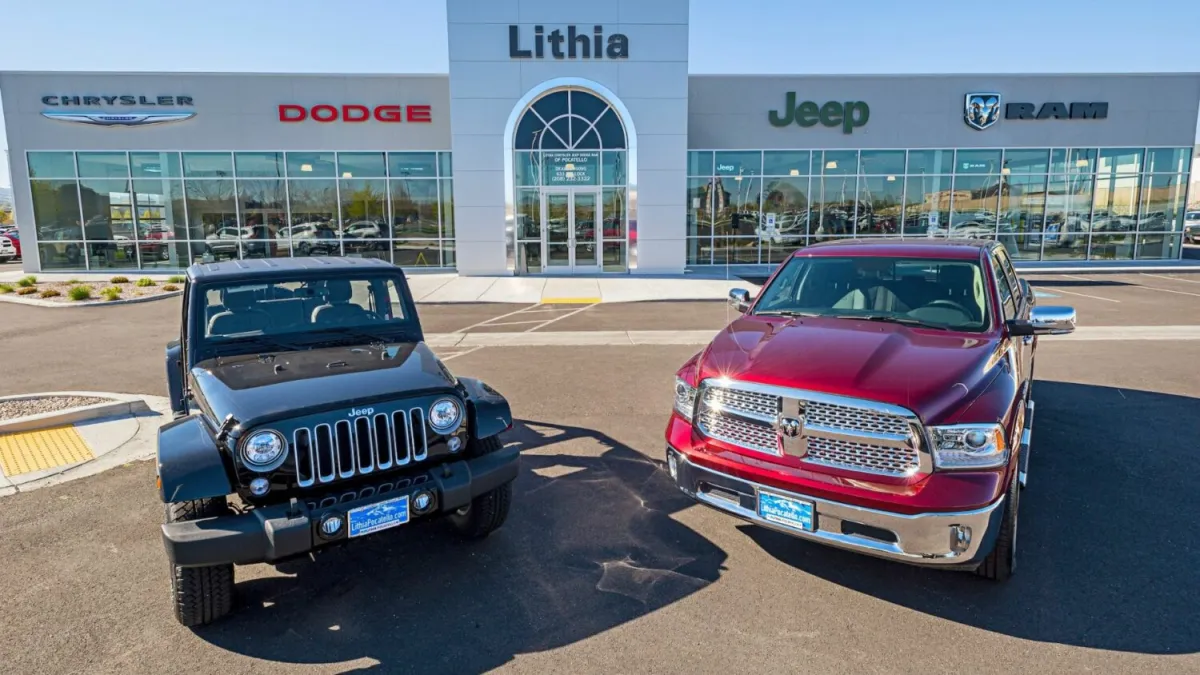 Photo: Lithia Motors, via d9s1543upwp3n.cloudfront.net
 Photo: Penske Automotive, via news-assets.stockstory.org
The business logic was sound. Larger groups could negotiate better terms with manufacturers, centralize back-office operations, spread marketing costs across dozens of locations, and apply consistent processes that reduced the variability — and the risk — of individual salespeople making judgment calls. From a shareholder perspective, it worked beautifully.
By 2023, the ten largest dealer groups in the United States accounted for a disproportionate share of total new vehicle sales. The number of franchised dealerships in America has actually declined significantly over the past three decades — from roughly 50,000 in the early 1990s to around 18,000 today — even as total vehicle sales have remained robust. The surviving dealers are simply bigger.
What Gets Lost in the Scaling
Walk into a large corporate dealership today and the experience is polished in ways the old neighborhood lots never were. The showroom is clean and contemporary. The digital displays are current. The process is documented, tracked, and managed with CRM software that knows your browsing history before you've introduced yourself.
What it often lacks is the thing that's hardest to systematize: genuine local accountability.
A salesperson at a corporate mega-lot is following a process designed in a regional office. Their manager is measured against metrics set by people who've never visited the town. The financing desk is running deals through systems that prioritize the group's preferred lenders. None of that is inherently corrupt — it's just optimized for a different set of outcomes than the ones that governed the old family dealer.
The service department, historically the most profitable part of any dealership, reflects this too. Independent dealers often had long-tenured mechanics who knew their customers' vehicles the way a family doctor knows a patient's chart. High turnover and standardized repair protocols in larger operations aren't the same thing, even when the work gets done correctly.
The Towns That Noticed
In smaller cities and rural communities, the disappearance of the local dealership isn't just a consumer experience story — it's an economic one. Family-owned dealers were frequently among the larger local employers, sponsors of community events, and sources of charitable giving that corporate groups, with their centralized philanthropy budgets, rarely replicate at the same local level.
When a family dealership gets acquired and rebranded, the name comes down. Sometimes the staff stays, at least for a while. But the owner who used to walk the service bay on Saturday mornings and knew every technician by first name is replaced by a general manager who reports to a district director who reports to a regional VP. The chain of accountability grows longer. The local connection grows thinner.
Some communities have watched their one local franchise disappear entirely — not acquired, but closed — as manufacturer consolidation and the shift toward electric vehicle distribution models reshuffle which markets get served at all.
What the Algorithm Doesn't Know About You
The irony of the modern car-buying experience is that it's technically more transparent than it's ever been. Pricing is more accessible online. Inventory is searchable. Reviews are public. The information asymmetry that let dealers play games with numbers for decades has narrowed considerably.
But transparency and trust aren't the same thing. The old neighborhood dealer offered something that no algorithm replicates: the sense that the person across the desk had a stake in your satisfaction that extended beyond the transaction. They'd see you at the hardware store. Their kid was in your kid's class. The relationship had a life outside the lot.
That's gone from most of the market now. Whether it's a fair trade for lower prices and more information is a question worth sitting with. The numbers might be better. The handshake meant something different.