Delivered by Rail: America's Forgotten Experiment With Buying Cars Without Dealers

Delivered by Rail: America's Forgotten Experiment With Buying Cars Without Dealers
When Tesla started selling cars directly to consumers without a single franchised dealership in the chain, automotive trade groups responded like the idea was revolutionary and dangerous in equal measure. Dealer associations in more than a dozen states lobbied hard against the model. Some succeeded in restricting or outright banning direct sales. The argument, broadly, was that bypassing the dealer was an untested disruption of a system that had served Americans for a century.
Except it hadn't. Not entirely. Because nearly a century before Elon Musk decided he didn't need a showroom, Sears, Roebuck and Company was selling motor vehicles through the mail — and Americans were picking them up at their local train depot.
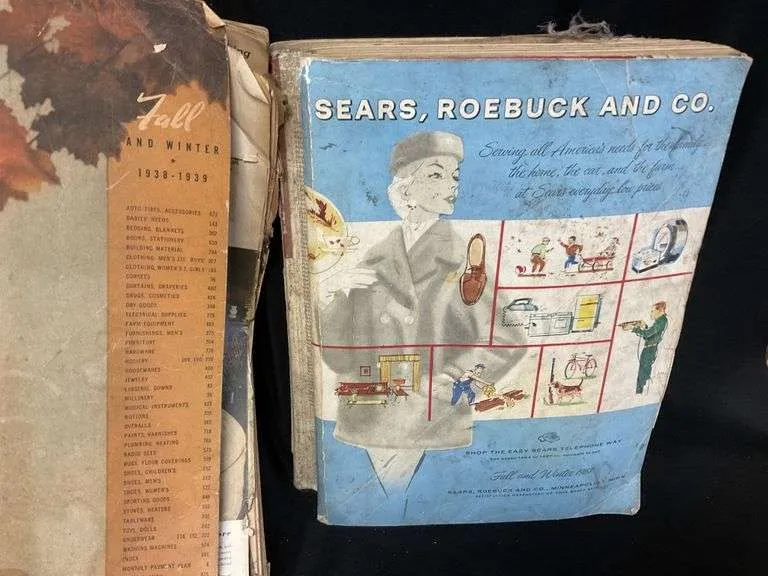 Photo: Sears, Roebuck and Company, via d3j17a2r8lnfte.cloudfront.net
The Catalog That Sold Everything, Including Cars
By the early twentieth century, the Sears catalog had already proven that Americans were willing to buy almost anything without seeing it in person first. Houses. Farm equipment. Engagement rings. The catalog's genius was its implicit promise: we've done the vetting, we stand behind the product, and you don't need to leave your county to get access to it.
In 1908, Sears briefly entered the automobile business with the Sears Motor Buggy — a high-wheeled vehicle sold through its catalog for around $395, which translates to roughly $13,000 in today's money. It wasn't a sophisticated machine. It looked more like a motorized carriage than what we'd recognize as a car. But the concept behind it was genuinely bold: order a vehicle from a printed page, have it shipped by rail to your nearest freight station, and assemble it yourself using the included instructions.
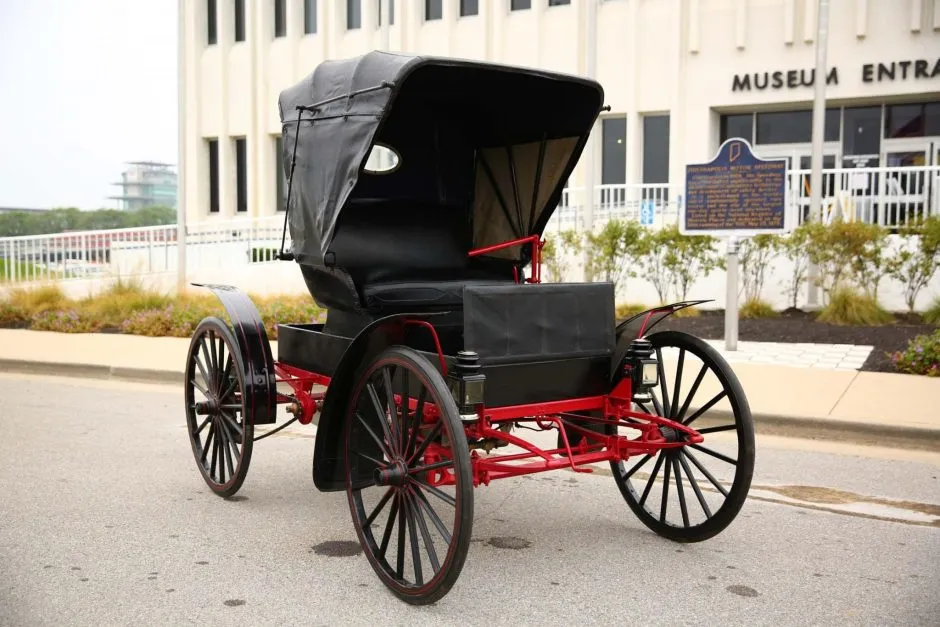 Photo: Sears Motor Buggy, via bringatrailer.com
The Sears Motor Buggy didn't last long. By 1912, the company had exited the automobile business, unable to compete with manufacturers like Ford who were scaling production rapidly and building their own distribution networks. But the idea — that the dealership was an optional middleman rather than a required step — had been planted.
The Dealer Model Wasn't Inevitable
The franchise dealership system that dominates American car sales today wasn't designed from first principles. It evolved from practical necessity. Early automakers lacked the capital to build company-owned stores across the country, so they licensed independent businesspeople to sell and service their vehicles locally. The dealer took on inventory risk, handled customer relationships, and provided the service infrastructure that kept cars running.
For most of the twentieth century, this arrangement worked reasonably well. Dealers knew their communities. They employed local people. They provided a physical place where buyers could see, touch, and test the product before committing.
But the system also created structural incentives that didn't always align with the buyer's interests. Dealers made money on financing, on add-ons, on service contracts, and on the spread between what they paid for a vehicle and what they sold it for. The transaction was inherently adversarial in ways that buyers found exhausting and that surveys consistently ranked among America's least enjoyable consumer experiences.
The question was never really whether the dealer model was ideal. It was whether anything better could replace it at scale.
A Century Later, the Catalog Comes Back
When Tesla launched its direct-sales model in the early 2010s, it was solving a problem that Sears had identified in 1908: the dealer adds cost and friction without always adding value. Tesla's pitch was that a car designed and built by a single company didn't need a separate retailer to explain it. The manufacturer knew the product better than any franchisee could, and the internet provided a distribution channel that railroads had once offered for physical goods.
The parallels are striking. Sears buyers in 1910 chose from a catalog, paid upfront, and received their vehicle via freight delivery. Tesla buyers today configure their vehicle on a website, pay a deposit, and receive it via home delivery or pickup at a company-owned facility. The fundamental transaction structure — manufacturer to buyer, without an independent intermediary — is nearly identical.
Carvana took a different angle on the same disruption. Rather than eliminating the dealer from new car sales, it rebuilt the used car market around a direct, digital experience. Its car vending machines — literal multi-story glass towers dispensing vehicles — became the most visible symbol of an industry rethinking its own assumptions. Behind the theater was a serious logistics operation that let buyers purchase, finance, and receive a used vehicle entirely online, with a seven-day return window that no traditional dealer had ever offered.
What the History Actually Tells Us
The narrative that direct car sales are a modern innovation depends on forgetting what came before. Americans have always been open to buying significant items without a human intermediary — when the price was right, the process was trustworthy, and the product could be evaluated adequately without physical inspection.
What changed between 1908 and today wasn't consumer psychology. It was information. The Sears Motor Buggy buyer was taking a real leap of faith. They couldn't read independent reviews, watch teardown videos, or consult forums full of existing owners. The information gap made the risk significant.
Today, a buyer can spend weeks researching a vehicle before committing to anything. They can read thousands of owner reviews, watch professional evaluations, compare real transaction prices across the country, and in some cases complete a virtual walkthrough of the specific unit they're considering. The information asymmetry that made dealerships necessary — and that made catalog car sales feel risky — has largely collapsed.
The Idea That Kept Coming Back
The dealer lobby's argument against direct sales has always been partly about consumer protection and partly about protecting a business model. Those two things aren't the same, and conflating them has made the debate murkier than it needs to be.
What the history of catalog car sales suggests is that the desire to bypass the dealer isn't a modern imposition on a traditional system. It's a recurring impulse that the industry managed to contain for most of a century — through franchise laws, state regulations, and the practical reality that nobody had built a better alternative yet.
Now that several companies have built credible alternatives, the impulse is resurging. The train depot has been replaced by a doorstep delivery. The printed catalog has been replaced by a website that's updated in real time. But the core transaction — customer to manufacturer, without the middleman — is the same one a Sears catalog customer was attempting in 1908.
Some ideas don't die. They just wait for the infrastructure to catch up.