America's Cathedral of Chrome: When Junkyards Were the Heartbeat of DIY Car Culture

Saturday Morning Salvation
Every Saturday morning, Tommy Rodriguez would grab his father's worn toolbox and head to Hernandez Auto Salvage on the outskirts of Phoenix. It was 1978, and their family's 1971 Chevelle had developed a mysterious knock in the engine. Rather than visit an expensive mechanic, they'd spend their weekend hunting through rows of sun-baked vehicles, searching for a replacement part that might breathe new life into their beloved muscle car.
 Photo: Chevrolet Chevelle, via www.france-voyage.com
 Photo: Hernandez Auto Salvage, via news.xopom.com
Tommy wasn't alone. Across America, salvage yards served as weekend destinations for millions of drivers who viewed car ownership as a hands-on relationship requiring constant attention, creativity, and resourcefulness.
The Geography of Ingenuity
American junkyards weren't just businesses—they were sprawling outdoor universities where practical engineering was taught through trial and error. These graveyards of chrome and steel, typically located on the edges of towns where land was cheap and zoning laws flexible, became gathering places for a uniquely American breed: the shade-tree mechanic.
Walk through Bill's Auto Parts in rural Ohio or Pete's Pick-A-Part in suburban California, and you'd find the same scene: fathers teaching sons how transmissions worked, neighbors helping neighbors locate hard-to-find components, and solitary tinkerers spending entire afternoons methodically stripping useful parts from vehicles that had reached the end of their road-worthy lives.
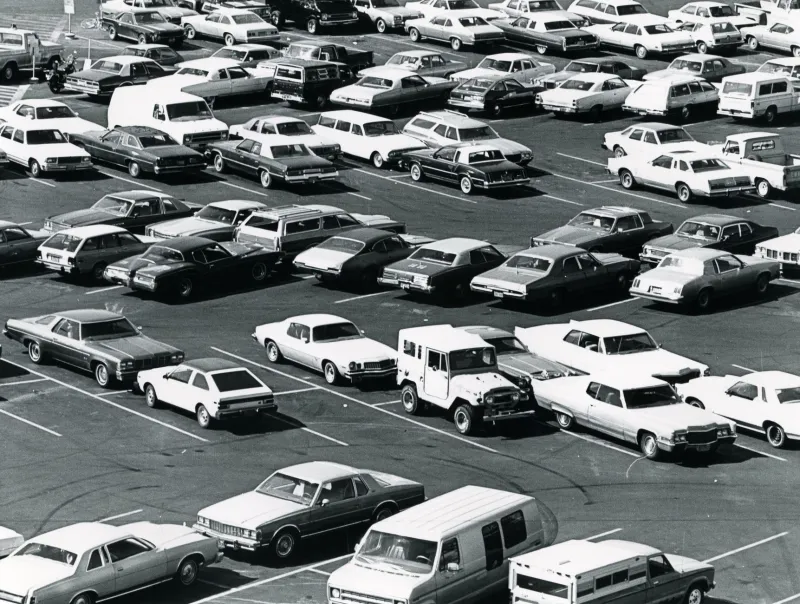
The layout was always similar—rows of cars organized by decade, make, or sometimes just wherever the tow truck happened to drop them. Narrow pathways wound between rusting hulks, creating a maze that regular customers learned to navigate like familiar neighborhood streets.
The Code of the Yard
Junkyard culture operated on unwritten rules that everyone understood. You brought your own tools. You pulled your own parts. You paid fair prices for what you took. And if you saw someone struggling with a stubborn bolt or heavy component, you offered to help.
The yard owners—often gruff characters with encyclopedic knowledge of automotive history—served as both gatekeepers and guides. They could tell you whether a 1967 Camaro transmission would fit in your 1969 Firebird, or direct you to the back corner where a rare Mercury Comet sat with the exact taillight assembly you needed.
Pricing was negotiable and relationship-based. Regular customers got better deals. Someone clearly struggling financially might find their total mysteriously reduced at checkout. The exchange of money felt secondary to the exchange of knowledge and mutual respect for mechanical ingenuity.
The University of Necessity
Before the internet, junkyards served as informal technical colleges where Americans learned automotive anatomy through hands-on exploration. Pulling a starter motor taught you how electrical systems connected. Removing a carburetor revealed the mysteries of fuel delivery. Every successful part extraction was a small victory in mechanical understanding.
Teenagers learned invaluable life skills during these weekend expeditions. They discovered how different tools solved different problems, how patience and persistence could overcome seemingly impossible challenges, and how a $15 junkyard part could save hundreds of dollars in professional repair costs.
The knowledge was cumulative and community-based. Experienced mechanics would share tricks with newcomers: which bolts always seized up, how to avoid cutting yourself on sharp metal edges, and which cars were known for particular weak points. This informal mentorship system created generations of Americans who understood their vehicles intimately.
When Cars Were Repairable Puzzles
The golden age of junkyard culture coincided with an era when cars were designed for repairability rather than replacement. Engines shared components across model lines. Body panels were interchangeable between years. Mechanical systems were visible and accessible, not buried beneath layers of plastic covers and electronic modules.
A determined shade-tree mechanic could keep a car running almost indefinitely by mixing and matching parts from various donors in the salvage yard. This created a vibrant ecosystem where vehicles rarely died completely—they simply transformed into organ donors for other cars that shared their mechanical DNA.
The process required genuine skill and knowledge. You had to understand gear ratios, bolt patterns, and compatibility issues. Success meant more than just finding the right part—you had to extract it without damaging surrounding components, then adapt it to work in your specific application.
The Digital Disruption
Today's automotive landscape bears little resemblance to that hands-on world. Modern vehicles are rolling computers with proprietary components that require specialized diagnostic equipment to understand, let alone repair. The neighborhood junkyard has largely been replaced by online parts catalogs and overnight shipping from centralized warehouses.
Contemporary cars are designed for planned obsolescence rather than indefinite repair. Plastic components crack and become irreplaceable. Electronic modules fail and require programming that only dealerships can provide. Body panels are shaped so specifically that interchangeability between model years has virtually disappeared.
The few salvage yards that remain operate more like automated inventory systems than community gathering places. Computer databases track every component, pricing is standardized, and many yards don't allow customers to pull their own parts due to insurance liability concerns.
The Lost Art of Mechanical Intimacy
What disappeared along with traditional junkyards was something more profound than just a source of cheap parts—it was an entire culture of mechanical self-reliance that defined American automotive culture for decades.
Previous generations developed deep, personal relationships with their vehicles born from necessity and nurtured through hands-on maintenance. They understood how cars worked because they had to. They could diagnose problems by sound, smell, and feel because professional repair was often unaffordable or unavailable.
This mechanical intimacy created a particular type of confidence and independence. If your car broke down in the middle of nowhere, you had a fighting chance of fixing it yourself with basic tools and creative thinking. That self-reliance extended beyond automotive repair into general problem-solving and resourcefulness.
The Environmental Paradox
Modern environmental concerns have also transformed automotive recycling. Today's sophisticated recycling facilities can extract and process materials with far greater efficiency than old-school junkyards ever achieved. Fluids are properly contained, metals are sorted precisely, and hazardous materials are handled safely.
However, this efficiency came at the cost of accessibility. The environmental cleanup of automotive recycling eliminated the casual browsing and hands-on exploration that made junkyards such effective learning environments. Progress in environmental responsibility meant the end of an educational ecosystem that had operated for decades.
Echoes in Digital Spaces
The spirit of junkyard culture hasn't disappeared entirely—it's migrated online. YouTube channels dedicated to automotive restoration, forums where enthusiasts share technical knowledge, and social media groups focused on specific car models all carry forward the collaborative, knowledge-sharing ethos of traditional salvage yards.
But something irreplaceable was lost in translation. Digital knowledge lacks the tactile understanding that came from actually wrestling with rusted bolts and heavy components. Online communities can share information, but they can't replicate the mentorship that happened when experienced mechanics guided newcomers through their first major repair.
The Last of the Breed
A few traditional junkyards still exist, primarily serving enthusiasts restoring classic vehicles from the era when cars were designed for repairability. These operations function more like museums than businesses, preserving not just old cars but the culture and knowledge that surrounded them.
Visiting one of these remaining yards feels like stepping back in time. The same unwritten rules apply. The same spirit of mechanical adventure persists. But the customers are mostly older now, and their numbers dwindle each year as the vehicles they're trying to preserve become increasingly rare.
The American junkyard represented something uniquely democratic about car culture—a place where knowledge mattered more than money, where persistence trumped credentials, and where the relationship between driver and machine was intimate, immediate, and earned through grease-stained hands and weekend afternoons spent among the automotive dead.
That world is largely gone now, replaced by efficiency, safety, and environmental responsibility. But for those who experienced it, the memory of America's cathedral of chrome remains vivid—a place where cars went to die so that others might live, and where ordinary people learned extraordinary things about the machines that carried them through life.