From a Dent and a Check to a Five-Figure Estimate: How Minor Car Damage Became a Financial Emergency

Photo by Photo by Zoshua Colah on Unsplash on Unsplash
Picture this: It's 1979. You're backing out of a grocery store parking lot in your Buick LeSabre and you clip the rear quarter panel of the Oldsmobile next to you. Not hard — just enough to leave a crescent-shaped crease and a little paint transfer. You exchange information with the other driver, take the car to a body shop on Monday, and walk out with an estimate for around $180. By Friday, it's fixed. You write a check, pick up your car, and that's the end of it.
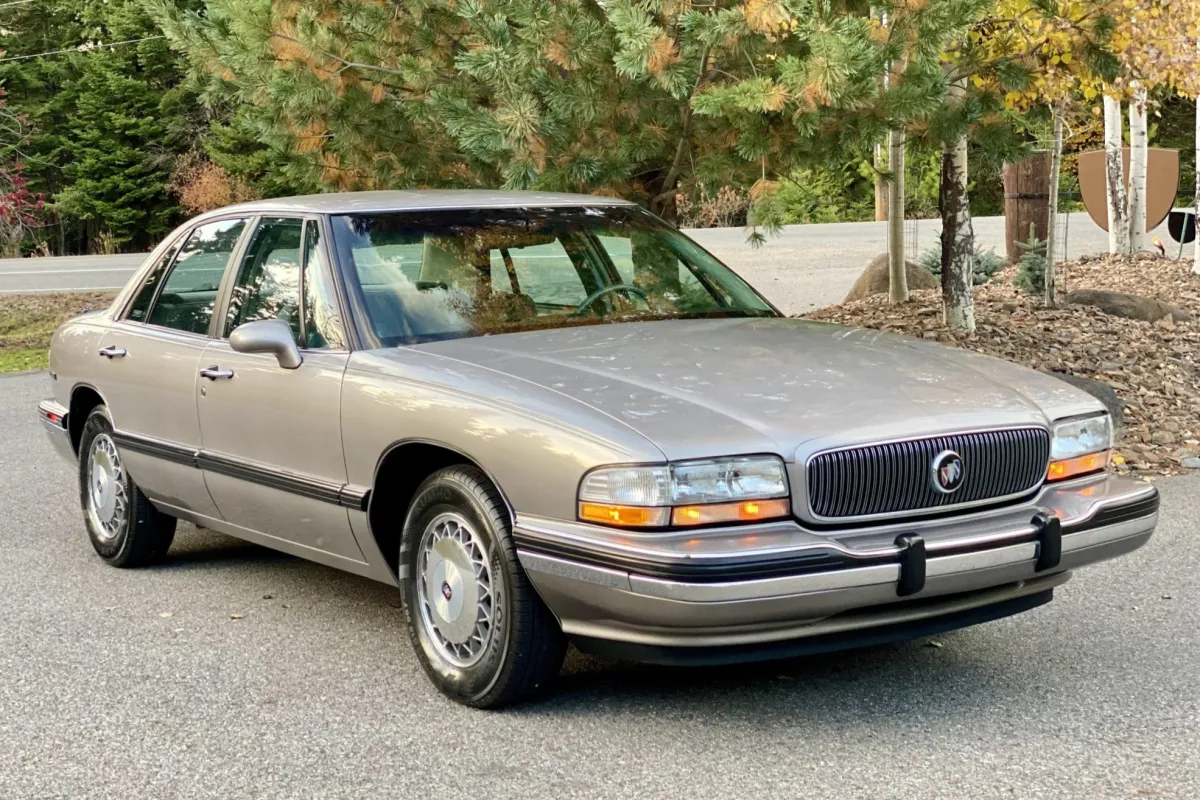 Photo: Buick LeSabre, via bringatrailer.com
Now run the same scenario in 2024. You tap the bumper of a late-model Chevrolet Silverado in a parking lot. The bumper looks fine — maybe a small scuff. You take it to a body shop. The technician scans the vehicle's systems and discovers that the impact has misaligned the rear parking sensors, damaged the trailer hitch camera housing, and cracked an interior bracket that holds the proximity alert module. The estimate comes back at $4,200. Your deductible is $1,000. Your insurance premium goes up at renewal. You've spent three weeks dealing with a parking lot mistake that lasted half a second.
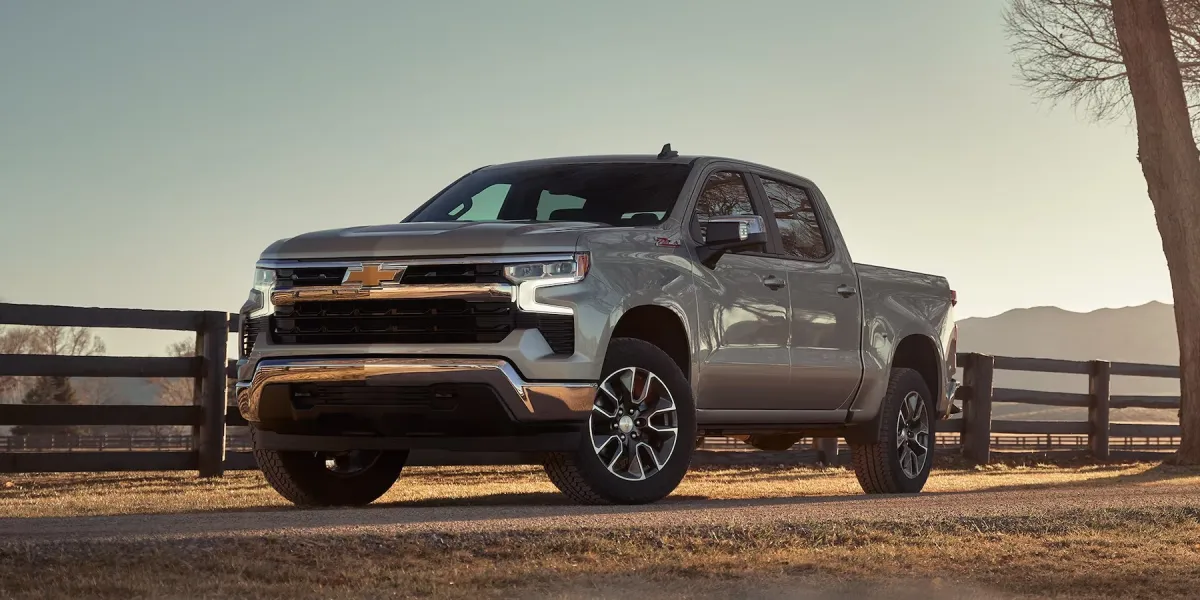 Photo: Chevrolet Silverado, via storage.googleapis.com
This is not an exaggeration. This is Tuesday.
Steel, Paint, and a Guy Named Gary
American cars in the 1960s and 1970s were mechanical objects. That sounds obvious, but the distinction matters enormously. They were made of steel panels that a skilled body man could reshape with hammers, dollies, and a practiced eye. Paint technology was simple enough that a good color match was achievable without a spectrophotometer. Parts were interchangeable in ways that kept costs manageable.
A competent body shop in 1975 operated with tools that hadn't changed dramatically since the 1950s. The work was physical, skilled, and relatively straightforward. A dented quarter panel meant hammer work, filler, primer, paint, and maybe a replacement trim piece. The labor was the primary cost, and labor was cheap by modern standards.
The Bureau of Labor Statistics tracked auto body repair costs, and the numbers tell a stark story. Minor collision repair on a typical American sedan in the mid-1970s averaged somewhere between $150 and $400 depending on the damage. Adjusted for inflation, that's roughly $800 to $2,100 in today's dollars. Actual average repair costs for minor collision damage today routinely run $2,500 to $6,000 — and that's before anything under the surface gets involved.
The Bumper That Isn't Really a Bumper
Here's where the story gets complicated, and where most drivers are caught completely off guard.
The plastic fascias that cover modern vehicles — what most people still call bumpers — are not bumpers in any traditional sense. They're aerodynamic covers. Behind them sits a foam energy absorber, a steel or aluminum reinforcement bar, and increasingly, a dense cluster of technology: radar sensors for adaptive cruise control, parking sensors, backup cameras, blind-spot monitoring hardware, and on higher-trim vehicles, components that support semi-autonomous driving features.
Cracking the plastic cover on a 2022 Honda CR-V doesn't just mean replacing a piece of plastic. It can mean replacing or recalibrating the radar sensor embedded in it, which requires specialized equipment and a certified technician. On many vehicles, the camera system must be recalibrated after any bumper work — a process that requires driving the vehicle through a specific pattern while connected to diagnostic equipment. That calibration alone can add $400 to $600 to any repair estimate.
A 2019 AAA study found that replacing a bumper cover equipped with parking sensors and cameras added an average of $280 to $1,100 to repair costs compared to a bumper without those features. On premium vehicles with full sensor arrays, that gap widens considerably.
The Taillight That Cost More Than a Month's Rent
If the bumper story surprises you, the taillight story might genuinely shock you.
On a 1977 Chevrolet Impala, a broken taillight assembly cost around $15 to $30 for the part and maybe $20 in labor. Total damage: under $50.
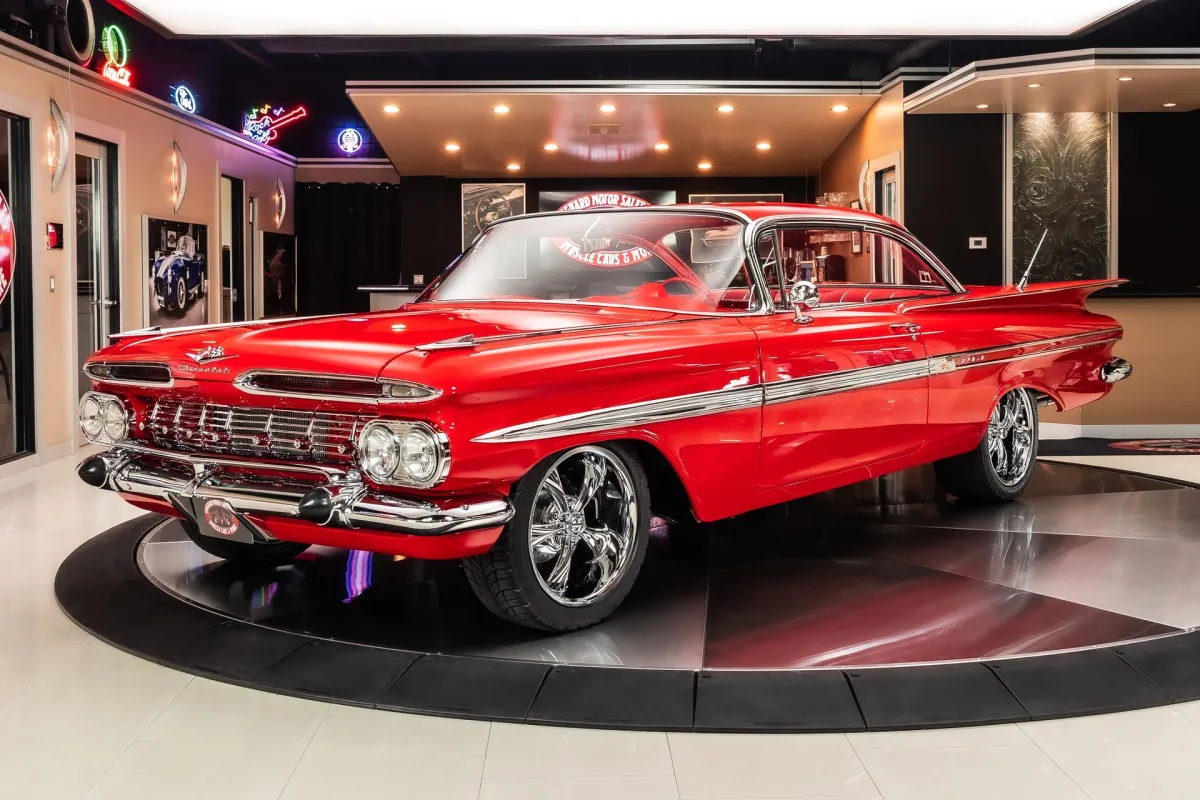 Photo: Chevrolet Impala, via cdn.dealeraccelerate.com
On a 2021 Cadillac CT5, a rear taillight assembly that incorporates LED lighting, sequential turn signals, and integration with the vehicle's body control module runs approximately $800 to $1,200 for the part alone. Labor and programming add more. A parking lot tap that cracks the lens can generate a repair bill north of $1,500.
This isn't unique to luxury brands. A cracked taillight on a 2020 Toyota Camry can run $600 to $900. On a Tesla Model 3, rear light repairs have been quoted above $1,000 for relatively minor damage. These are family cars. These are everyday vehicles driven by people with ordinary budgets.
The Safety Trade-Off Nobody Warned You About
Here's the honest part of this conversation. The technology that made modern cars expensive to repair also made them dramatically safer to drive.
Automatic emergency braking, lane departure warnings, blind-spot monitoring, backup cameras — these features have measurably reduced accident rates and saved lives. The Insurance Institute for Highway Safety has documented significant crash reductions associated with each of them. The safety argument is real and it's compelling.
But there's a cost transfer happening that most buyers don't fully understand when they're sitting in a dealership. The sensors that prevent accidents also make minor accidents catastrophically expensive. The sophistication that protects you on the highway exposes you in the parking lot.
Insurance premiums have reflected this reality. The National Association of Insurance Commissioners has tracked a consistent rise in average auto insurance costs over the past decade that significantly outpaces general inflation — driven in large part by rising repair costs on increasingly complex vehicles.
The Repair Shop's New Reality
Body shops have had to transform completely to keep up. A modern collision center needs frame measuring systems, welding equipment rated for high-strength steel, paint mixing technology that can match hundreds of factory colors, and certified technicians who understand vehicle electronics well enough to perform post-repair calibrations.
Many smaller independent shops simply can't afford the equipment or the training. The result has been consolidation — large regional and national collision chains absorbing the market as neighborhood shops close. The guy named Gary who fixed your Buick for $180 in 1979 is gone, and the business model that supported him is gone with him.
What a Scratch Actually Costs Now
The next time you hear a car door ding in a parking lot, consider this: on a modern vehicle with a painted bumper cover, integrated sensors, and a camera system, a scratch that barely breaks the surface can realistically generate a $1,500 to $3,000 repair estimate once all the diagnostic and calibration work is factored in.
That's not a repair bill. That's a financial event.
The cars got safer. The roads got safer. The accidents got rarer. But when an accident does happen — even a small one, even a stupid one that lasts half a second in a grocery store parking lot — the bill that follows lives in a completely different universe than anything a driver from 1979 would recognize.
Progress has a price. In this case, it shows up on the estimate sheet.