Stickers, Slogans, and 65 MPH Confessions: The Rise and Quiet Fade of America's Rolling Identity
Stickers, Slogans, and 65 MPH Confessions: The Rise and Quiet Fade of America's Rolling Identity
Pull up behind enough cars at a red light in 1987 and you'd learn a lot about the driver without ever seeing their face. They'd been to Yellowstone. Their kid was an honor student at Jefferson Middle School. They wanted you to question authority. They were proud of their alma mater. They had a strong opinion about the upcoming election that they were absolutely not keeping to themselves.
The bumper sticker was America's most democratic publishing platform. No editor, no algorithm, no follower count required. Just a three-inch strip of adhesive vinyl and the willingness to commit.
Today, the backs of American cars are largely blank. And that blankness is telling a story of its own.
How the Sticker Got Its Start
The bumper sticker's origins trace back to the late 1940s, when an enterprising Kansas City printer named Forest Gill started producing adhesive strips for promotional use. Early versions required wire to attach to bumpers — true bumper stickers with actual pressure-sensitive adhesive didn't arrive until the 1950s, when the material became cheap enough to print in volume.
Political campaigns grabbed the format immediately. Eisenhower's 1952 campaign used them. So did Stevenson's. By the time the 1960s arrived and American culture was fracturing along every possible fault line, the bumper sticker had become a weapon, a badge, a conversation starter, and occasionally a reason for a stranger to honk at you from three lanes over.
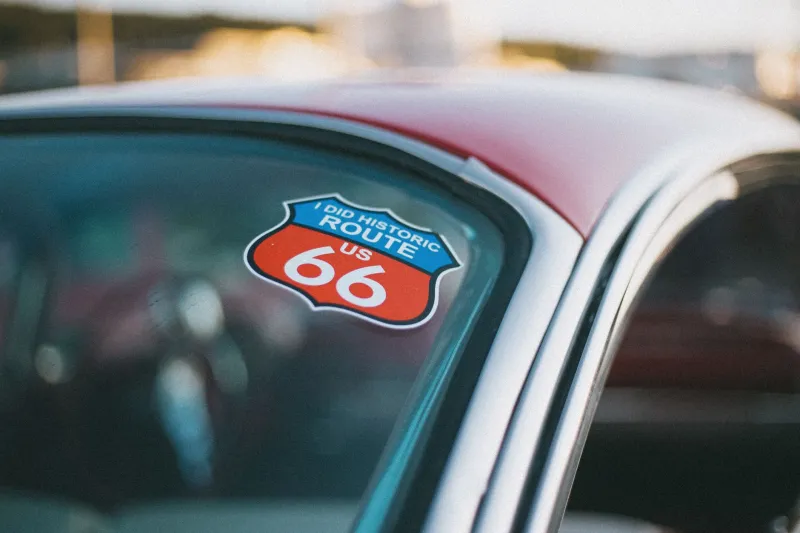
The 1970s and 1980s were the golden age. Political slogans competed for rear bumper space with national park ovals, "Honk If You Love Jesus" declarations, and the first wave of destination stickers that told the world you'd made it to the Outer Banks or the Florida Keys. Truckers plastered their rigs. Station wagons became rolling manifestos. Even the family sedan had something to say.
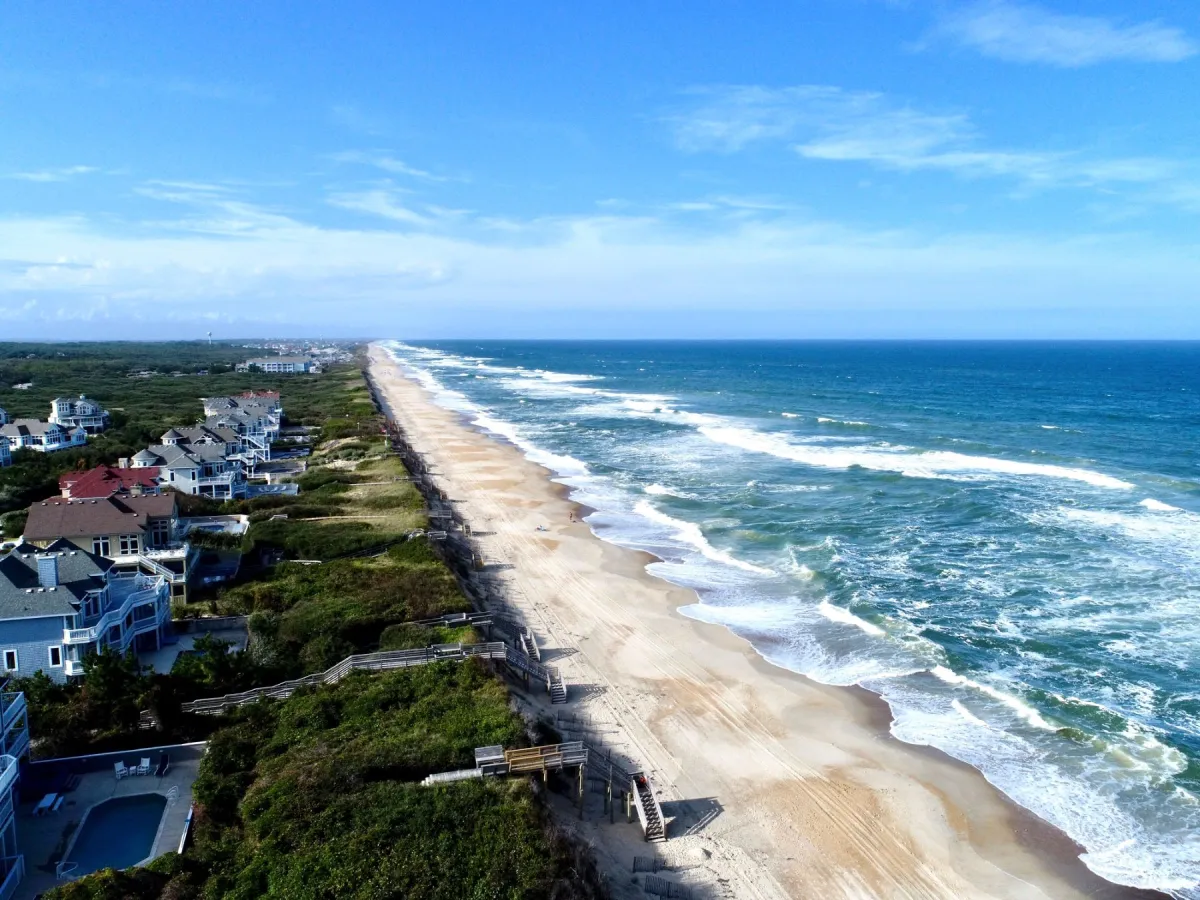 Photo: Outer Banks, via pirates-cove.com
The Oval That Started a Conversation
Few formats captured the bumper sticker spirit better than the European-style oval destination sticker that became an American obsession starting in the 1980s. Originally used in Europe to indicate a driver's country of origin — GB for Great Britain, D for Germany — the oval got repurposed stateside as a vacation trophy. OBX for the Outer Banks. MVY for Martha's Vineyard. ACK for Nantucket.
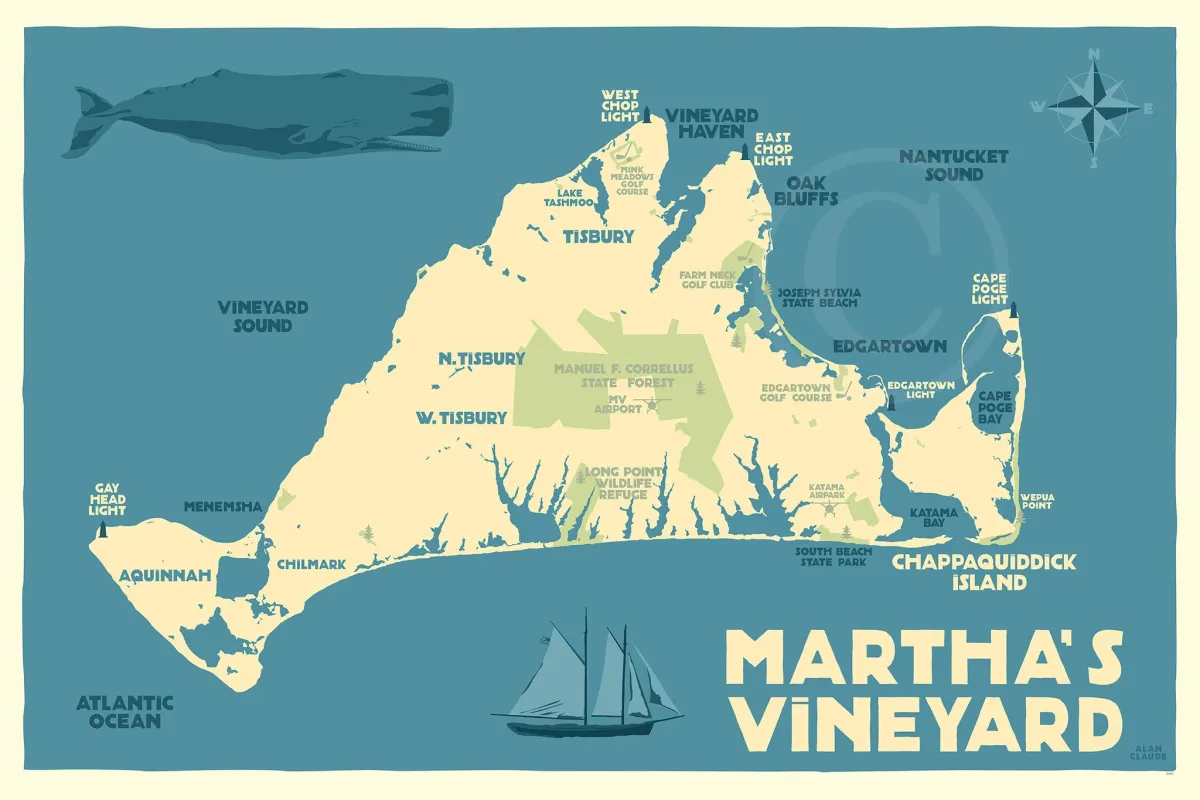 Photo: Martha's Vineyard, via cdn.shopify.com
At first these carried genuine social currency. Slapping an OBX sticker on your Volvo wagon told the neighborhood something about where your family spent its summers. Then the format exploded into self-parody. By the 2000s, you could get an oval for your cat's name, your favorite brewery, your CrossFit gym, and at least a dozen ironic variations mocking the original concept. The joke became the point, which is usually how American trends die.
Family stick figures followed a similar arc — earnest expression of family pride, massive mainstream adoption, inevitable backlash, and then the slow fade into embarrassment. Nothing kills a cultural format faster than everyone doing it at once.
The Politics Plastered on Your Bumper
For a long time, American political expression on vehicles was relatively good-natured. You declared your candidate. You pushed a cause. You expressed a view. The person behind you at the stoplight might have disagreed, but the exchange was mostly harmless.
The climate changed. As political identity became more tribal and the stakes of public disagreement felt higher, a lot of Americans quietly decided that announcing their politics on a vehicle parked in a public lot carried risks they weren't comfortable with. Stories of keyed cars and confrontations in parking garages made the rounds. Whether those stories were common or just memorable, they had an effect. People started thinking twice.
The 2010s saw a measurable pullback in political bumper stickers across the board — not just from one side of the aisle but from both. Expressing yourself at 65 miles per hour started to feel less like free speech and more like an invitation.
The Financial Reason Nobody Talks About
Here's the part of the bumper sticker story that doesn't get enough attention: Americans stopped owning their cars the way they used to.
In 1980, the vast majority of car buyers paid cash or took out a straightforward loan and eventually held the title outright. You owned that bumper. You could decorate it however you wanted because it was yours, and when you sold the car, the buyer could deal with it.
Today, roughly 30 percent of new vehicles are leased. A huge portion of the remainder are financed through arrangements where the driver is essentially a long-term renter who needs the car to look presentable at turn-in. Lease agreements specifically prohibit modifications that affect the vehicle's appearance or value. A bumper sticker, technically, qualifies.
Even buyers who aren't leasing think twice. Resale value is a genuine concern in a market where a used car's condition affects its trade-in by hundreds or thousands of dollars. Sticker residue on a bumper isn't catastrophic, but it's a signal of carelessness that savvy sellers prefer to avoid.
When cars became financial instruments rather than personal property, personalization started to feel irresponsible.
Where the Declaration Went
The impulse didn't disappear. It migrated. The opinions, the identity signals, the tribal affiliations, the humor — all of it moved to social media, where the audience is theoretically infinite, the format is more flexible, and you can delete it if the reaction gets ugly.
Instagram handles the vacation trophy. Twitter — or whatever it's called this week — handles the political declaration. TikTok handles the humor. The back of the car has been relieved of duty.
But there's something worth noticing in that migration. A bumper sticker was a commitment. You stuck it on, and it stayed. Everyone in your neighborhood, your grocery store parking lot, your kid's school pickup line could see it. It was a public declaration made to strangers, not to a curated audience of people who already agreed with you. That kind of exposure required a certain confidence — or at least a certain indifference — that digital self-expression doesn't really demand in the same way.
A Blank Bumper Says Something Too
The backs of American cars are cleaner than they've been in fifty years. Whether that's progress or loss probably depends on what you think public identity is for.
What's certain is that something visible and human has gone quiet on the American road. The rolling confessions, the vacation trophies, the political arguments nobody asked for — they were messy and sometimes obnoxious and occasionally genuinely funny. They were also a reminder that the person in the car ahead of you was a full human being with opinions and a history and somewhere they'd been that they were proud enough to advertise.
Now you just see the car. Clean, anonymous, and saying absolutely nothing.