No Belts, No Rules, No Problem: The Long Road to Protecting Kids in Cars
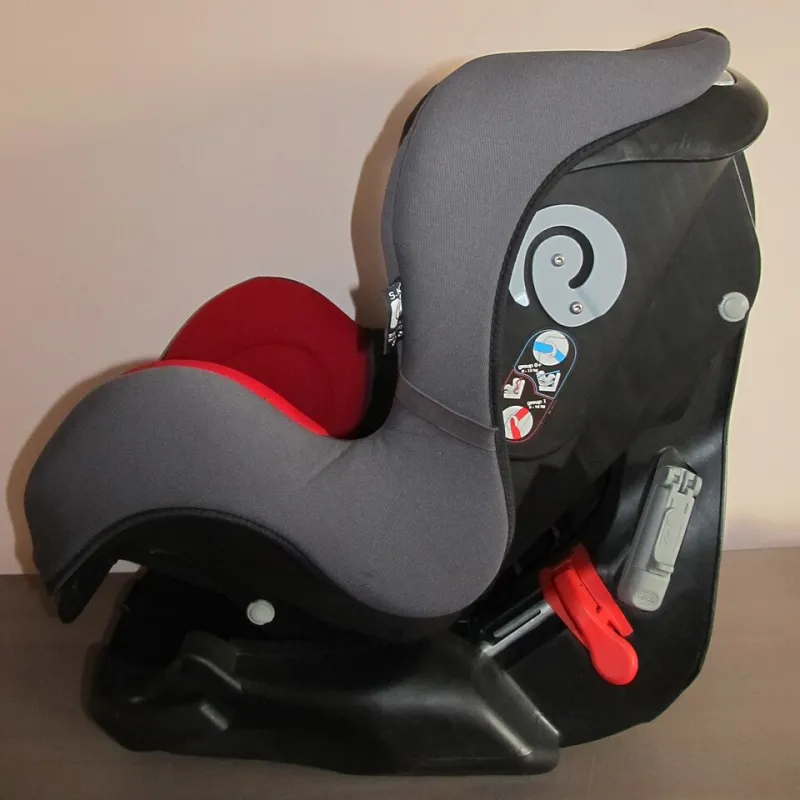
Photo: Niklitov, CC BY-SA 4.0, via Wikimedia Commons
If you were a kid in America before the 1980s, there's a decent chance your earliest car memories involve complete freedom of movement. Kneeling on the back seat to watch the highway disappear behind you. Curling up across the rear window ledge on long trips. Riding shotgun in your mom's lap while she navigated a parking lot. Nobody thought much about it. That was just how kids rode in cars.
The idea that a child needed to be harnessed, buckled, and secured in a government-tested, weight-rated seat before the car could move — that concept didn't exist yet. And the distance between that world and the one we live in now is one of the most dramatic transformations in American road culture.
The Era of Benign Neglect
Through the 1950s and 1960s, child passenger safety wasn't really a concept that registered with most families. Cars were big, roads were familiar, and the prevailing attitude was that a parent's arms were protection enough. The "crash position" for a child was mom's right arm swinging across the chest at a sudden stop — an instinct that, in any real collision, would do essentially nothing.
Early attempts at child car seats existed, but they were designed for convenience rather than safety. The goal was to boost a child high enough to see out the window, or to contain a toddler so they didn't climb all over the driver. Some attached to the seat back with a simple hook. Others were little more than padded boxes. Crash protection wasn't part of the design language.
Station wagons, which dominated American family life through the 1960s and 1970s, often had rear-facing jump seats in the cargo area — essentially a bench bolted into the back of the vehicle, behind the rear axle. Kids loved them. In a crash, they were catastrophic.
The Science Catches Up
Crash research in the late 1960s and early 1970s began generating data that was impossible to ignore. The physics were simple and brutal: in a 30 mph collision, an unrestrained child becomes a projectile. The forces involved are far beyond what any human arm could counter. The injuries — and deaths — that resulted were preventable.
Tennessee passed the first mandatory child passenger safety law in the United States in 1978, requiring children under four to be restrained in an approved seat. It was a quiet legislative moment that would eventually reshape the behavior of every parent in the country. By 1985, every state had some version of the law on the books. The details varied — age limits, weight thresholds, enforcement mechanisms — but the principle was established: children had to be buckled.
What changed public behavior wasn't just law, though. It was a sustained campaign of education, hospital programs, and eventually, cultural normalization. Pediatricians started asking about car seats at checkups. Hospitals began requiring parents to demonstrate a properly installed seat before discharging a newborn. The car seat became as essential a piece of new-parent equipment as a crib.
The Complexity Ratchets Up
Early mandated car seats were relatively simple. Strap the child in, buckle the seat to the vehicle, drive. But as crash testing became more sophisticated and injury data accumulated, the standards evolved rapidly — and so did the hardware.
Today's child passenger safety landscape is remarkably intricate. Seats are rated by weight and height, with distinct categories for rear-facing infants, forward-facing toddlers, and belt-positioning booster seats for older children. Installation involves either the vehicle's seat belt or the LATCH anchor system, and the margin for error is slim — studies have consistently found that a large percentage of car seats are installed incorrectly, even by well-intentioned parents.
Many communities now run free car seat inspection events staffed by certified child passenger safety technicians. The NHTSA maintains a searchable database of recalled seats. Seats themselves carry expiration dates — typically six to ten years from manufacture — because plastic degrades and safety standards change.
For a parent trying to do the right thing, it can feel overwhelming. But that complexity exists for a reason.
What the Numbers Actually Show
The results of this transformation are documented in federal traffic safety data, and they're significant. The CDC estimates that child safety seats reduce the risk of death in passenger vehicle crashes by 71 percent for infants and 54 percent for toddlers ages one to four. Booster seats reduce injury risk for older children by 45 percent compared to seat belts alone.
The broader trend in child traffic fatalities reflects this shift. In 1975, before mandatory seat laws existed anywhere in the US, more than 2,000 children under five died in motor vehicle crashes annually. By the 2010s, that number had dropped by more than 75 percent — even as the number of cars on the road, and miles driven, increased substantially.
That's not a small statistical footnote. Those are tens of thousands of children who are alive because a set of laws, products, and cultural habits changed.
A Different Kind of Normal
Today's parents generally don't think twice about buckling their kids in. It's automatic — part of the ritual of getting into a car, as instinctive as fastening their own belt. Kids expect it. Many will refuse to let a car move until everyone is buckled, because they've been taught that's simply how it works.
That cultural normalization is arguably the most significant victory of the child passenger safety movement. Laws can mandate behavior, but they can't create the reflexive, unthinking compliance that comes from a generation that grew up knowing no other way.
The parents who let their toddlers bounce around a back seat in 1968 weren't reckless or indifferent. They just didn't know what the data would eventually make impossible to ignore. Once they knew — once the science was clear and the laws were written and the seats were available — everything changed.
It's one of those rare cases where the gap between then and now isn't a story of something lost. It's a story of something genuinely, measurably better.