The Last Guy Who Checked Your Oil: What We Traded Away When We Pumped Our Own Gas

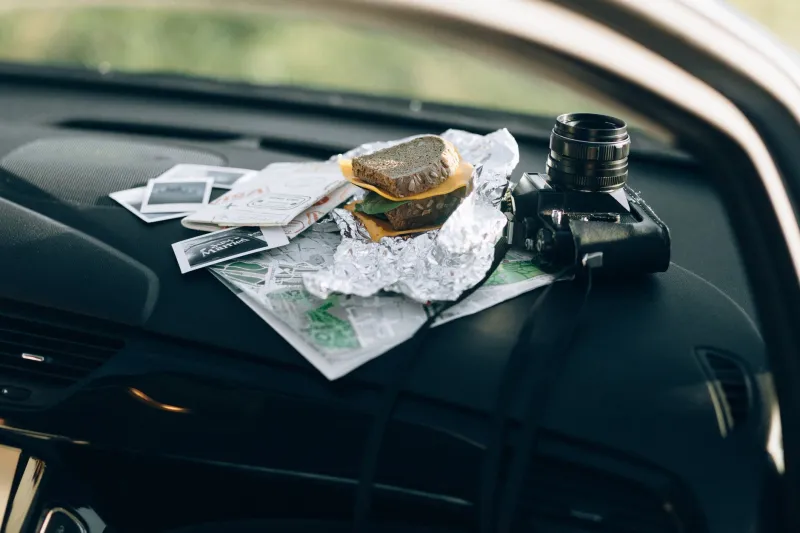
Photo by Photo by Stephanie Valencia on Unsplash on Unsplash
There's a generation of Americans who can still remember the sound of it — the little bell that rang when your tires rolled over the rubber hose stretched across the gas station driveway. Within seconds, a guy in a uniform would appear. He'd ask what you needed, start the pump, then move around the car with a quiet efficiency that felt almost choreographed. Windshield wiped. Oil dipstick pulled. Tire pressure eyeballed. Maybe a word about the weather, or a question about how the family was doing. By the time he handed back your change, you knew your car was okay and someone had actually looked at it.
That world is almost entirely gone now. What replaced it is faster, cheaper, and available around the clock — but it's also colder, more anonymous, and a little more lonely than most people want to admit.
The Full-Service Era Was the Default
For the first six decades of American car culture, you didn't pump your own gas. It simply wasn't done. Gas stations competed on service, not just price, and the attendant was the product. Major oil companies trained their staff in specific routines. Gulf, Texaco, and Standard Oil all had branded uniforms, standardized greeting scripts, and multi-point check procedures that attendants were expected to follow on every visit. A good station had guys who remembered your name, your car, and how you liked your windshield cleaned.
The service station was also a community fixture in a way that's hard to fully appreciate today. In small towns especially, the guy running the Esso station often knew more about the mechanical condition of the local vehicle fleet than anyone else in the county. He knew which trucks had been burning oil for six months and which farm equipment was one bad road away from a breakdown. It was informal, untracked knowledge — but it was real, and it mattered.
Oregon and New Jersey: The Last Holdouts
The shift to self-service didn't happen all at once. It crept in through the 1960s and exploded during the 1973 oil crisis, when fuel shortages and spiking prices made the labor cost of full-service stations suddenly untenable. Stations that let customers pump their own gas could charge a few cents less per gallon, and in a price-sensitive market during a shortage, a few cents was everything.
Most states followed the economics. But two didn't — Oregon and New Jersey held onto mandatory full-service laws for decades, making them cultural time capsules for anyone who remembered the old way. Oregon finally loosened its rules in 2018, allowing self-service in rural counties. New Jersey still requires attendants at most stations as of this writing, making it the last state in the union where someone will still come to your window and ask what you need. Visitors from other states often don't know what to do when it happens. They sit there, hands on the wheel, waiting for a prompt that never comes, until the attendant knocks on the glass.
What the Transaction Actually Looked Like
It's worth being specific about what the full-service experience included, because the memory has gotten a little fuzzy. A standard full-service fill-up in 1965 meant: the attendant greeted you and confirmed the fuel grade, started the pump, checked the engine oil level with the dipstick, checked the radiator coolant, inspected the battery terminals, checked tire pressure on all four tires, cleaned all the windows front and rear, and sometimes swept out the floor mats if you asked. All of this happened while you sat in the car. The whole thing took about the same time as a fill-up takes today — maybe five or six minutes — but you left knowing your car had been looked at by someone who knew what they were doing.
Modern drivers, many of whom have never opened their own hood, are now entirely responsible for monitoring all of those same systems. Oil levels go unchecked for months. Tire pressure warnings get ignored. The dashboard light that's been on since February gets treated as ambient decoration. The attendant wasn't just a convenience — he was a built-in accountability system for basic vehicle maintenance.
The Convenience Store Pivot
What killed the service station wasn't just self-service pumps. It was the realization that the real money wasn't in fuel at all — it was in everything else. Gas margins are notoriously thin. The profit is in the coffee, the energy drinks, the hot dogs rotating under a heat lamp, and the lottery tickets. The modern gas station is really a convenience store that happens to have pumps out front, and the pumps are mainly there to get you out of your car and into the building.
This is a complete inversion of the original model. The old service station existed to serve the car and the driver. The modern version exists to serve the snack industry, with fuel as the loss leader.
What Independence Actually Cost Us
Self-service gas gets framed as a win for consumer independence — you're in control, you set the pace, you don't have to interact with anyone if you don't want to. And there's something real in that. Americans value efficiency and autonomy, and the ability to fill up at 2 AM without waiting for anyone is genuinely useful.
But there's a cost that rarely gets tallied. We lost a touchpoint — a regular, built-in moment where someone with mechanical knowledge laid eyes on our vehicle and said whether it was okay. We lost a familiar face at a neighborhood institution. We lost a job category that employed hundreds of thousands of people in towns that had little else. And we gained a transaction that's deliberately designed to be as fast and frictionless as possible, which is another way of saying it's designed for you to spend the least amount of time thinking about it.
The bell over the driveway hose is still technically out there somewhere — in museum restorations and nostalgia-themed stations that charge a premium for the full-service experience. But for most Americans, the last time someone checked their oil as a routine courtesy was sometime before they were born. We call that progress. Most days, it probably is. But every now and then, on a cold morning when the tire pressure light is on and you're not sure what to do about it, the old way doesn't sound so bad.