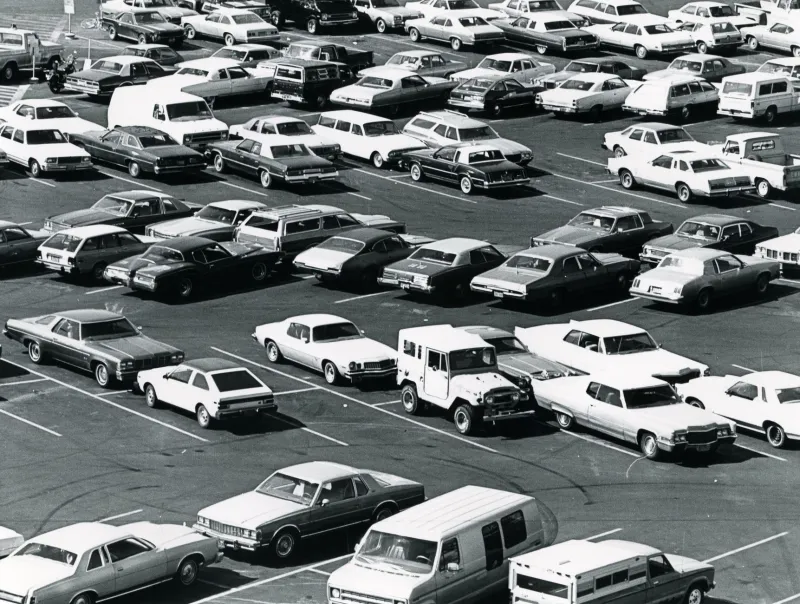
Oil-Stained Sundays: When Every American Driveway Was an Auto Shop
The Saturday Morning Ritual
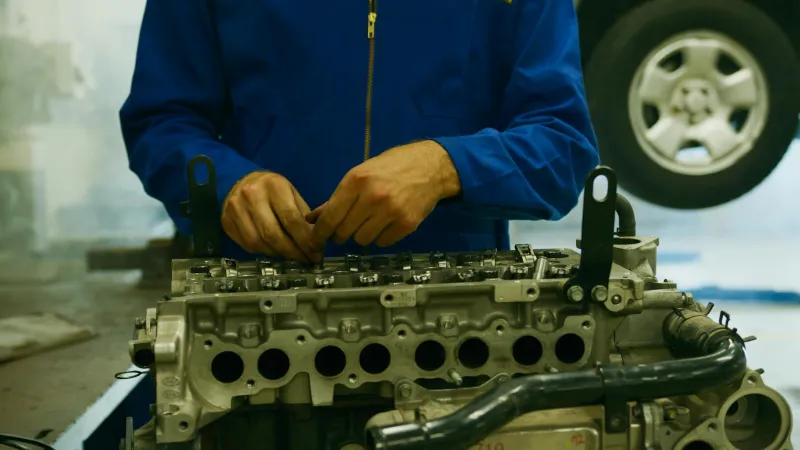
Every Saturday morning in 1975, the sound was the same across American suburbia: the metallic clank of socket wrenches, the wheeze of hydraulic jacks, and the satisfying thunk of car hoods slamming shut. In garages and driveways from Maine to California, millions of Americans were elbow-deep in their own engines, performing surgery on carburetors and coaxing life from tired transmissions.
This wasn't a hobby for gearheads—it was mainstream American culture. Your neighbor the accountant could rebuild a small-block Chevy. The high school English teacher knew the difference between a 327 and a 350. The guy who sold insurance spent his weekends boring out cylinders and installing performance cams. Mechanical literacy was as common as knowing how to change a flat tire.
The Chilton Manual Generation
Walk into any American garage in 1970, and you'd find it: a grease-stained Chilton manual or Motor's repair guide, pages dog-eared and margins filled with handwritten notes. These books were the Wikipedia of their era, containing exploded diagrams, torque specifications, and step-by-step instructions for everything from valve adjustments to complete engine overhauls.
The manuals assumed you had basic tools and basic intelligence—nothing more. They'd walk you through pulling a transmission in your driveway using a floor jack and some creativity. They'd explain how to rebuild a carburetor on your kitchen table. They treated mechanical work as something any reasonably motivated person could tackle given enough time and patience.
Fathers passed these skills to sons and daughters like family recipes. Weekend garage sessions became bonding time, teaching moments wrapped in the shared frustration of stripped bolts and the satisfaction of hearing an engine fire up after hours of work.
Tools You Could Actually Afford
The beauty of working on cars back then lay in the simplicity of what you needed. A basic socket set, some wrenches, a few screwdrivers, and maybe a timing light could handle 90% of automotive repairs. Specialized tools existed, but creative mechanics found ways around them. Need to compress valve springs? A C-clamp and some ingenuity would do.
Parts were cheap and available everywhere. You could walk into any auto parts store and buy a complete engine rebuild kit for a few hundred dollars. Junkyards were treasure troves of interchangeable parts. A transmission from a '69 Camaro would bolt right into a '71 Nova. Engine swaps were weekend projects, not month-long custom fabrication jobs.
The Neighborhood Network
Every neighborhood had its informal network of mechanical expertise. Bob down the street was the carburetor wizard. Jim across town knew everything about automatic transmissions. The guy at the end of the block had the engine hoist everyone borrowed. Knowledge and tools flowed freely through these networks, creating a community of shared mechanical wisdom.
Garage sales regularly featured boxes of used parts, half-finished projects, and tool collections from guys who'd finally given up on that '67 Mustang restoration. These sales were like archaeological digs for car enthusiasts, revealing the mechanical ambitions of previous generations.
When Cars Wanted to Be Fixed
The vehicles themselves encouraged this hands-on relationship. Engine bays were spacious and accessible. You could actually see the engine, reach every component, and understand how everything connected. Carburetors, distributors, and mechanical fuel pumps were mechanical devices you could take apart, clean, and reassemble with basic tools.
Diagnosing problems was largely mechanical detective work. A engine miss might be a bad plug wire. Poor fuel economy usually meant carburetor adjustment. Overheating pointed to the radiator, water pump, or thermostat. The troubleshooting process was logical and accessible to anyone willing to learn.
The Computer Revolution Changes Everything
The transformation began gradually in the 1980s with the introduction of electronic fuel injection and computerized engine management systems. Suddenly, diagnosing problems required expensive scan tools instead of mechanical intuition. The Check Engine light replaced the art of reading spark plugs and listening to engine sounds.
By the 1990s, cars had become computers on wheels. Engine bays filled with plastic covers hiding the mechanical components underneath. Proprietary diagnostic equipment costing thousands of dollars became necessary for basic troubleshooting. The intimate mechanical relationship between owner and machine began to fade.
Today's Sealed Black Boxes
Modern vehicles actively discourage owner maintenance. Warranty language threatens to void coverage for unauthorized repairs. Plastic engine covers hide components that were once proudly displayed. Special tools and procedures that were once optional suggestions have become absolute requirements.
Try to work on a current-model car in your driveway, and you'll quickly discover the barriers. Removing a headlight might require removing the entire front bumper. Changing spark plugs could involve dismantling half the intake manifold. Simple repairs have become complex procedures requiring specialized equipment and knowledge.
The Death of Mechanical Intimacy
What we've lost goes beyond just the ability to fix our own cars. We've lost the intimate understanding of how machines work, the satisfaction of solving mechanical problems with our own hands, and the community that formed around shared mechanical challenges.
The modern relationship between owner and vehicle has become passive and distant. Cars are appliances to be used until they break, then delivered to professionals for repair. The mechanical literacy that once defined American car culture has largely vanished, replaced by the ability to navigate touchscreen interfaces and connect smartphones.
Progress and Its Discontents
Today's cars are undeniably better in almost every measurable way. They're more reliable, more efficient, safer, and cleaner than anything from the golden age of backyard mechanics. The computer systems that make them impossible to fix at home also make them far less likely to need fixing in the first place.
But something irreplaceable was lost in that transition. The confidence that came from understanding your machine. The community that formed around shared mechanical knowledge. The simple satisfaction of fixing something with your own hands. The weekend ritual that brought fathers and children together over grease-stained workbenches.
The Ghost in the Garage
Drive through any older American neighborhood today, and you'll still see the evidence: garages with workbenches, tool chests, and engine hoists gathering dust. These spaces once hummed with mechanical activity every weekend. Now they store lawn mowers and Christmas decorations, monuments to a more hands-on relationship with the machines that move us.
The oil-stained Sundays of American car culture represent more than just automotive history—they represent a fundamentally different relationship with technology, one where understanding and participation mattered more than convenience and efficiency. That world is gone, but its ghost still haunts every garage where the tools wait patiently for hands that will never again rebuild an engine on a Saturday afternoon.