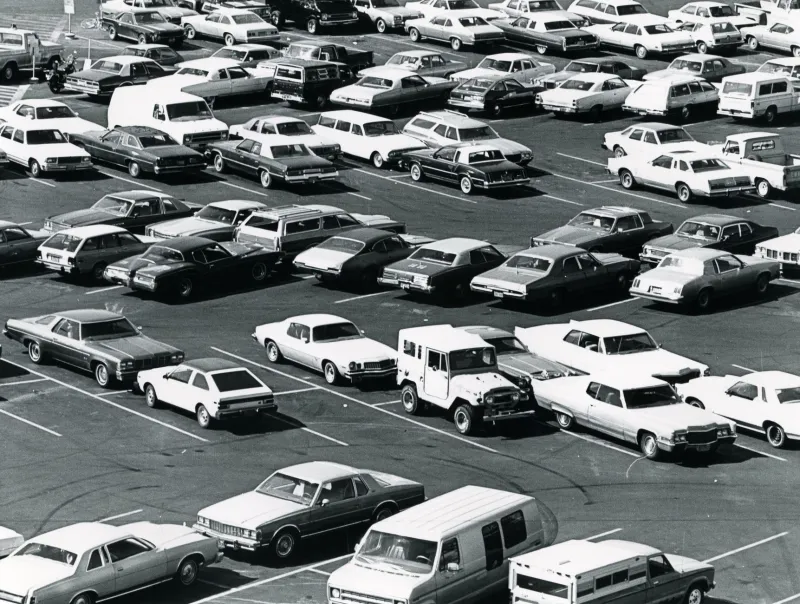
Knobs, Levers, and the Satisfying Click: The Physical Controls That Modern Cars Are Quietly Erasing

Photo by Photo by C D-X on Unsplash on Unsplash
Picture a 1991 pickup truck. The interior is not glamorous. The seats are vinyl. The stereo is a single-DIN unit with a row of preset buttons along the bottom. The air conditioning is controlled by two sliders — one for temperature, one for fan speed — that click into position with a satisfying mechanical certainty. The windows go down with a crank handle that takes exactly four turns. Everything in that cabin has a specific physical location, a specific feel, and requires zero mental bandwidth to operate.
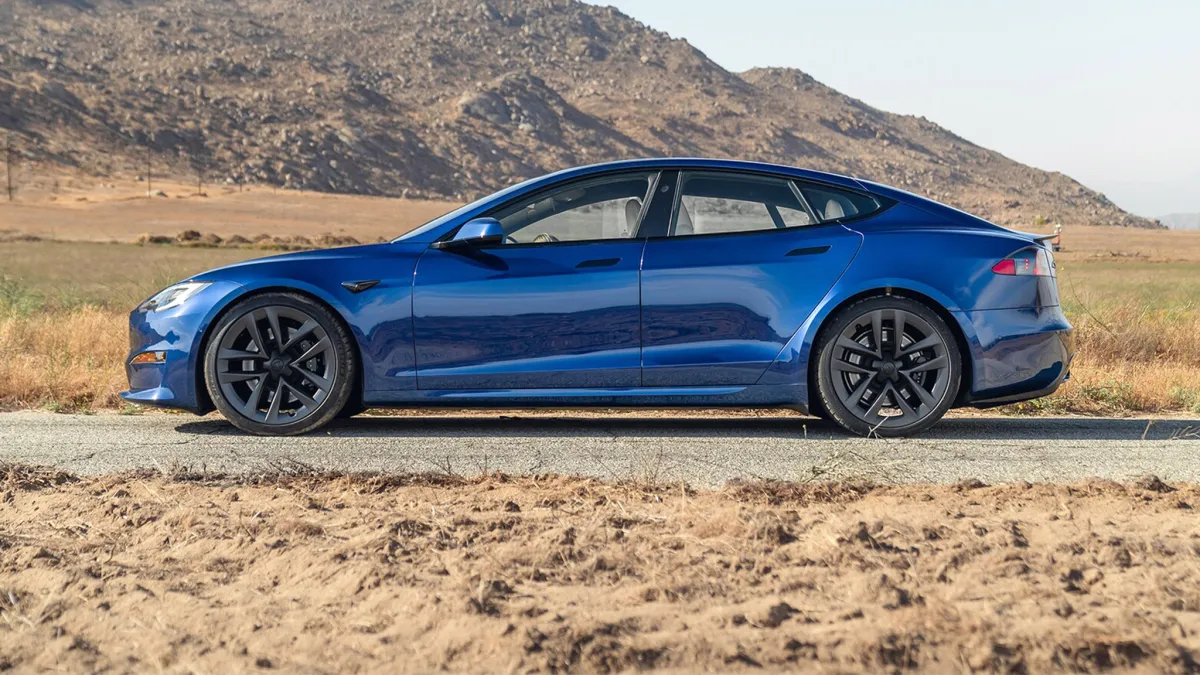 Photo: Tesla Model S, via www.motortrend.com
Now picture a 2024 electric sedan. The interior is stunning — a wide, minimalist dashboard dominated by a large glass touchscreen. Climate, audio, navigation, seat position, ambient lighting, mirror adjustment: it's all in there somewhere. All you have to do is find it.
That's where things get interesting.
The Muscle Memory That Used to Keep You Safe
There's a reason experienced drivers from earlier eras could adjust the radio, change the temperature, and flip on the defroster without moving their eyes from the road. The controls were physical, fixed, and findable by touch alone. Your hand knew where the volume knob was. Your thumb knew how hard to push the fan button. The interaction required almost no conscious thought — which is exactly what you want from a system being operated at highway speeds.
This wasn't an accident of design. Early automotive engineers understood, even before distracted driving was a formal research category, that controls needed to be operable without demanding visual attention. The physical knob, the dedicated button, the lever with distinct positions — these were solutions to a real problem. They worked because they gave the driver tactile feedback. You could feel when the fan was on high. You could feel when the heat was set to maximum. The car communicated back to your fingertips.
By the time the 1990s gave way to the 2000s, that system was being refined to a high degree. Climate controls had clear, dedicated dials. Audio systems had physical tuning knobs with detents you could count by feel. Even the most feature-rich vehicles of that era maintained the principle that critical controls should be accessible without a learning curve and operable without a screen.
How the Touchscreen Took Over
The shift started in the early 2010s, accelerated by the success of the smartphone and the arrival of large infotainment screens in consumer vehicles. The logic was understandable: a touchscreen could consolidate dozens of functions into a single surface, reduce manufacturing complexity, and give the interior a sleek, modern aesthetic that physical buttons simply couldn't match.
Tesla pushed the concept furthest and fastest. The Model S, launched in 2012, replaced virtually every physical control with a 17-inch touchscreen. The result was visually arresting — a dashboard that looked like it belonged in a science fiction film. Other manufacturers watched the reaction and began moving in the same direction, some enthusiastically, some reluctantly.
By the early 2020s, the industry had largely committed. Chevrolet, Ford, BMW, Volkswagen, Honda — nearly every major brand was consolidating controls into screens and reducing or eliminating physical buttons. The logic of the touchscreen had become the default logic of automotive design.
The problem is that a touchscreen, no matter how responsive, cannot replicate what a physical knob does. It requires you to look at it. It requires you to navigate to the right menu. It gives you no tactile confirmation that you've done what you intended. Changing the temperature in a modern vehicle often means touching the screen, waiting for the climate menu to appear, and then tapping the correct element — a sequence that takes two or three seconds of visual attention that was previously not required at all.
Researchers at the Swedish automotive publication Vi Bilägare measured the time required to perform common in-car tasks on modern touchscreen systems versus older physical controls. The results were striking: tasks that took two or three seconds on a traditional knob-and-button system took anywhere from ten to thirty seconds on modern touchscreen interfaces. At highway speeds, those extra seconds represent enormous distances traveled without eyes on the road.
The Backlash Begins
Something interesting has been happening in the last few years: drivers are pushing back, and some automakers are listening.
Volkswagen, which aggressively eliminated physical controls in its 2020 Golf, reversed course in subsequent model years after significant customer complaints about the touch-sensitive sliders it used for volume and temperature. The new controls brought back actual knobs. The press release practically apologized.
Hyundai and Kia have maintained physical climate controls even as their infotainment systems grew larger and more capable. Toyota has been notably conservative about eliminating buttons, particularly for functions used frequently while driving. Even some luxury brands, under pressure from customer feedback, have begun reintroducing tactile controls for the most commonly used functions.
The conversation in automotive design circles has shifted. "Human-machine interface" has become a serious discipline, with researchers studying exactly how much cognitive load different control systems impose on drivers. The answer, increasingly, is that physical controls win on usability for anything time-sensitive — and that beautiful screens are not automatically better screens.
Something More Than Convenience
There's also a dimension to this that goes beyond safety data and usability metrics. Physical controls had character. The specific resistance of a well-made volume knob. The satisfying thunk of a gear lever settling into position. The precise travel of a window crank. These interactions were small, but they were part of a tactile relationship between driver and machine that made the experience of driving feel connected and immediate.
A touchscreen, however beautiful, is the same glass surface regardless of what function it's controlling. There's no difference in feel between adjusting the bass and setting the navigation destination. The car no longer communicates through your fingertips. It communicates through a display, which means it communicates on its terms, not yours.
For drivers who grew up with physical controls, the loss is real even if it's hard to articulate. The car used to feel like an extension of your hands. Now it sometimes feels like a device you're operating — one that occasionally requires you to remember which submenu holds the setting you want.
Progress built a cleaner dashboard. What it couldn't quite build was the click.