The Secret Language of the Road: How Drivers Used to Talk to Each Other Without Saying a Word
There's a moment that older drivers remember clearly. You're cruising down the highway at night, and an oncoming car flashes its headlights twice. You ease off the gas. Sure enough, a speed trap appears around the next bend. You never saw the other driver's face. You'll never know their name. But for one brief second, you were teammates.
That kind of exchange — wordless, instinctive, genuinely useful — was once a cornerstone of American driving culture. It's mostly gone now. And the road is a lonelier, less cooperative place because of it.
A Vocabulary Built on the Road
The nonverbal language of driving wasn't invented by any single person or codified in any rulebook. It evolved organically over decades, passed from experienced drivers to new ones the way dialects spread through communities. By the mid-20th century, it was rich and surprisingly nuanced.
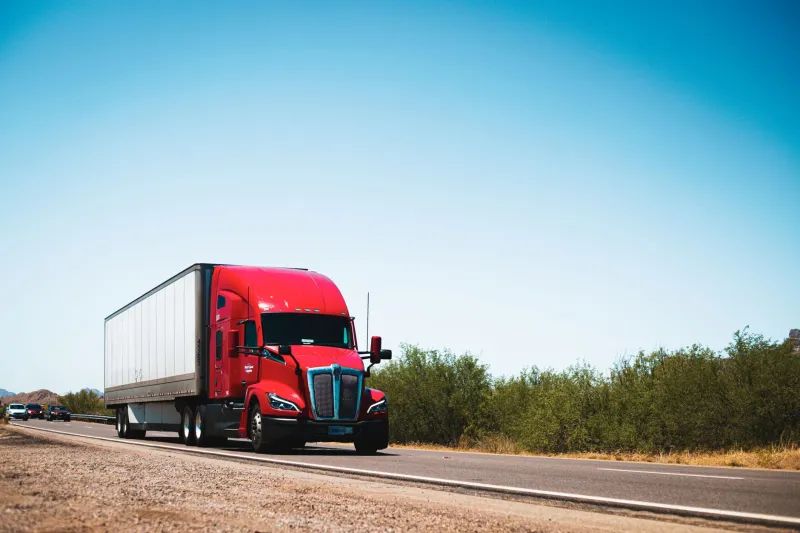
Headlight flashing was the most universal signal. Two quick flashes from an oncoming car meant police ahead — a warning extended freely across lanes, across strangers, across the invisible social barriers that separate people in everyday life. On the highway, a single brief flash from a truck driver told a passing car that it had cleared enough distance to merge safely back into the right lane. The car's driver would often respond with a quick flash of the hazard lights — a thank-you that required no words.
Hand signals had their own grammar. A driver with their arm out the window, palm down and moving in a slow wave, was asking you to back off and give more space. A circular motion meant "roll your window down" — useful before the era of universal power windows, when you might need to shout something important across two lanes. Truckers developed their own extended vocabulary of horn patterns and light sequences, a maritime-style signaling system for the interstate age.
Even the horn had layers. A single light tap was a friendly greeting or a gentle heads-up. Two short bursts said "hey, pay attention." A long, sustained blast was something else entirely — frustration, alarm, or genuine danger. Experienced drivers parsed these distinctions automatically.
Why It Worked
What made this informal system function wasn't just the signals themselves — it was the shared attention that made them possible.
Drivers in the 1950s, 1960s, and 1970s were, in a very real sense, more present behind the wheel. Not because they were more virtuous, but because the car demanded it. There was no GPS announcing every turn. No cruise control holding the speed. No lane-keeping system nudging the wheel. Driving required continuous active engagement with the road and with the other vehicles sharing it.
That engagement meant drivers were constantly reading each other. The slight hesitation before a lane change. The way a car's front end dipped when someone hit the brakes hard. The angle of a truck's wheels telegraphing an upcoming turn. Experienced drivers processed all of this unconsciously, building a mental model of the traffic around them that was far more sophisticated than any modern sensor array.
The informal signaling system lived inside that broader awareness. It worked because everyone was already watching. A headlight flash registered immediately because the other driver was already looking at oncoming traffic, not at a screen.
The Technology That Replaced Human Judgment
Modern vehicles are remarkable machines. The safety technology packed into a current mid-range sedan would have seemed like science fiction to a 1970s driver. Lane departure warnings, adaptive cruise control, automatic emergency braking, blind-spot monitoring — these systems have genuinely saved lives, and that matters.
But they've also changed what driving asks of the person behind the wheel. When a sensor watches your blind spot, you stop watching it yourself. When an alert tells you that you're drifting, you stop feeling it in the steering. Each automated system that takes over a task quietly erodes the human skill that the task once required.
The social dimension has eroded too. Modern drivers are increasingly isolated inside their vehicles — insulated by noise-canceling cabins, occupied by infotainment systems, and navigated by GPS voices that eliminate the need to read the road ahead. The mental bandwidth that once went toward reading other drivers now goes toward podcasts and text notifications.
Headlight flashing still happens, but it's less common and less understood. Many younger drivers don't know what it means when a truck flashes its lights after they pass. The hand-signal vocabulary has largely vanished. The cooperative instinct that once connected strangers on the highway has faded into the background.
The Social Contract That's Gone Quiet
There's a sociological dimension here that's easy to overlook. The informal language of the road wasn't just practical — it was a form of community. It reminded drivers that they were part of a shared space, moving together, mutually dependent on each other's cooperation and goodwill.
The warning flash for a speed trap was, in its small way, an act of solidarity between strangers. The trucker's clearance signal was a gift of information freely given. The thank-you hazard flash was an acknowledgment that the other driver had done something kind. These micro-transactions of courtesy added up to a culture — one in which the road felt less like a competition and more like a commons.
That culture hasn't disappeared entirely. Long-haul truckers still maintain much of the old vocabulary. Rural drivers in parts of the country still wave to oncoming cars on two-lane roads. But on the urban interstates where most Americans do most of their driving, the old language is nearly extinct.
What Modern Drivers Are Missing
Here's the part that should give us pause: the technology that replaced driver-to-driver communication is good at what it does, but it only works within the car that contains it. It can't tell you that the driver two vehicles ahead just got a phone call and stopped paying attention. It can't communicate the trucker's hard-won knowledge that there's black ice on the overpass ahead. It can't replicate the cooperative intelligence of a thousand experienced drivers all watching out for each other.
The old system was imperfect and informal. It required skill and attention to use well. But it connected drivers to each other in a way that no sensor package has yet managed to replicate.
The road is safer in many measurable ways than it was fifty years ago. But it's also quieter in a way that has nothing to do with noise. The conversation between drivers — that subtle, wordless exchange that once made highways feel like shared territory — has mostly gone silent. And we're all a little more alone out there because of it.