Sixteen and Behind the Wheel: When Getting Your License Meant Everything in America
The Birthday That Changed Everything
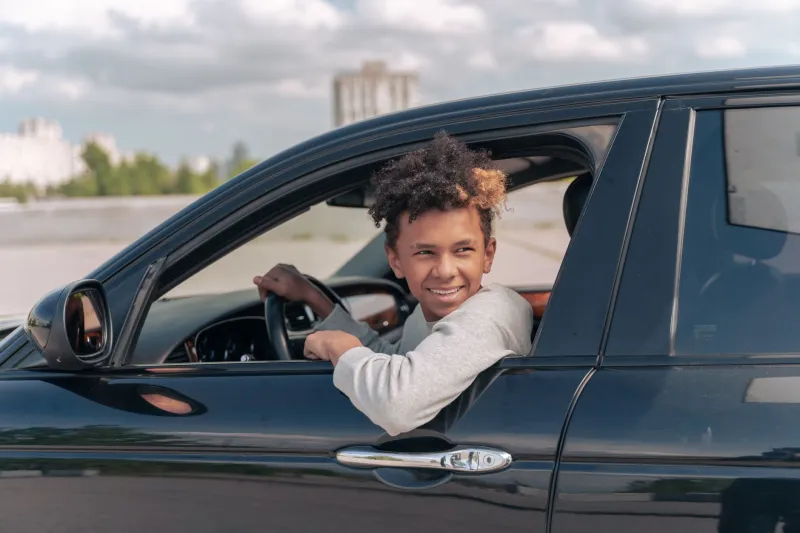
In 1985, Sarah Martinez counted down the days to her 16th birthday with the intensity of a NASA launch countdown. Not because of cake or presents, but because March 15th meant one thing: she could finally get her driver's license. Her parents had already promised her the family's 1978 Buick Skylark every Friday night, and her friends were planning their first real road trip to the mall three towns over.
 Photo: 1978 Buick Skylark, via a.ltrbxd.com
Sarah's experience wasn't unique. For decades, getting your driver's license at 16 was America's most important coming-of-age ritual, ranking somewhere between your first kiss and high school graduation in terms of life-changing significance.
When DMV Lines Were Teenage Pilgrimages
Walk into any Department of Motor Vehicles office in 1980, and you'd find it packed with nervous teenagers clutching their learner's permits like golden tickets. The parallel parking test wasn't just an exam—it was a public declaration that you were ready to join the adult world.
 Photo: Department of Motor Vehicles, via i.pinimg.com
Parents would take time off work to accompany their kids to the DMV. Grandparents would drive hours to witness the moment. Some families even threw "license parties" to celebrate their teenager's newfound mobility. The plastic card with your awkward photo wasn't just identification; it was proof that you'd crossed an invisible threshold into independence.
The ritual started months earlier with driver's education classes that felt more important than any other subject in school. Behind-the-wheel training with Mr. Johnson, the perpetually nervous driving instructor, became legendary stories passed down through graduating classes. Everyone remembered their first time merging onto the highway or attempting to park downtown.
Freedom With Four Wheels and a Tank of Gas
Once you had that license, the world fundamentally changed. Friday nights weren't spent waiting for parents to drive you places—you could cruise Main Street, pick up your friends, and decide your own adventures. The family car became your chariot, and a full tank of gas represented unlimited possibilities.
Teenagers would spend entire evenings just driving around town, radio cranked up, windows down, going nowhere in particular but feeling like they owned the world. The phrase "I'll pick you up" carried weight and responsibility that made you feel genuinely grown-up.
Part-time jobs became more than pocket money—they were fuel funds. Mowing lawns, babysitting, and working at the local diner all served one primary purpose: keeping gas in the tank so you could maintain your newly won independence.
The Quiet Revolution Nobody Noticed
Today, that same DMV office Sarah visited in 1985 tells a dramatically different story. The teenage crowds have thinned considerably. Many 16-year-olds aren't even bothering to get their learner's permits, let alone rushing to take their driving test on their birthday.
The statistics are startling: in 1983, 87% of 19-year-olds had driver's licenses. By 2014, that number had dropped to 69%. Among 16-year-olds, the decline is even more dramatic—from 46% in 1983 to just 24% in 2014.
Why the Rush Disappeared
Several factors converged to diminish the driver's license's cultural power. Urban and suburban planning changed, creating walkable communities where teenagers can reach friends, jobs, and entertainment without cars. Public transportation improved in many areas, offering viable alternatives to driving.
Technology played perhaps the biggest role. Why beg your parents for car access when you can maintain rich social lives through smartphones and social media? Video calls, online gaming, and digital hangouts replaced the need to physically gather in parking lots and drive aimlessly through town.
The rise of rideshare services like Uber and Lyft gave teenagers on-demand transportation without the responsibility of car ownership. For many, summoning a ride became more convenient than learning to parallel park.
The Economics of Independence
Money matters changed too. Car insurance for teenage drivers skyrocketed, often costing families $2,000-4,000 annually. Gas prices, while fluctuating, generally increased faster than teenage wages. The total cost of teen driving—insurance, gas, maintenance, and the occasional fender-bender—began outweighing the benefits for many families.
Meanwhile, teenage employment rates declined. In 1979, 58% of teenagers had summer jobs. By 2016, that number fell to 35%. Without steady income, maintaining driving privileges became financially challenging for many teens.
What We Lost in Translation
The decline in teen driving represents more than changing transportation preferences—it signals a fundamental shift in how young Americans experience independence and responsibility.
Previous generations learned crucial life skills through driving: navigation without GPS, mechanical problem-solving when cars broke down, financial management through gas and insurance costs, and social coordination that required advance planning rather than instant messaging.
The driver's license also served as a universal milestone that connected teenagers across economic and social lines. Rich kids and working-class kids all faced the same parallel parking test, creating shared experiences that built community bonds.
The New Normal
Today's teenagers often delay licensing until college or beyond, when practical necessity finally outweighs convenience. Some never bother at all, particularly in major cities where car ownership feels more burdensome than liberating.
This shift reflects broader changes in how younger Americans view adulthood itself. Previous generations rushed toward independence markers like driving, dating, and working. Today's teens often extend adolescence, focusing on academic achievement and digital social lives rather than physical mobility.
The Road Forward
While the cultural significance of the driver's license has undeniably diminished, driving hasn't disappeared entirely. It's simply moved from a universal rite of passage to a practical skill acquired when circumstances demand it.
Perhaps that's not entirely negative. Today's eventual drivers often approach the responsibility more thoughtfully, getting licensed when they genuinely need mobility rather than simply because they've reached an arbitrary age.
But something irreplaceable was lost when that plastic card stopped representing the key to adulthood. For generations of Americans, nothing quite matched the feeling of holding your brand-new driver's license, knowing that for the first time in your life, you could point your car in any direction and just go.
That particular brand of freedom—immediate, tangible, and earned through parallel parking prowess—may be fading into history, but its memory still makes former teenagers smile whenever they hear their favorite driving song from 1985.