The Borrowed Car and the Open Road: What Happened to the American Teenager's Greatest Rite of Passage
The Borrowed Car and the Open Road: What Happened to the American Teenager's Greatest Rite of Passage
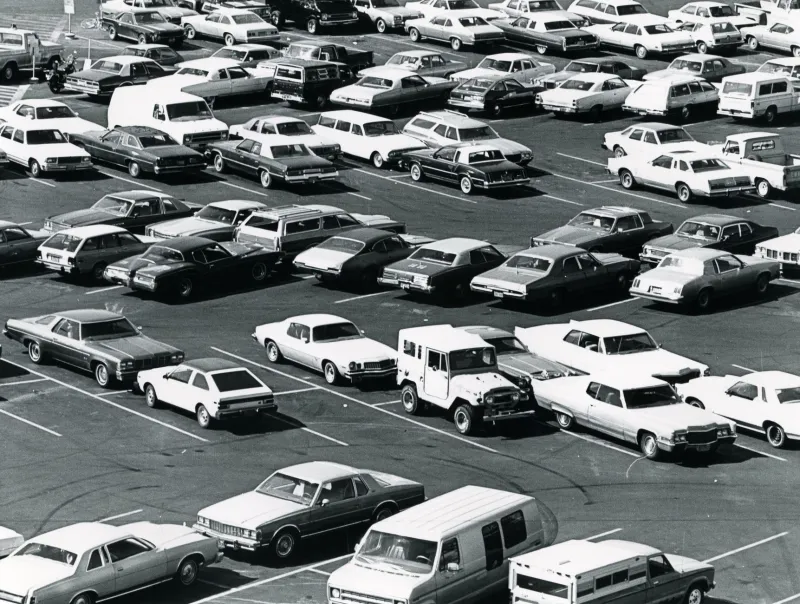
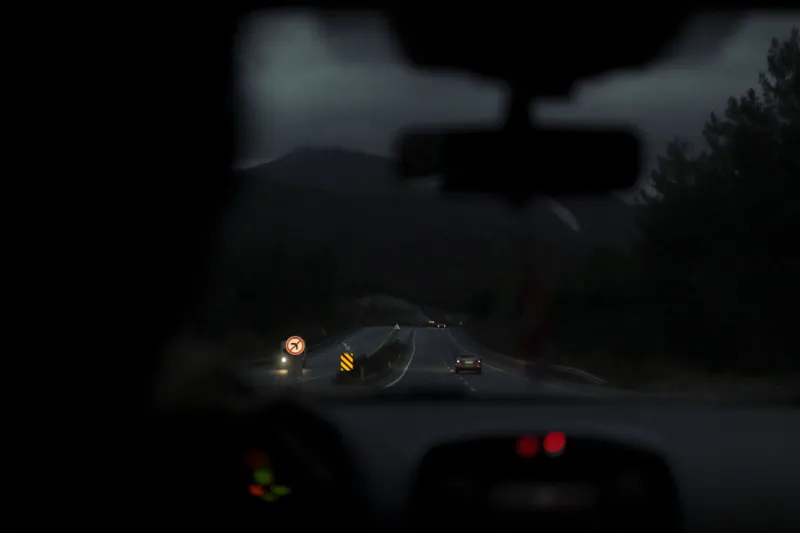
Somewhere in the American suburbs, circa 1987, a sixteen-year-old is easing the family Buick out of the driveway at 11 p.m. with the headlights off. The parents are asleep. The destination is nowhere in particular — maybe a parking lot, maybe a back road, maybe just the long way around town with the radio turned up louder than it ever got during daylight hours. Nobody knows where this kid is. Nobody can know. And that invisibility is the whole point.
This was the joyride. Not necessarily reckless, not necessarily illegal, but fundamentally unsupervised in a way that felt enormous to a teenager navigating the narrow space between childhood and adulthood. The car wasn't just transportation. It was proof that you existed independently of the people who raised you.
That experience, in its purest form, is essentially gone.
When Getting Lost Was a Feature, Not a Bug
The freedom teenagers found in cars during the latter half of the 20th century wasn't incidental — it was structural. There was simply no technology capable of tracking where a young driver went. Phones were attached to walls. Maps were paper. If your parents wanted to know where you were, they had to wait for you to come home and tell them.
This created a remarkable kind of trust — or at least a practical version of it. Parents set a curfew, handed over the keys, and operated on faith. The teenager, in turn, operated on something like honor, knowing that consequences existed but also knowing that the window between leaving and returning was genuinely theirs.
For many Americans who grew up between the 1960s and the early 2000s, those drives are among the most vivid memories of adolescence. The specific geography of late-night suburban streets. The way a parking lot felt different at midnight. The quiet thrill of being somewhere your parents didn't know about, doing absolutely nothing dangerous, and feeling like an adult anyway.
The car was the mechanism. Anonymity was the fuel.
The Surveillance Infrastructure Arrives
The erosion didn't happen all at once. It came in layers, each one introduced with reasonable justifications.
First came the cell phone. By the mid-2000s, most teenagers carried one, and most parents expected to be able to reach them at any time. The phone didn't track location, but it collapsed the distance between parent and child in a way that changed the emotional texture of independence. You were never fully alone if someone could call you.
Then came GPS. Dedicated vehicle tracking devices appeared in the early 2000s, initially marketed toward fleet managers and worried parents of very young drivers. They were clunky and required installation, so adoption was limited. But the concept was established: it was now possible to know exactly where a car was at any moment.
Insurance companies got interested around the same time. Telematics programs — which track speed, braking, acceleration, and mileage through a plug-in device or a smartphone app — began appearing as discounts for safe driving. They were optional, technically. But when the alternative was paying full rates, the choice wasn't entirely free. Families started enrolling teenage drivers in these programs, partly for the savings and partly because the data was right there if you wanted to look at it.
Then smartphones became standard equipment for teenagers, and location sharing became a default feature of family life. Find My Friends. Life360. Google Family Sharing. These apps are used by tens of millions of American families, with real-time location data available at a glance. Some parents check constantly. Some check occasionally. But the data exists, and both parent and teenager know it exists.
Finally, the cars themselves became connected. Modern vehicles log driving behavior, transmit location data, and in some cases allow remote monitoring through manufacturer apps. The 2024 family sedan knows where it went, how fast it traveled, and when it was driven — and that information is accessible to whoever holds the account.
The architecture of teenage invisibility has been systematically dismantled, one reasonable innovation at a time.
What Gets Lost When Nothing Is Hidden
It's easy to frame this entirely as a safety story, and the safety dimension is real. Teenage drivers are statistically the highest-risk group on American roads. Graduated licensing laws, telematics feedback, and parental monitoring have all contributed to declining teen traffic fatalities over the past two decades. These are not small numbers. These are lives.
But something else is also true: the experience of being a teenager has changed in ways that go beyond accident statistics.
The joyride wasn't just about driving. It was about practicing autonomy in a low-stakes environment — making decisions without a parent watching, navigating the world independently, learning what you actually wanted to do when no one was telling you what to do. Developmental psychologists have long argued that unsupervised time is essential to adolescent identity formation. The car was one of the last places American teenagers could find it.
When every mile is logged and every location is shared, that practice space shrinks. The teenager behind the wheel is still physically alone, but they're not experientially alone in the way that mattered. The parents are present in the data, if not in the passenger seat.
A Generation That Never Had the Option
For teenagers coming of age in the 2020s, this isn't experienced as a loss — you can't miss something you never had. Location sharing is simply how family life works. Telematics is normal. The idea of taking a car somewhere without anyone knowing feels not like freedom but like a technical problem to solve.
What's genuinely interesting is how this mirrors a broader cultural shift: the compression of the space between childhood and adulthood, the extension of parental oversight into years that previous generations considered their own. The car was one of the clearest expressions of that boundary. When the boundary moved, the car moved with it.
Somewhere, a parent is checking their phone right now, watching a blue dot move through familiar streets, reassured that everything is fine.
And it probably is. But the kid driving that car is having a fundamentally different experience than the one who slipped out of the driveway in 1987 with the headlights off, heading nowhere in particular, gloriously untracked.