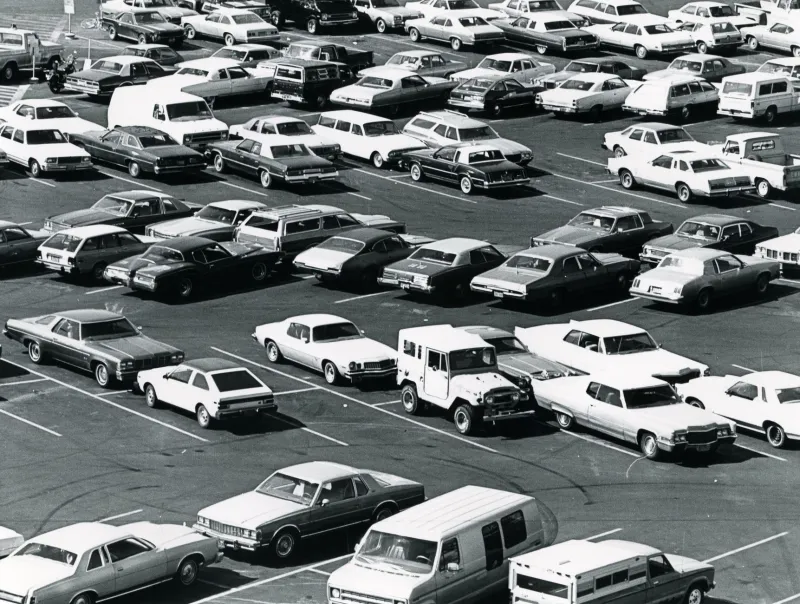
The Man With a Trunk Full of Miracles: How Traveling Parts Salesmen Kept Rural America Rolling
Somewhere in the middle of a Kansas wheat field in 1974, a farmer named Dale is staring at a tractor that won't start and a combine that's leaking hydraulic fluid at a rate that makes his stomach hurt. The nearest auto parts store is forty miles away on roads that aren't exactly kind to his pickup. Then he hears gravel crunching in the driveway. It's a familiar sound. It's Tuesday, which means it's Bob.
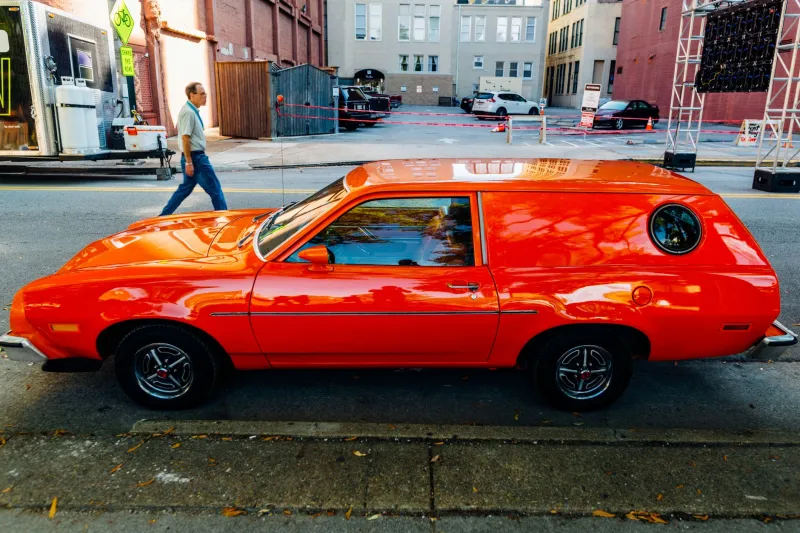
Bob drove a '68 Ford Galaxie with a trunk so organized it looked like a hardware store had collapsed into it. Filters, belts, gaskets, hoses, spark plugs, points, condensers — all sorted by make and application, all wrapped in a knowledge base that no search engine would ever match. Bob didn't just sell parts. Bob knew what you needed before you finished describing the problem.
This was the world of the traveling auto parts salesman, and it was more essential to American life than most people today would ever guess.
A Supply Chain Built on Handshakes
The traveling salesman is a figure that's been reduced to a punchline in modern culture, but in the automotive world, these men — and they were almost always men — served a function that was genuinely critical. From the 1940s through the early 1980s, independent distributors and manufacturer's reps crisscrossed rural America on regular routes, calling on small garages, farm co-ops, fleet operators, and anyone else who kept machinery running for a living.
They represented brands like Champion, Gates Rubber, Fram, Purolator, and AC Delco. They carried sample cases and order books. They left catalogs thick enough to prop up a workbench. And they came back every week or every month, depending on the territory, because the relationship was the product.
A good traveling parts salesman knew your equipment inventory better than you did. He knew your '63 Chevy truck needed a specific carburetor kit that was hard to source, and he'd already put one aside for you in the back of his car. He knew your son had just bought a used Ford and that the water pump on that particular engine was a weak point. He showed up with the part before you knew you needed it.
That's not commerce. That's community.
The Geography of Mechanical Knowledge
What made these salesmen irreplaceable wasn't just the inventory they carried. It was the information they moved between stops. A parts salesman who covered a hundred-mile radius was essentially a traveling encyclopedia of mechanical problems and solutions. He'd seen what was failing on the equipment in your county. He'd watched a particular batch of fuel pumps cause trouble across three different garages on his route. He'd heard from a mechanic in the next town over about a trick fix that actually worked.
This was a human knowledge network operating at a time when the only alternative was calling the manufacturer's technical line and hoping someone picked up. The salesman was faster, more practical, and he remembered your name.
For farmers especially, this relationship was the difference between a broken-down harvest season and a productive one. Agriculture runs on tight windows. A combine that quits in October doesn't get a rain check. Having a guy who could show up with the right part — or at minimum tell you where to find it — was worth more than any discount catalog could offer.
When the Routes Started Dying
The unraveling came gradually, then quickly. Chain auto parts stores began spreading through the 1970s and accelerated hard through the 1980s. AutoZone opened in 1979. O'Reilly Auto Parts began expanding beyond Missouri. NAPA deepened its retail footprint. Suddenly, even mid-sized towns had a store with a computer terminal that could look up any part in under a minute.
The economics of the traveling salesman started falling apart. Why wait for Tuesday's visit when you could drive to town and get the part today? The chains offered competitive pricing, consistent inventory, and the same part-lookup technology the salesmen used to carry in their heads.
Then came the internet, and after that, the whole model collapsed. RockAuto launched in 1999 and turned the parts market into a price comparison exercise. Amazon followed. By the time smartphones put a full parts catalog in every mechanic's pocket, the traveling salesman had become a ghost story that old-timers told in garages that smelled like oil and decades.
What the Algorithm Can't Carry
Here's what next-day delivery doesn't do. It doesn't pull into your driveway and notice that the belt you ordered last month has been installed wrong and is about to take out your alternator. It doesn't remember that your fleet runs a non-standard oil filter because the previous owner modified the engine. It doesn't pass along the information that three other guys on the same county road have had the same problem with the same part this season.
Modern parts sourcing is faster, cheaper, and incomparably more convenient. There's no honest argument against that. A farmer today can order a part on his phone at midnight and have it in his hands by the following afternoon. That's remarkable progress by any measure.
But what was lost in the transaction was something harder to quantify. The traveling parts salesman carried mechanical knowledge the way a doctor carries diagnostic instinct — built up over years of exposure, pattern recognition, and genuine investment in outcomes. He was a specialist who worked without a clinic, making house calls to engines instead of patients.
The routes he drove connected isolated communities to a broader mechanical world. The conversations he had were a form of continuing education for every small-shop mechanic and shade-tree wrench-turner he visited. When those routes closed, that thread snapped. The knowledge didn't transfer to a database. It retired, or it died, and nobody built a digital version of the thing it actually was.
The Gateway That Closed
There's a reason old mechanics get misty when this comes up. It's not pure nostalgia. It's the recognition that something genuinely useful existed, served a real purpose, and then disappeared without anyone quite deciding to let it go. The market made the decision, the way markets do, and the logic was sound. But logic doesn't always account for everything that gets left behind.
Somewhere in a barn in the Midwest, there's probably still a parts catalog from 1978 with a salesman's business card paper-clipped to the front cover. The phone number doesn't work anymore. But whoever left it there knew that the man behind it was worth keeping close.